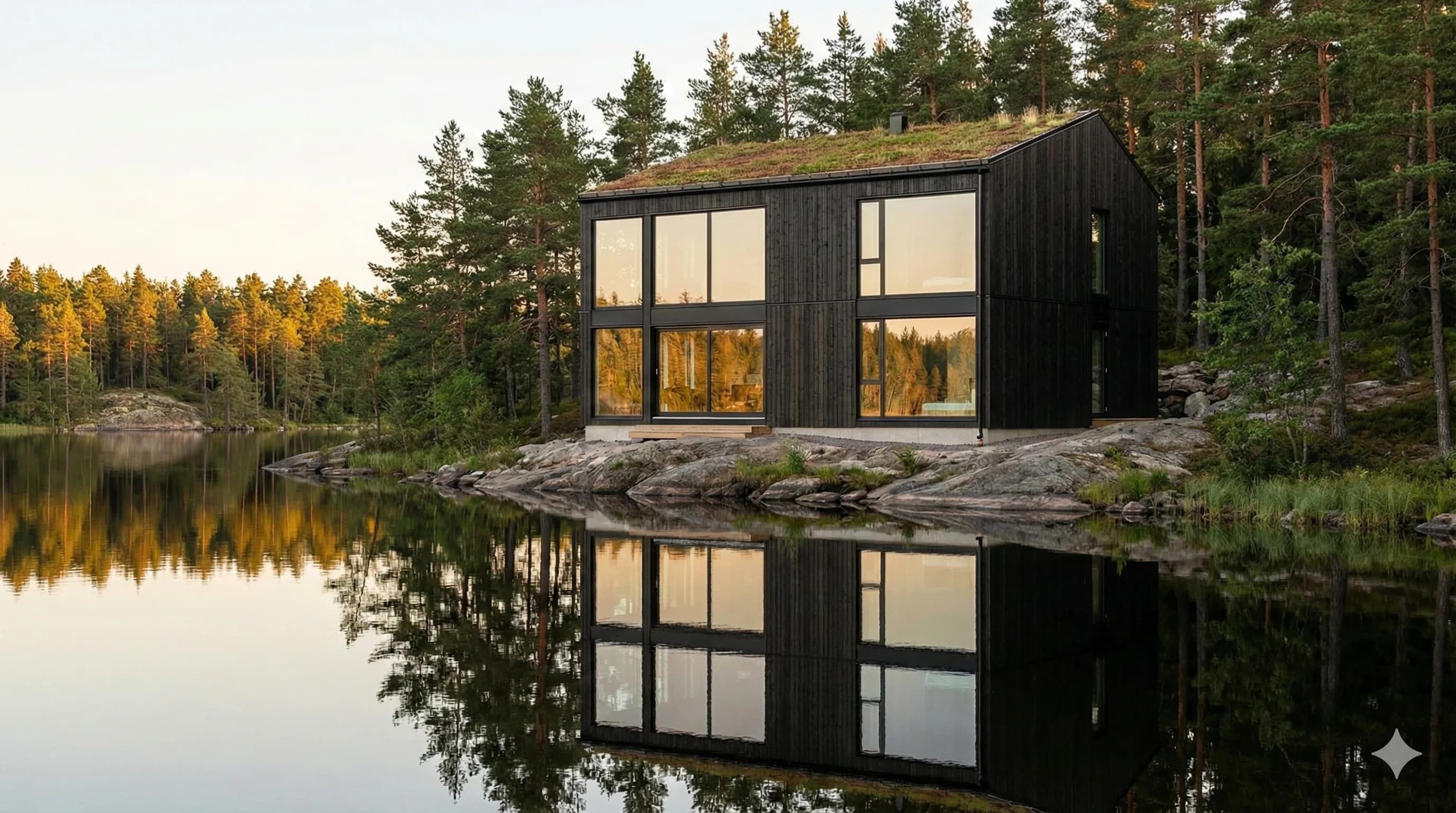
Country House 2026: Honest Trends and Interiors
Discover the key country house design trends for 2026: Soft Minimal, dark wood, biophilic design, broken-plan layouts and more tactile, honest interiors.
Honest Country House Design: Trends 2025–2026
If the past five years were driven by the pursuit of flawless visuals, the trends of 2025–2026 are clearly shifting toward sensory experience and authenticity. Today, the primary client request is no longer “impress my guests,” but rather “create a place where I can truly rest.”
The country house is no longer just a status asset. It is becoming an emotional cocoon — a space for recovery, calm, and balance. Below are six key directions that will remain relevant in the coming years, without marketing noise or short-lived effects.
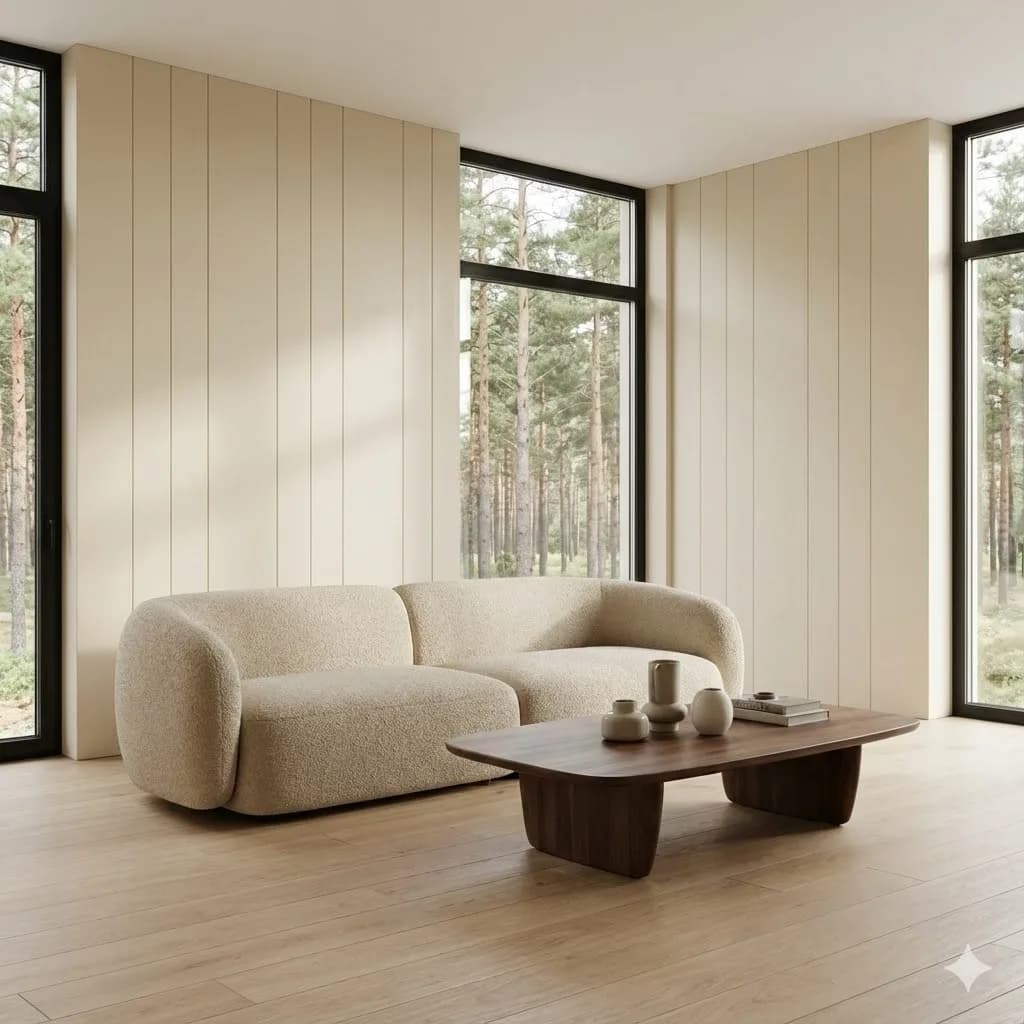
1. Quiet Luxury and Warm Minimalism (Soft Minimal)
Sterile white minimalism and cold high-tech interiors are firmly in the past. They are being replaced by a more human approach designers call Warm Minimalism.
The essence: the space remains clean and uncluttered, yet becomes warm and tactile. The interior is defined not by décor, but by the quality of its core materials.
Palette and materials:
- Color: In contemporary modular houses, pure stark white interiors are being phased out. In practice, warm neutral tones are used more often — creamy, sandy shades, light greys with a beige undertone, as well as tones inspired by natural wool and clay. These colors are less sensitive to changing daylight, feel calmer in everyday use, and are more forgiving in real living conditions.
- Walls: Perfectly smooth painted walls are used less frequently. Real projects commonly rely on mineral or lime-based plasters with a subtle texture, as well as wall panels — most often veneered panels, slatted wood panels, or engineered wood systems. The combination of plaster and panels is especially common in modular houses, as it simplifies installation, helps conceal module joints, and reduces the need for perfectly precise wall geometry.
- Panels: Panels are used primarily as a functional construction element rather than pure decoration. In practice, slatted and veneered panels are the most common, while acoustic panels are used selectively. Panels help conceal technical systems, improve acoustic comfort in open or broken-plan layouts, and allow lighting to be integrated without visible fixtures. In most interiors, panels are applied to selected wall zones rather than covering all surfaces.
- Furniture: Furniture tends to feature simple, restrained forms without ornamental detailing. In real interiors, this usually means a mix of standard factory-made pieces and custom elements, using materials such as oak, plywood, metal, and textiles based on linen, wool, or blended fabrics. Strong color accents are used sparingly or avoided altogether; emphasis is placed on material texture, proportions, and light.
2. The Return of Dark Wood and Heritage Design
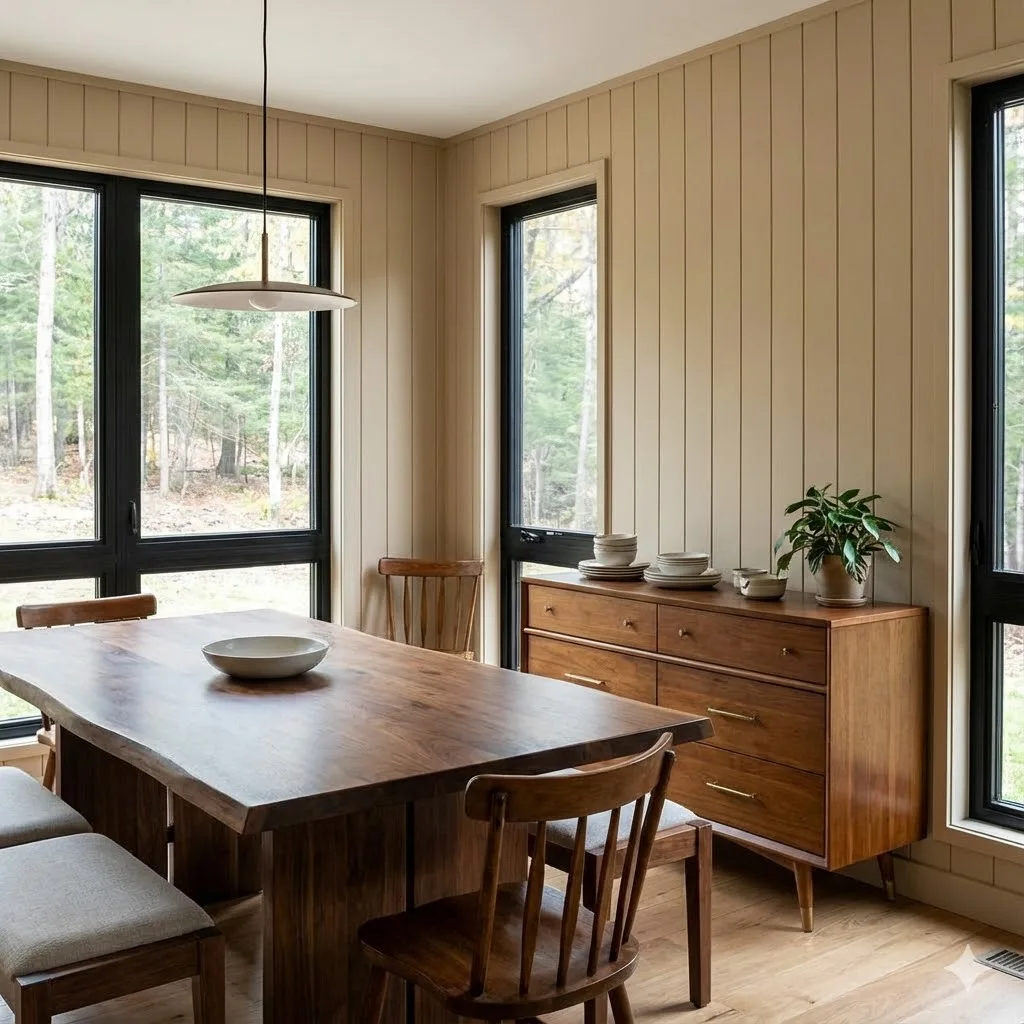
Scandinavian light oak and bleached pine have become overly familiar. In 2026, there is a clear renewed interest in dark, noble wood species.
- Materials: walnut, smoked oak, cherry. Dark wood brings depth, maturity, and a sense of grounding to an interior.
- Heritage approach: people are increasingly tired of furniture that looks “like everyone else’s.” Integrating vintage pieces — a 1960s dresser or a restored armchair — into a modern modular home adds character and warmth, avoiding a showroom-like feel.
3. Biophilia 2.0: Blurring Boundaries
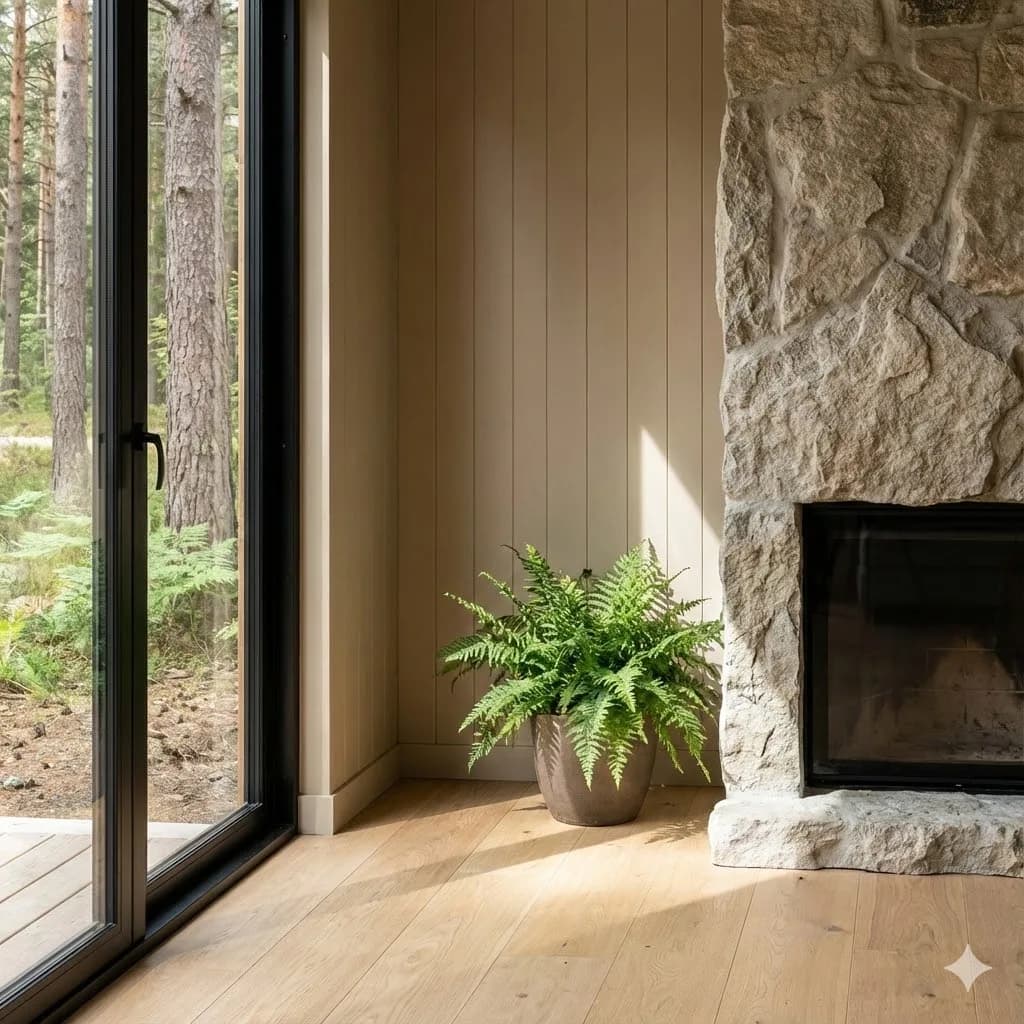
In modular homes with panoramic glazing, nature naturally becomes the main visual element. But biophilia 2.0 goes far beyond simply adding plants.
Color palette:
deep, complex natural shades — sage green, olive, terracotta, storm-cloud grey, and mustard.
Raw textures:
unfinished stone — travertine with natural cavities, rough slate, sandstone — is used not only on façades but also indoors: on fireplaces, kitchen islands, and bathroom surfaces.
4. Texture Over Color
By 2026, visual noise has become genuinely exhausting. The eye seeks rest, while tactile experience takes priority.
Fabrics and forms:
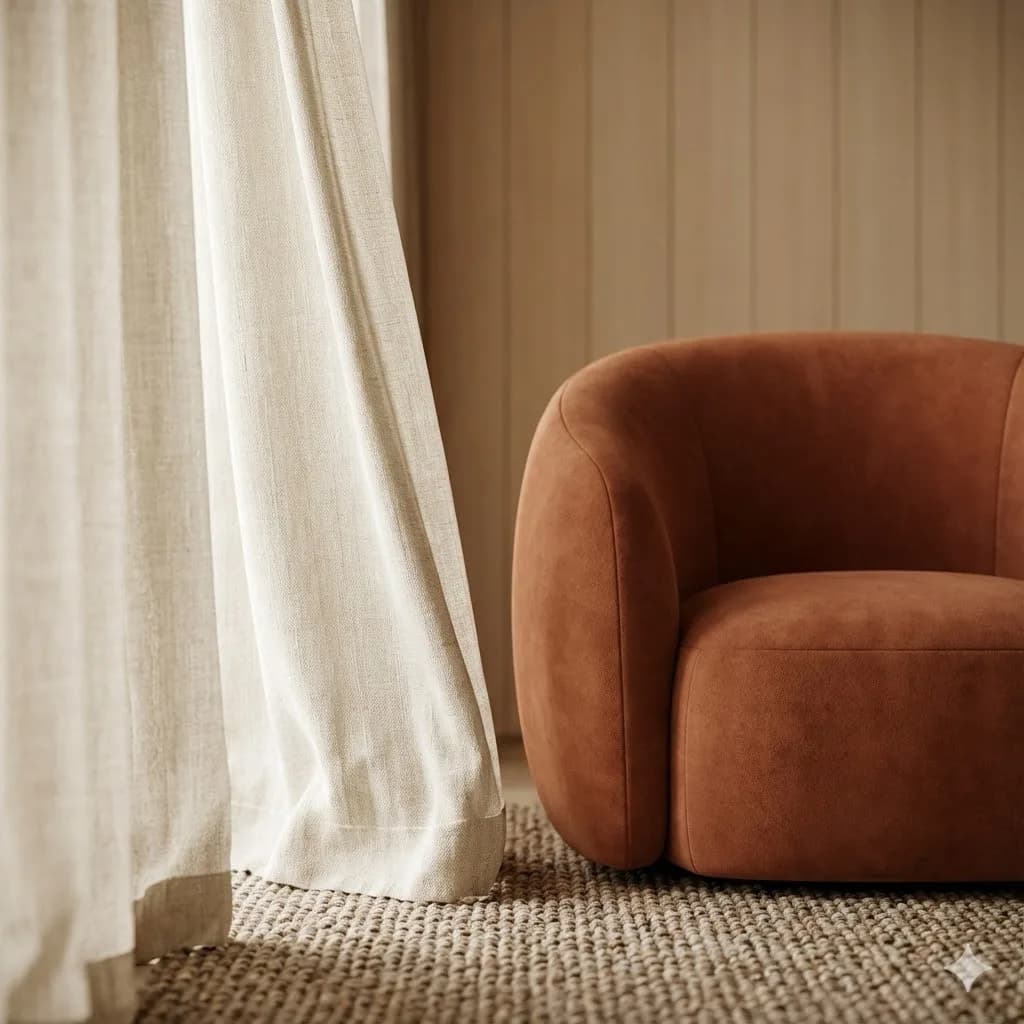
- Textiles: once-popular bouclé gives way to heavy linen, dense cotton, corduroy, and suede.
- Geometry: furniture is losing sharp edges. Stone-like sofas, round tables, and arched openings are perceived as safer and more comforting.
5. The Invisible Smart Home
Technology is fading into the background. Large control panels and blinking indicators are now considered an anti-trend.
- Hidden assistance: leak sensors, automated climate control (humidity, CO₂), curtains that open with sunrise.
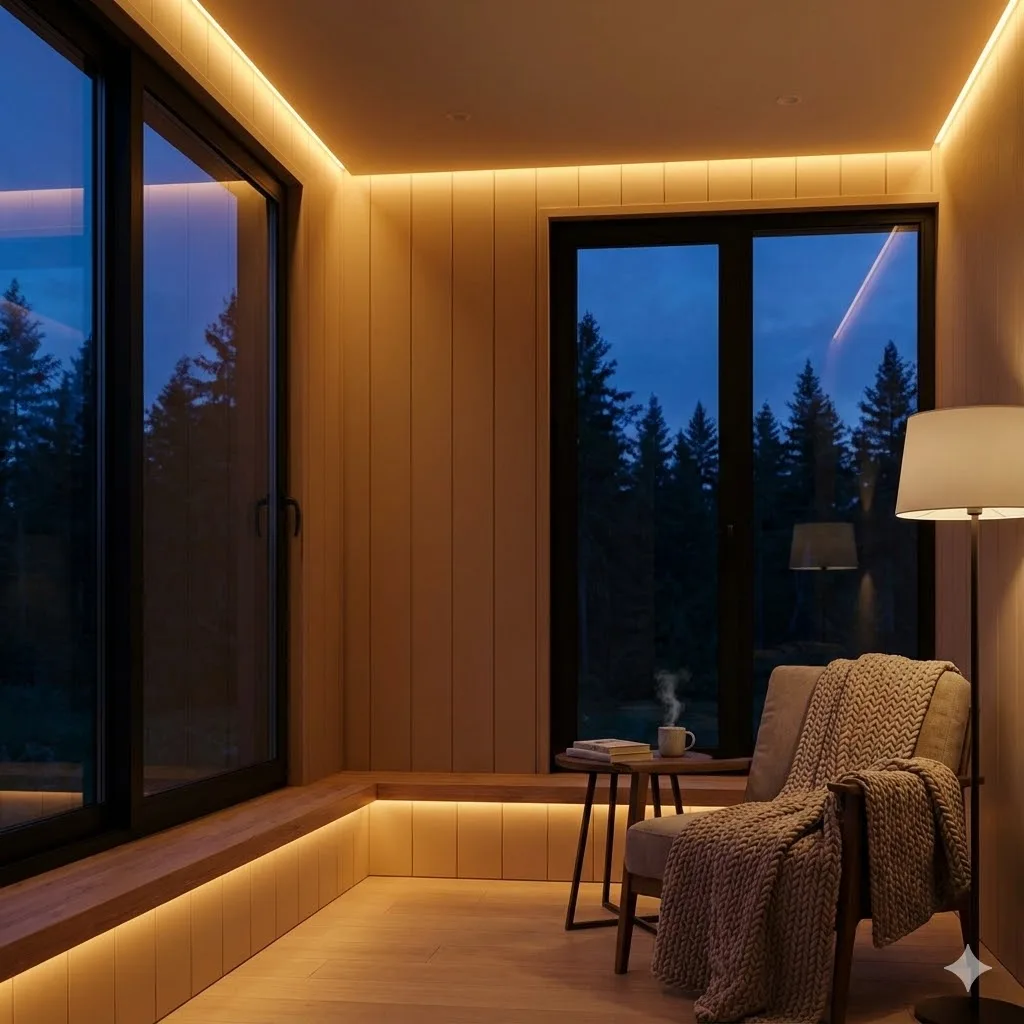
- Biodynamic lighting: light temperature changes throughout the day — cool and energising in the morning, warm and amber-toned in the evening to support natural melatonin production. Emphasis shifts to low- and mid-level lighting.
6. Honest Layout: The Broken Plan
The pandemic made one thing clear: a complete absence of walls becomes problematic when everyone is home at once. The concept of total open space is evolving.
What’s changing:
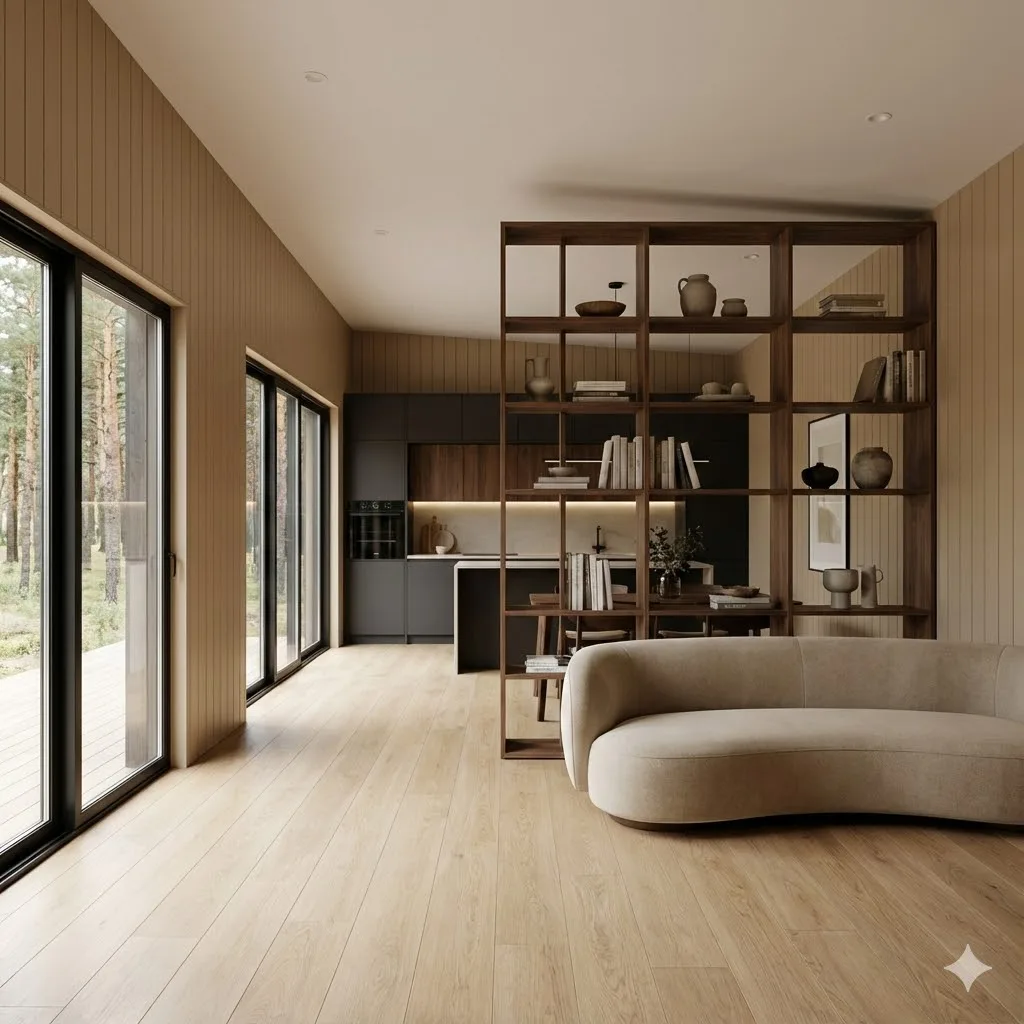
- Zoning (broken plan): the living room and kitchen remain connected but are visually separated by glass partitions, open shelving, fireplaces, or subtle level changes.
- Privacy: quiet zones — such as a small home office or reading nook — are no longer optional.
Anti-Trends: What to Avoid
- Total concrete: bunker-style interiors can feel psychologically heavy.
- Plastic imitations: laminate posing as parquet or marble-look tiles with repetitive patterns. Honest materials age better.
- Glossy ceilings: a clear no. Matte finishes only.
- Matching furniture sets: identical sofas and armchairs feel predictable. Mixing eras and forms creates depth.
Summary
The defining trend of 2026 is individuality.
A country house no longer needs to look like a perfect Pinterest image. The home of the future is a place where technology quietly saves time, and natural materials create a sense of calm and emotional balance.
Photos: Renohacks Collection
Tags: #interior2026 #countryhouse #designtrends #softminimal #biophilicdesign #naturalmaterials #modularhome
Check airflow before finishes go in
Start with the main calculator, then use the two tools that most naturally follow this article.
This piece is grounded in the article topic, related calculations, and practical renovation decisions without extra theory.