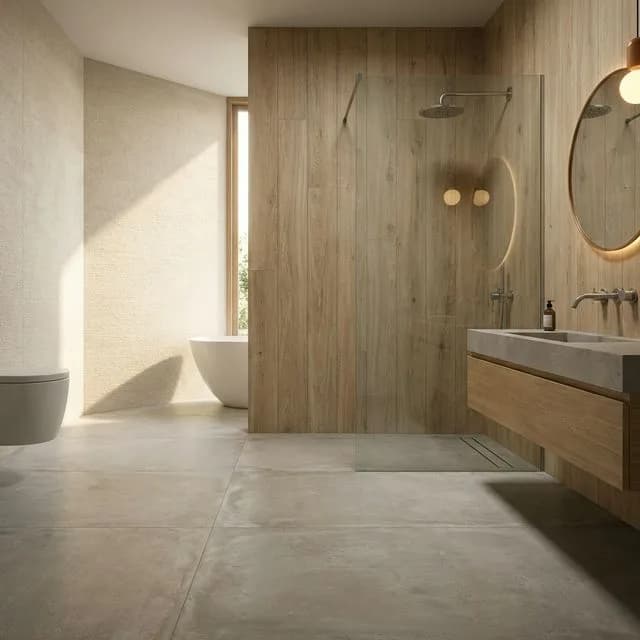
How to Choose Bathroom Tiles: A Complete Guide with Photos
Breaking down all the nuances of choosing ceramic tiles and porcelain stoneware for your bathroom. Designer tips, layout ideas, and common mistakes.
Choosing bathroom tiles is one of the most important stages of a renovation. It affects both the look of the room and how long the finish lasts. In this guide, we break down the key selection principles and show practical examples.
1. Ceramic Tile or Porcelain Stoneware?
This is the first decision to make.
Ceramic tile is great for walls. It is lighter, easier to cut, and easier to drill (for example, for sockets or towel hooks).
Porcelain stoneware is usually the better choice for floors. It has higher density, withstands impacts better, and has very low water absorption. Today, it is also increasingly used on walls to create a unified, seamless look.
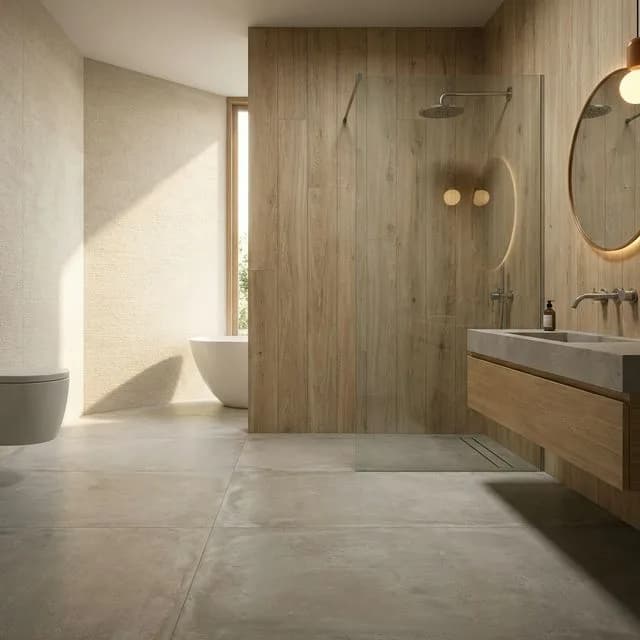
Tip. If you are using porcelain stoneware on the floor, choose matte options with anti-slip properties. In residential bathrooms, installers often target R10-R11. For barefoot wet zones, also check the A/B/C barefoot classification (DIN 51097), typically not lower than class B. A glossy floor in a wet bathroom is a major slip hazard.
2. Format and Size Matter
The myth that a small bathroom only needs small tiles is long outdated. Large-format porcelain stoneware (for example, 60x60 or 60x120 cm) visually expands the space thanks to the minimal number of grout joints.
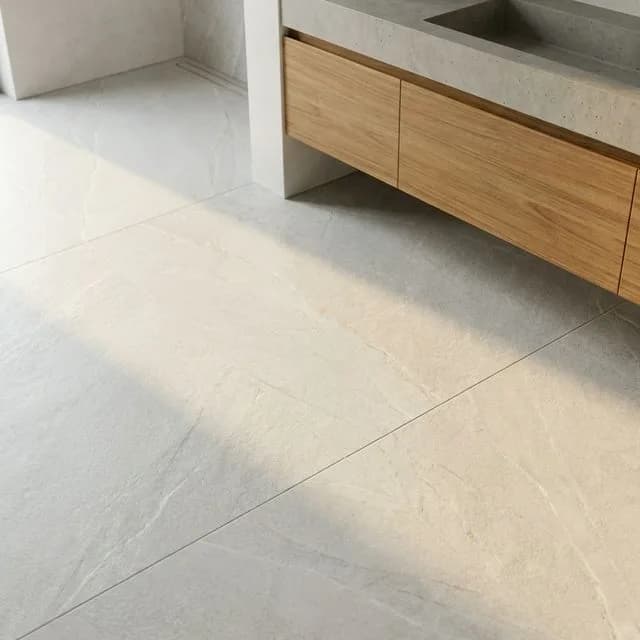
If you want to add texture, you can use:
- Subway tile — an excellent option for an accent wall in the shower area.
- Mosaic — ideal for cladding shower pans, niches, or curved surfaces.
3. Color Palette: Light or Dark?
Light tiles (white, beige, light gray) are a reliable classic. They make the bathroom brighter and visually more spacious. On light surfaces, water spots and mineral deposits are often less noticeable than on very dark ones, though visibility depends on texture and water hardness.
Dark tiles (anthracite, deep blue, emerald) look premium and expensive, but require more careful maintenance, especially in areas of direct water contact.
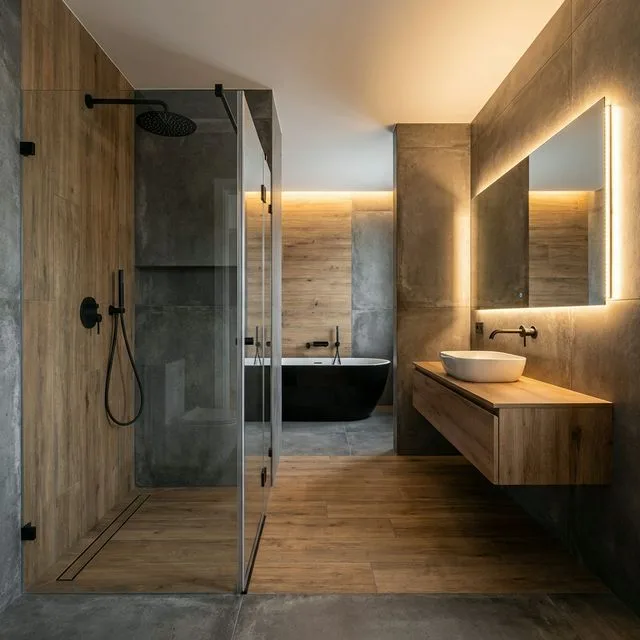
Bathroom Renovation
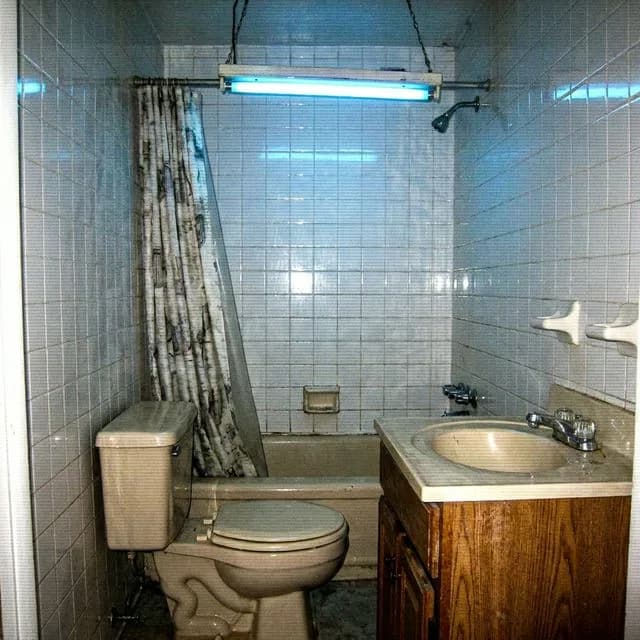
Replacing old white ceramic squares with modern concrete and wood-look porcelain stoneware.
Tile Calculation Tool
To avoid buying too much (or, worse, suddenly running out of tiles), use our built-in calculator. It takes into account wall areas, door sizes, and the standard margin for cutting.
Tile Calculator
Calculate the exact number of tiles needed for floors or walls, including waste, grout, and adhesive.
Measure from wall to wall
From one wall to another
If there is a built-in bathtub or fixed screen
Indicated on the package, e.g. 30×30 cm
For square tiles, same as length
For grout calculation
Usually 1.5–3 mm
For pack count
If work experience is low, add 5–10%
❓ Frequently Asked Questions
What tile overage margin should I buy? For a straight layout (grid pattern), a 10% waste allowance is usually recommended. If you plan a diagonal layout, increase it to about 15%. For large-format porcelain stoneware, waste is often calculated piece by piece.
Which grout is better: cement or epoxy? For wet zones (inside the shower area, near the bathtub), epoxy grout is often the better choice. It has lower water absorption and better resistance to staining and mold, but it is more expensive and harder to apply. For other walls, high-quality cement grout with water-repellent additives is usually sufficient.
Can tiles be laid on drywall? Yes. Use moisture-resistant drywall, follow the manufacturer's requirements for board thickness and framing spacing, and always apply continuous waterproofing on joints and surfaces in wet zones before tiling.
Calculate tile and waste first
Start with the main calculator, then move into the related tools and the matching topic hub.
Tile Calculator
Estimate wall or floor tile, waste allowance, and adhesive consumption.
Bathroom Hub
Keep bathroom articles, tools, and key planning decisions in one place.
Open hubVentilation Calculator
Calculate airflow needs by room volume and air-change rate.
Check airflowLighting Calculator
Work out how many lumens and fixtures a room really needs.
Calculate lightingThis piece is structured as a practical sequence of work, material choices, and decisions without extra steps.