Renovation Without Rework in 2026: 12 Decisions That Save Budget and Stress
A practical guide to avoid costly renovation rework through better planning: electrical, plumbing, ventilation, acoustics, lighting, and quality control.
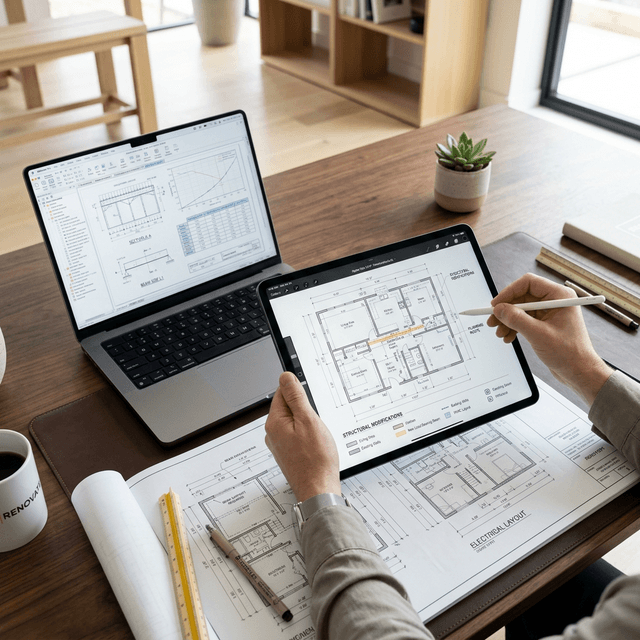
Most renovation overruns are caused not by material prices, but by rework after finishing. In 2026, the most practical approach is simple: engineering and real-life scenarios first, visual design second.
Here are 12 decisions that consistently reduce risk and protect your budget.
1. Scenario Map Before Demolition
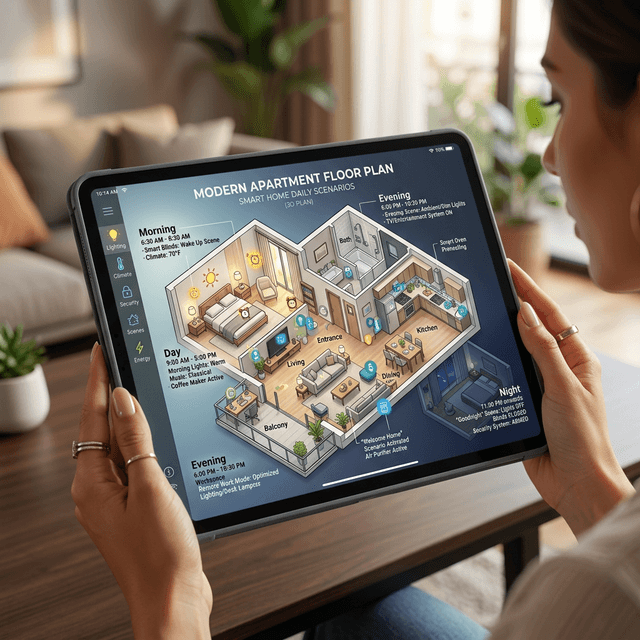
Before work starts, map daily use:
- where you work with a laptop;
- where devices are charged;
- how you move at night;
- where laundry is handled;
- where seasonal storage is located.
This defines outlet placement, lighting, switch logic, and storage zones. Without it, late changes are almost guaranteed.
2. Electrical Plan With 20-30% Capacity Reserve
A modern baseline:
- dedicated lines for kitchen appliances;
- dedicated line for AC;
- RCD and RCBO zoning;
- 2-3 spare breakers in the panel;
- 20-30% reserve in outlet count.
Adding outlets during rough-in is always cheaper than wall cutting after finishing.
3. Wet Areas: Plumbing Nodes Before Tile
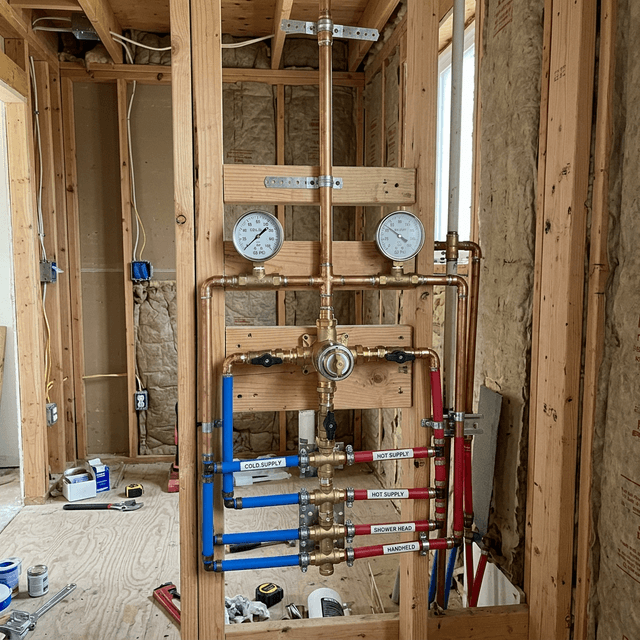
Sequence matters:
- lock plumbing points to real furniture/equipment;
- install access hatches;
- complete waterproofing with wall overlap;
- only then tile and finishing.
A common mistake is tiling first and discovering offset fixtures later.
4. Acoustic Strategy by Weak Points, Not Everywhere
Highest ROI usually comes from:
- risers and utility shafts;
- shared walls near bedrooms;
- entry door and slopes;
- ceiling zones with upper-neighbor impact noise.
Targeted acoustic work is often more effective than full-area treatment.
5. Ventilation and CO2 Must Be in Scope
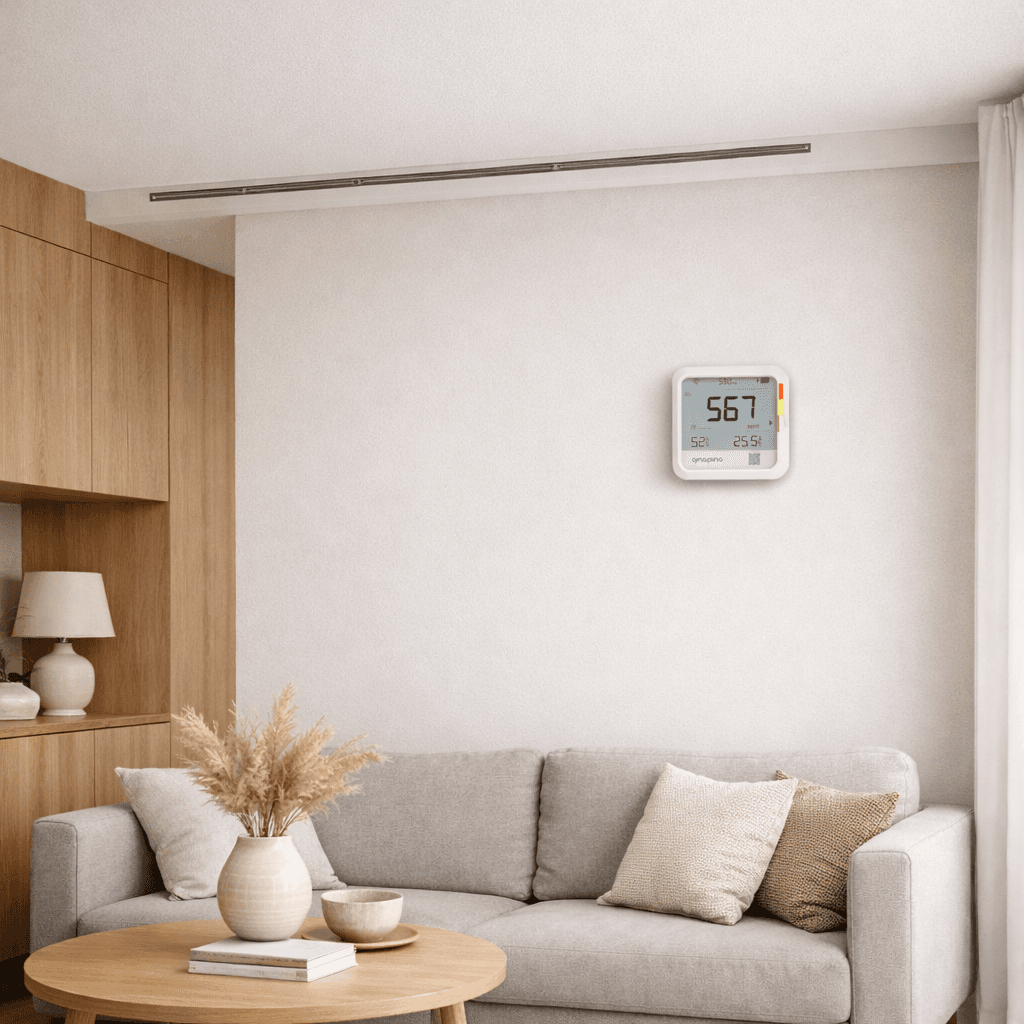
If bedroom air quality is poor at night, premium design does not matter. Minimum baseline:
- verify ventilation draft before renovation;
- plan fresh-air supply (valves or mechanical unit);
- keep grilles unobstructed by furniture/decor.
Goal: stable air exchange and better sleep quality.
6. Lighting by Scenarios: Base, Task, Evening

Use at least three layers in key rooms:
- ambient base layer;
- task layer (kitchen, desk, mirror);
- evening layer (soft/local).
This prevents the classic “single chandelier for everything” failure.
7. Service Access Is Non-Negotiable
Maintain quick access to:
- water filters;
- manifolds;
- meters;
- electrical panel;
- complex equipment connections.
Beautiful interiors without maintenance access become expensive later.
8. Material Selection by Real Load
Choose by use profile:
- hallway/kitchen: high wear resistance;
- bedroom: tactile comfort and low VOC;
- bathroom: moisture resistance and maintainable joints.
There are no universal materials, only correct context.
9. One Owner for Trade Interfaces
Most expensive defects happen at interfaces:
- electrical ↔ ceiling;
- plumbing ↔ tile;
- millwork ↔ utility points.
Assign one person to sign off all interfaces before each handoff.
10. Hidden-Work Photo Documentation
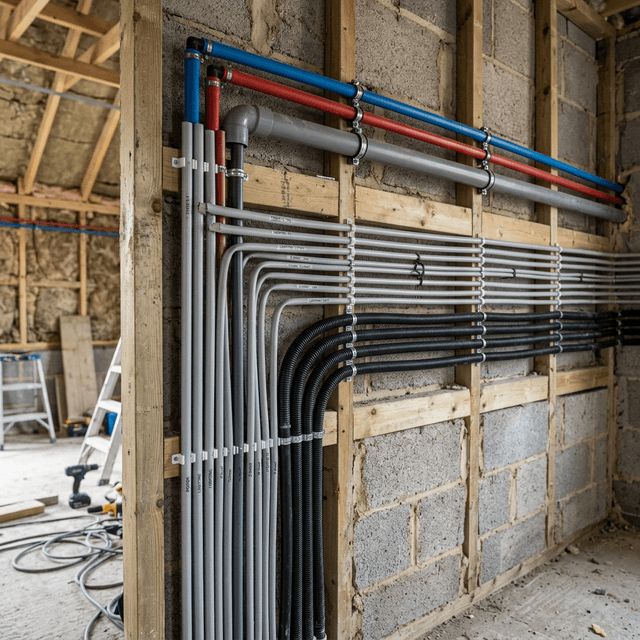
Before closing walls and boxes, capture:
- cable routes;
- pipe routes;
- embedded supports;
- dimensions from corners/floor.
This saves time and prevents accidental damage in future upgrades.
11. Pre-Finish Control Checklist
Before finishing, verify:
- all utility points are correctly placed and elevated;
- panel circuits are labeled and tested;
- no leaks under pressure;
- ventilation works in every zone;
- wall/floor geometry meets millwork tolerance.
Skipping this pushes hidden problems directly into final finishes.
12. Reserve Budget 12-15% Is Standard
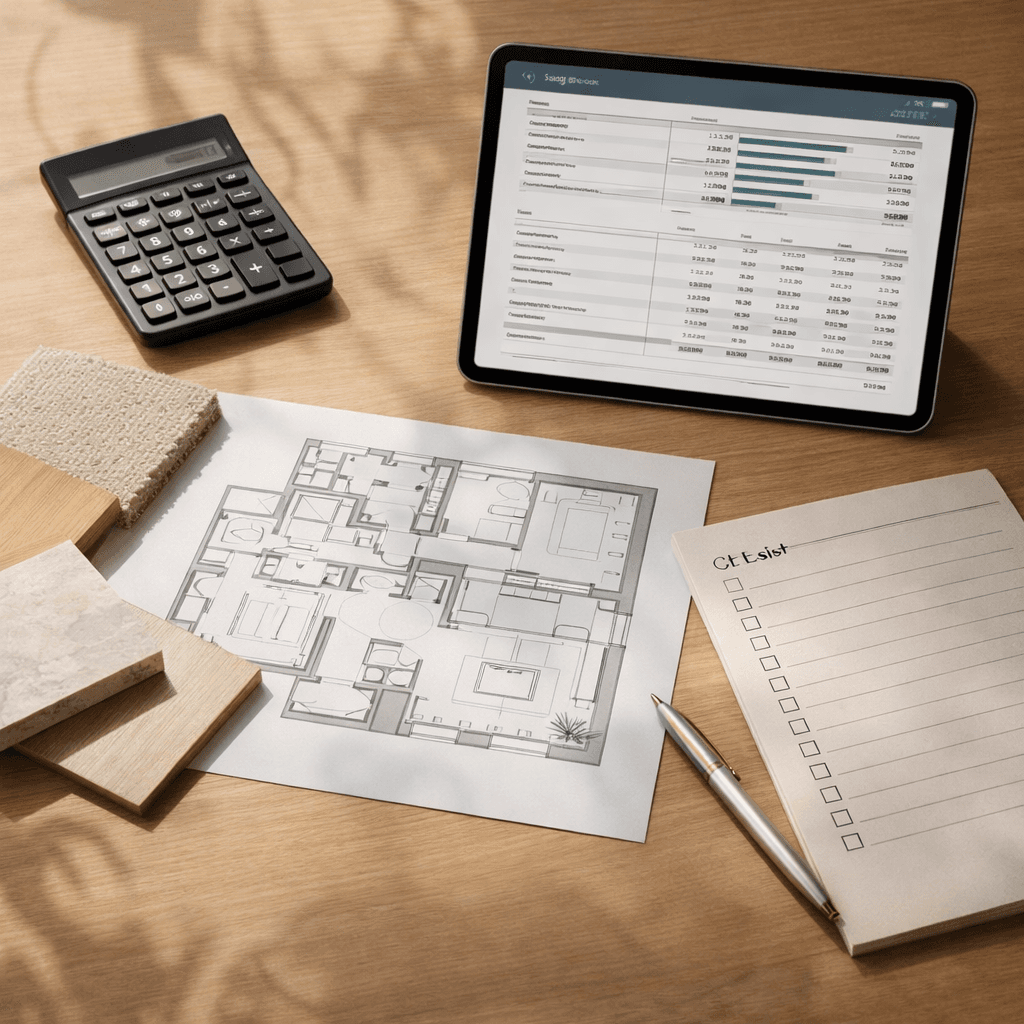
In 2026, supply and lead times remain volatile. A practical model:
- 70% core works/materials;
- 15-18% equipment/lighting/plumbing;
- 12-15% contingency reserve.
Reserve budget protects quality and schedule under uncertainty.
Final Takeaway
Renovation without rework is not “more expensive.” It is more precise upfront. When engineering decisions are tied to real use, you avoid repeated work, schedule slips, and avoidable stress.
🔗 Related articles
- 5 Apartment Renovation Mistakes — how to avoid common traps
- Wellness Home 2026 — health-optimizing design and tech
- Rough Renovation Guide — step-by-step action plan
📸 Photos: Renohacks.com collection
🏷️ Tags: Renovation, Planning, Engineering, Tips, 2026
Turn the idea into a working budget
Start with the main calculator, then move into the related tools and the matching topic hub.
Budget Planner
Build a renovation budget by category, currency, and contingency reserve.
Planning and Budget Hub
Keep budgeting, phasing, savings, and renovation cost control in one focused planning cluster.
Open hubLighting Calculator
Work out how many lumens and fixtures a room really needs.
Calculate lightingColor Palette Generator
Build a balanced interior color palette before you commit to paint and finishes.
Build a paletteThis piece is structured as a practical sequence of work, material choices, and decisions without extra steps.