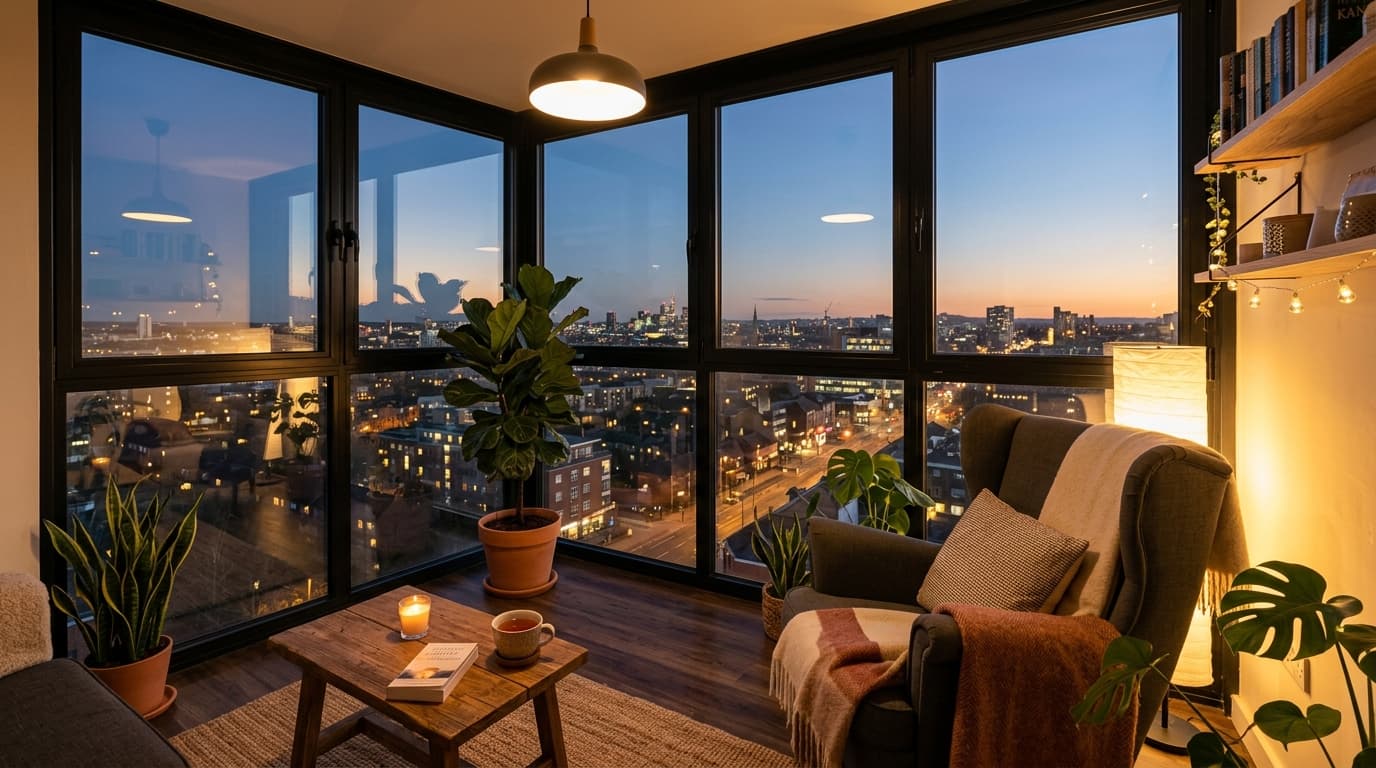
Balcony Insulation & Conversion 2026: The Complete DIY Retrofit Guide
How to convert a cold balcony or loggia into a year-round office or lounge space. XPS thermal insulation, triple-pane glazing, radiant floor heat, and cost breakdowns.
Balcony Insulation & Integration in 2026: Modern Retrofit Strategies
Insulating and enclosing a balcony or loggia remains one of the most effective strategies for expanding living space in urban apartments. In 2026, the focus has shifted toward building a continuous energy-efficient thermal envelope that retains heat during winter freezing temperatures while blocking solar heat gain during summer months.
This step-by-step guide covers insulation layer choices, window specs, moisture control, and code-compliant heating systems.
3 Critical Steps to a Year-Round Balcony

1. High-Performance Multi-Pane Glazing Retrofits
Uninsulated single-pane aluminum windows leak massive heat. Creating a habitable balcony requires 5-chamber or 7-chamber vinyl (PVC) window frames equipped with double-pane or triple-pane Low-E glass units filled with argon gas.

2. Continuous Insulation & Vapor Barrier Membrane Assembly
Every unconditioned surface—parapet wall, end walls, floor slab, and ceiling—must be insulated continuously.
- Primary Insulation: Rigid Extruded Polystyrene (XPS) or PIR boards 2 to 3 inches (50–80 mm) thick.
- Foil Vapor Barrier: Foil-faced polyethylene film 1/4 to 3/8 inch (5–10 mm) thick with aluminum-taped seams to stop indoor humidity from penetrating framing.

3. Interior Finishes & Space Zoning
Finish interior walls using moisture-resistant drywall (Greenboard), decorative plaster, or wood-look accent panels. End alcoves are ideal for building compact workstations or storage shelving.

Heating Strategies: Code-Compliant Climate Control
In almost all municipal building codes across North America and Europe, extending central hot-water hydronic radiator loops onto an exterior balcony is strictly prohibited due to freezing risks and system pressure drops.
Approved Heating Options:
- Electric Radiant Floor Heating: Thin-set cable mats or carbon film heating element placed under porcelain tile or engineered vinyl flooring;
- Wall-Mounted Electric Convector: Programmable thermostat-controlled unit offering rapid heat distribution;
- Mini-Split Heat Pump: High-efficiency ductless system supplying active cooling in summer and supplemental heating in winter.
Cost Comparison: 50 sq ft (4.6 sq m) Balcony Conversion
| Component | US Cost Estimate | European / International Range |
|---|---|---|
| Thermally Broken Glazing Package | $1,800 – $2,800 | €1,500 – €2,400 |
| Rigid XPS Insulation & Vapor Barrier | $400 – $650 | €350 – €550 |
| Electrical Rough-in & Radiant Floor | $350 – $550 | €300 – €500 |
| Drywall, Paint & Tile Finishes | $700 – $1,200 | €600 – €1,000 |
| ESTIMATED TOTAL: | $3,250 – $5,200 | €2,750 – €4,450 |
Frequently Asked Questions (FAQ)
Can I extend my home’s central hydronic heating to the balcony?
No. Most municipal building codes strictly prohibit extending central hot-water heating loops to unconditioned exterior zones due to pipe freezing hazards and system pressure imbalances. Use electric radiant floor heat or a mini-split instead.
Why do insulated balcony windows fog up and sweat?
Window condensation happens when warm, moisture-heavy indoor air contacts cooler glass without adequate fresh air exchange. Installing trickle vents or a small HRV (Heat Recovery Ventilator) unit resolves moisture buildup completely.
Is spray foam insulation better than rigid XPS foam board for balconies?
Both work well, but Closed-Cell Spray Foam (SPF) offers superior seamless air sealing in tight framing cavities, while Rigid XPS boards provide more consistent thickness on flat masonry walls at lower material costs.
By investing in high-grade insulation and energy-efficient window systems, an underutilized balcony becomes a valuable, comfortable year-round living area.
Turn the idea into a working budget
Start with the main calculator, then use the two tools that most naturally follow this article.
This piece is structured as a practical sequence of work, material choices, and decisions without extra steps.