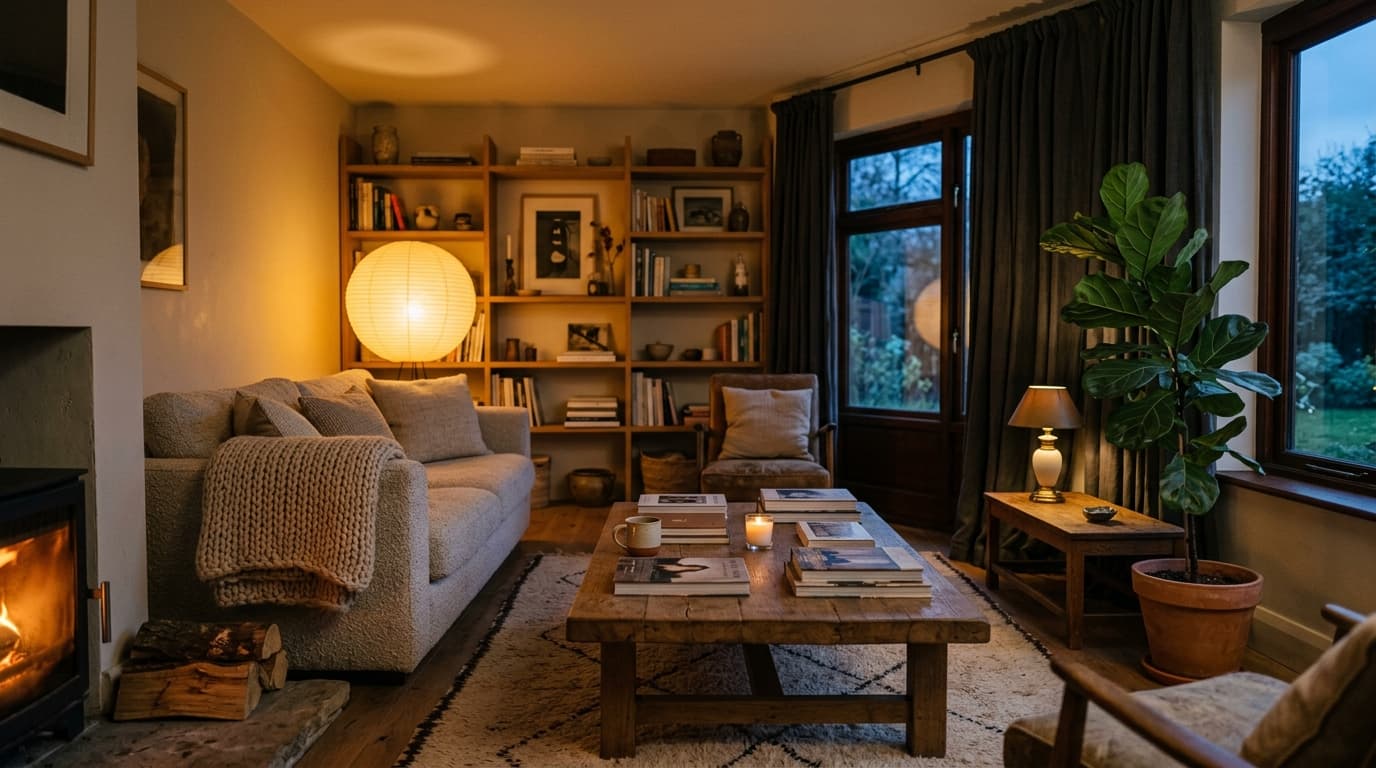
The Formula of Coziness: 7 Sensory Rules Why Your Brain Rejects Glossy Catalogs and What Your Senses Crave
A deep dive into sensory architecture and environmental psychology. Why sterile, catalog-perfect interiors trigger chronic stress, and how circadian lighting, tactile micro-relief, acoustics, and biophilia turn a home into a deep recovery sanctuary.
Have you ever walked into a flawlessly renovated, magazine-worthy apartment and felt an unexpected wave of unease? Spotless white walls, floating ceilings, razor-sharp cabinetry, not a single rogue item in sight. The space looks like a multimillion-dollar showroom, yet within minutes your shoulders tense, your breathing turns shallow, and you feel as on edge as in a sterile hospital waiting room.
In architectural psychology and evidence-based design, this condition is known as «sensory sterility» or showroom syndrome. The human nervous system evolved across hundreds of thousands of years in rugged, nuanced, biologically complex natural environments. When we confine our bodies to boxes of polished drywall, synthetic laminate, and harsh overhead LEDs, our subconscious doesn't register «tasteful minimalism» — it registers sensory deprivation and ambient threat.
True coziness is not decorative clutter, a trendy paint swatch, or three scented candles on a coffee table. At a neurobiological level, coziness is a physiological marker of safety. It is the precise moment when all five sensory channels simultaneously signal to the amygdala (the brain's threat radar): «You are protected, warm, sheltered, and in control of your resources. Power down sympathetic fight-or-flight; switch on the parasympathetic nervous system for cellular repair, digestion, and restorative rest.»
Here is the scientific breakdown of the 7 sensory laws of the home, grounded in peer-reviewed environmental psychology, neuroarchitecture, and sensory physiology.
1. Light Architecture (2200K–2700K): Banishing the «Interrogation» Glare for Chiaroscuro Islands
The single most pervasive residential design failure is relying on a high-lumen central ceiling fixture or a uniform grid of recessed ceiling downlights blasting cool, neutral light (4000K and above). Lighting designers refer to this as the «interrogation room effect».
The Neuroscience of Illumination
A landmark discovery by the Salk Institute for Biological Studies (Dr. Satchidananda Panda’s chronobiology laboratory) revealed that the human retina contains specialized non-visual photoreceptors: intrinsically photosensitive retinal ganglion cells (ipRGCs) carrying the photopigment melanopsin. These cells project directly into the brain's master biological clock (the suprachiasmatic nucleus):
- Top-down 4000K–6500K ceiling light mirrors the noon sun at its zenith. It halts melatonin synthesis in its tracks and spikes systemic cortisol (stress response).
- Warm 2200K–2700K light angled at or below eye level mirrors the setting sun and primal embers of an evening hearth. Research from the Harvard T.H. Chan School of Public Health demonstrates that shifting to low-kelvin evening light speeds sleep onset by 35% and stabilizes resting heart rate variability.
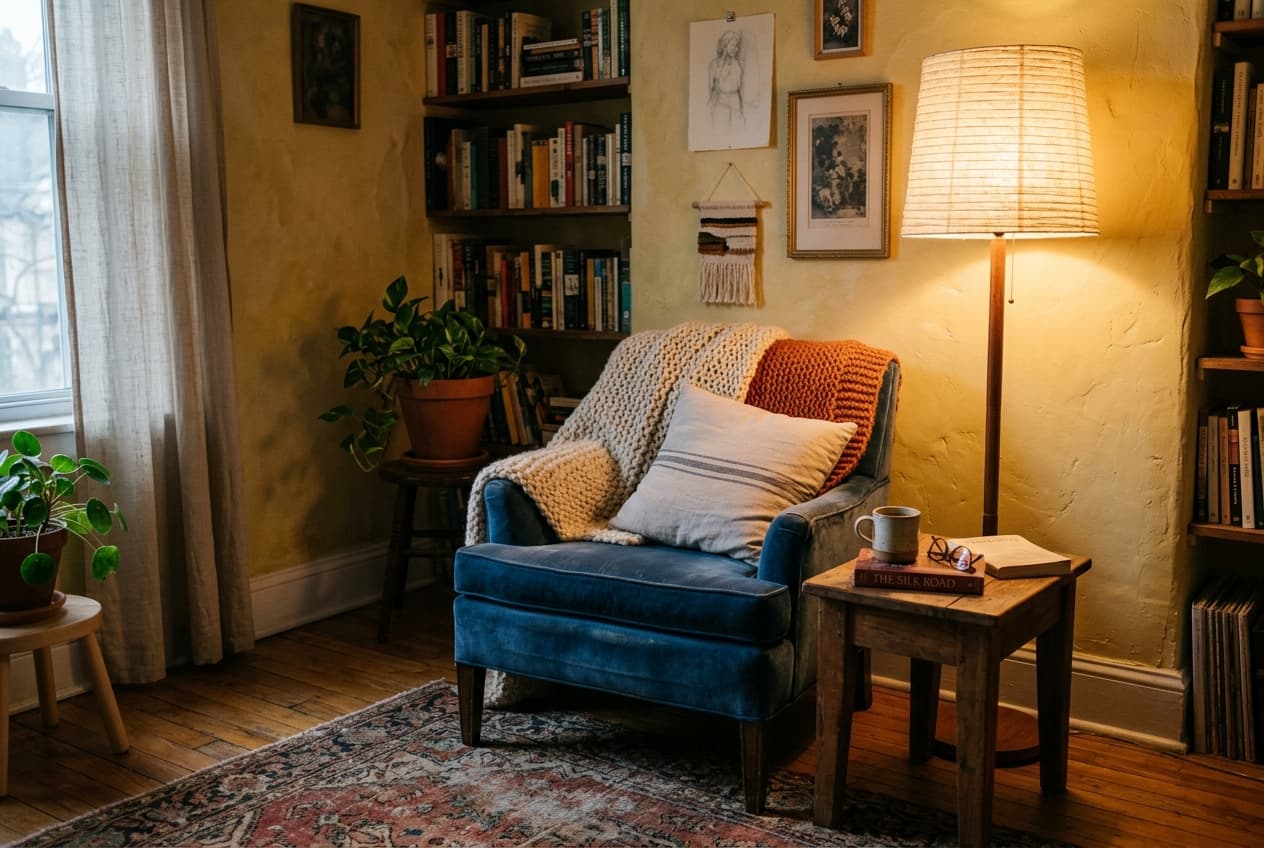
Implementation Blueprint:
- The Three-Tier Luminaire Rule: Eliminate single-switch overhead illumination. Establish three independent layers:
- Ambient Diffused: Indirect, concealed cove or ceiling-wash warm light.
- Mid-Level Functional: Sconces and floor lamps with textured washi paper or coarse fabric shades set at 47–63 inches (120–160 cm) from the finished floor.
- Low-Level Intimate: Table lamps, baseboard graze, or plinth lights set at 8–16 inches (20–40 cm).
- Chiaroscuro Light Islands: Coziness thrives on gentle contrast. The ocular ciliary muscles require soft shadow gradients to disengage and relax. Illuminate only zones of purposeful habitation: an armchair, a dining tabletop, or a treasured piece of art.
2. Tactile Micro-Relief: The Antidote to «Glass Screen Syndrome»
The average modern urbanite spends 8 to 12 hours every day touching completely smooth, chemically inert, non-organic substrates: smartphone gorilla glass, plastic laptop keyboards, and slick laminated melamine desktops. In neurophysiology, this is diagnosed as tactile sensory deprivation.
Returning home to a sofa upholstered in slick polyester and a PVC-filmed coffee table compounds that sensory drought.
How Skin Communicates Peace to the Brain
Neurobiologists at the University of Gothenburg (spearheaded by Prof. Håkan Olausson) mapped the human skin's C-tactile (CT) afferent network. These unmyelinated nerve fibers respond specifically to gentle, low-velocity contact with warm, naturally textured organic surfaces. Their activation triggers an immediate release of oxytocin — the neurohormone of trust, safety, and social calm — lowering blood pressure and systemic inflammation.

Implementation Blueprint:
- Tactile Fabric Weaves: Prioritize 100% French washed flax linen (with its uneven, slubby organic weave), rich textured bouclé, and high-thread-count washed cotton percale.
- Chunky Raw Wool: Unbleached merino, Shetland, or alpaca wool retains natural microscopic crimp and microscopic lanolin reserves that micro-massage cutaneous mechanoreceptors.
- Deep Touch Pressure (Weighted Blankets): Blankets calibrated to approximately 10% of body weight — 13–20 lbs (6–9 kg) — stimulate proprioceptive receptors, recognized by clinical occupational therapists for dampening sympathetic autonomic arousal within 15 minutes.
3. Honest Biophilia: Why Your Subconscious Spots Synthetic Imitations
Why does gazing at a slab of live-edge timber soothe our pulse, while faux-wood vinyl flooring leaves our soul cold? The empirical answer comes from physicist Dr. Richard Taylor (University of Oregon / NASA), published in Nature.
The Mathematics of Natural Calm
Organic structures — tree rings, slate fractures, marble veins, fern fronds — are governed by fractal geometry with a statistical fractal dimension of D ≈ 1.3 to 1.5.
Real-time electroencephalogram (EEG) imaging shows that when human visual cortex encounters fractal patterns within this specific bandwidth, brain alpha wave activity increases by up to 60%, inducing relaxed, alert tranquility.
When presented with vinyl faux-plank flooring, the brain immediately detects artificial pattern repetition (the exact same knot repeating every 3–4 boards) and flags an environmental falsehood, keeping low-level vigilance engaged.

Implementation Blueprint:
- Open-Grain Timber: Avoid thick, glossy polyurethane coats that encase real wood in what feels like rigid acrylic. Use penetrating hardwax oils or beeswax that leave timber pores breathing and tactilely warm.
- Raw Earth & Stone: Incorporate unpolished travertine, honed limestone, volcanic tuff, or terracotta. Their thermal inertia aligns with human skin contact.
4. Olfactory Architecture: Ground-Zero Purity and Woodsy Scent Anchors
The olfactory nerve is the only sensory pathway that bypasses the thalamus (the brain's analytical sorting gate) and projects straight into the limbic system, the amygdala, and the hippocampus — the epicenters of emotion and visceral memory.
The Science of Pure Air vs. Synthetic Masking
The Harvard COGfx Study (Harvard Center for Health and the Global Environment, led by Dr. Joseph Allen) demonstrated that elevated indoor carbon dioxide (CO₂ exceeding 1,000 ppm) paired with volatile organic compounds (VOCs from synthetic air fresheners, harsh cleaners, and off-gassing particleboard) slashes cognitive throughput by 15% to 50% while stimulating systemic irritability.
Spraying chemical aerosol scents (e.g., artificial vanilla or berry sprays) does not create coziness; it chemically assaults human olfactory epithelium with phthalates.
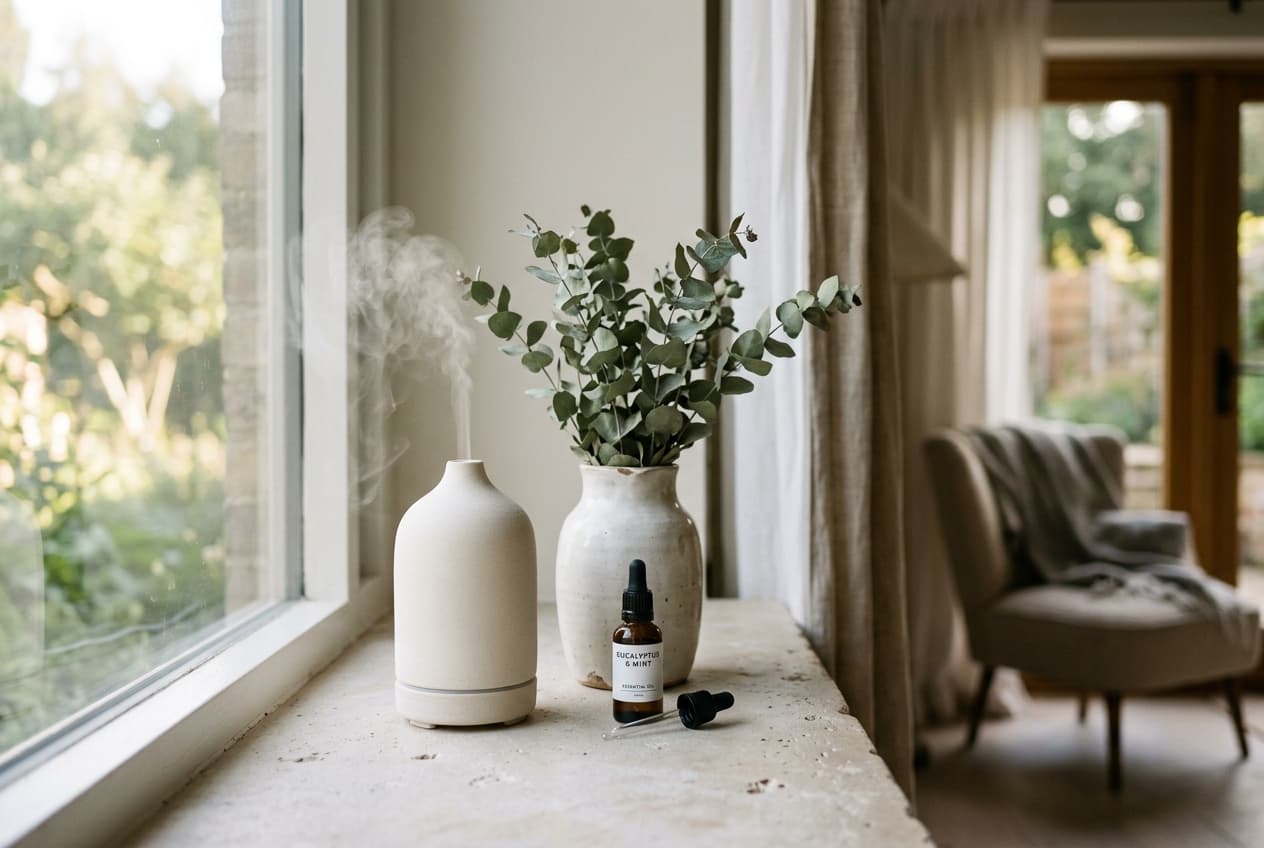
Implementation Blueprint:
- Ground-Zero Baseline: True olfactory coziness starts with neutral, pristine air. Mechanical fresh-air ventilation (energy recovery ventilators or HEPA air purifiers) and maintaining relative humidity between 45% and 60% is non-negotiable.
- Grounding Botanical Notes: Opt for natural low-frequency woodsy terpenes: Atlas cedarwood, sandalwood, vetiver, frankincense, dried fig leaf, and juniper. These compounds stimulate GABA receptors, suppressing racing thoughts.
- Porous Ceramic Diffusers & Wood-Wick Candles: Cold-mist ultrasonic stone diffusers preserve delicate essential oil chemistry, while natural soy or beeswax candles with crackling wood wicks introduce an acoustic whisper of open fire.
5. Acoustic Cocoon: Decibel Geometry and Eliminating Reverb Anxiety
Ever stepped into a freshly painted apartment with bare drywall and polished tile floors? Even whispering sounds harsh, and the drop of a key sounds jarring.
The Science of Reverberation Stress
This acoustic malaise is caused by excessive reverberation time (RT60). The World Health Organization (WHO Environmental Noise Guidelines) documents that indoor flutter echo and ambient reflections induce involuntary cardiovascular stress, prompting continuous micro-spikes in heart rate. Evolving in open plains and forests, the human ear associates cavernous echoes with defenseless, hollow spaces where sound localization is compromised.
Implementation Blueprint:
- The 40% Sound-Absorption Rule: At least 30% to 40% of room surfaces must feature high Noise Reduction Coefficient (NRC) properties.
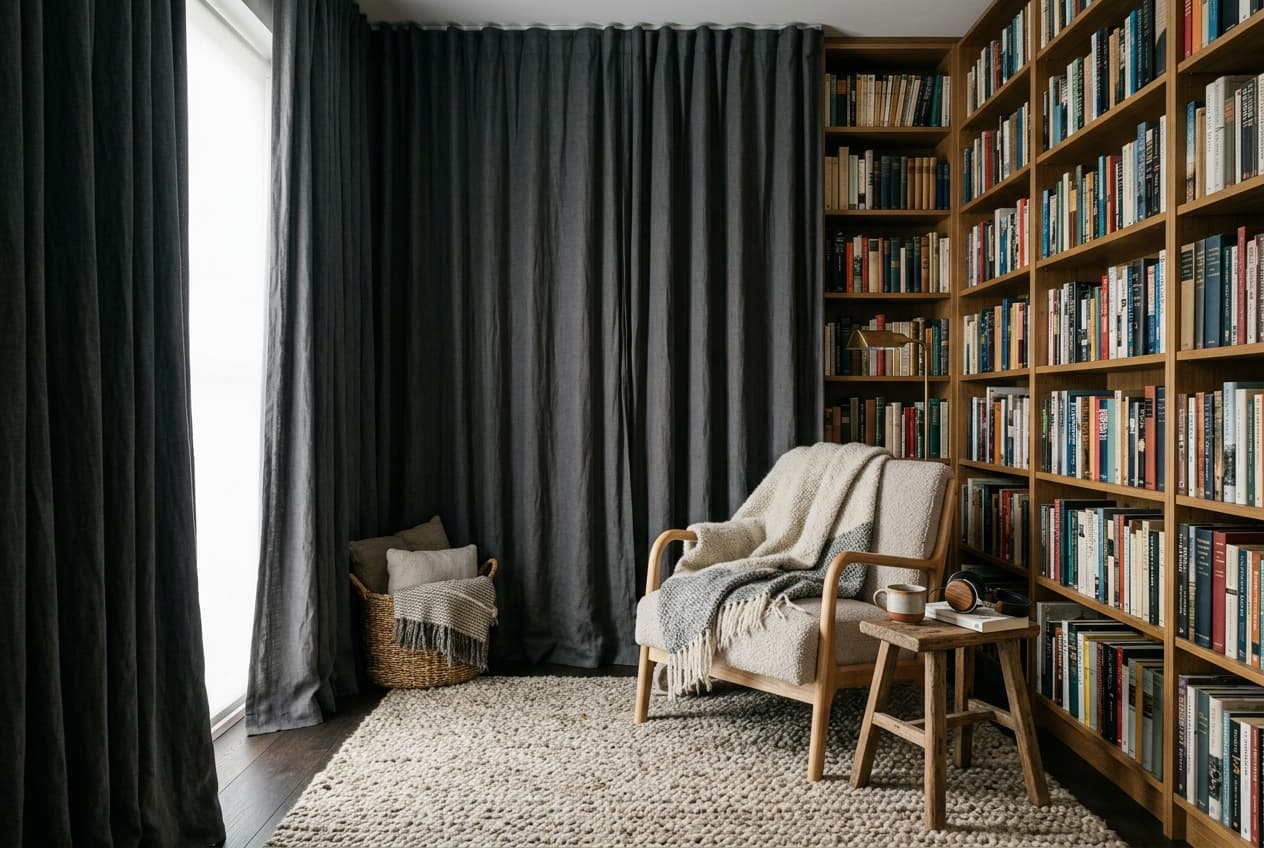
- Heavy Architectural Drapes: Window treatments made from heavyweight linen or velvet — 10 to 14 oz/sq yd (350–450 g/m²) — absorb both exterior traffic decibels and internal high-frequency flutter echo.
- High-Pile Wool & Jute Floor Coverings: Covering at least 50% of open floor area in living and sleeping zones anchors footfall acoustics.
- Bookshelves as Schroeder Diffusers: Paper is an acoustic dampener. Filled floor-to-ceiling bookshelves with staggered hardcover depths scatter standing sound waves, transforming harsh room reverberation into a velvety, intimate hush.
6. The Refuge Instinct: Jay Appleton’s Prospect-Refuge Blueprint
In 1975, Oxford geographer Jay Appleton published The Experience of Landscape, articulating a cornerstone principle of habitat selection:
Humans experience peak serenity and aesthetic pleasure in spatial configurations where they have a commanding view outward (Prospect) while their back is fully sheltered (Refuge).
Environmental psychologists at the University of Michigan (Profs. Stephen and Rachel Kaplan) confirmed through Attention Restoration Theory (ART) that sitting with one’s back exposed to an open transit corridor drains up to 20% of subconscious cognitive bandwidth on defensive spatial monitoring.
Implementation Blueprint:
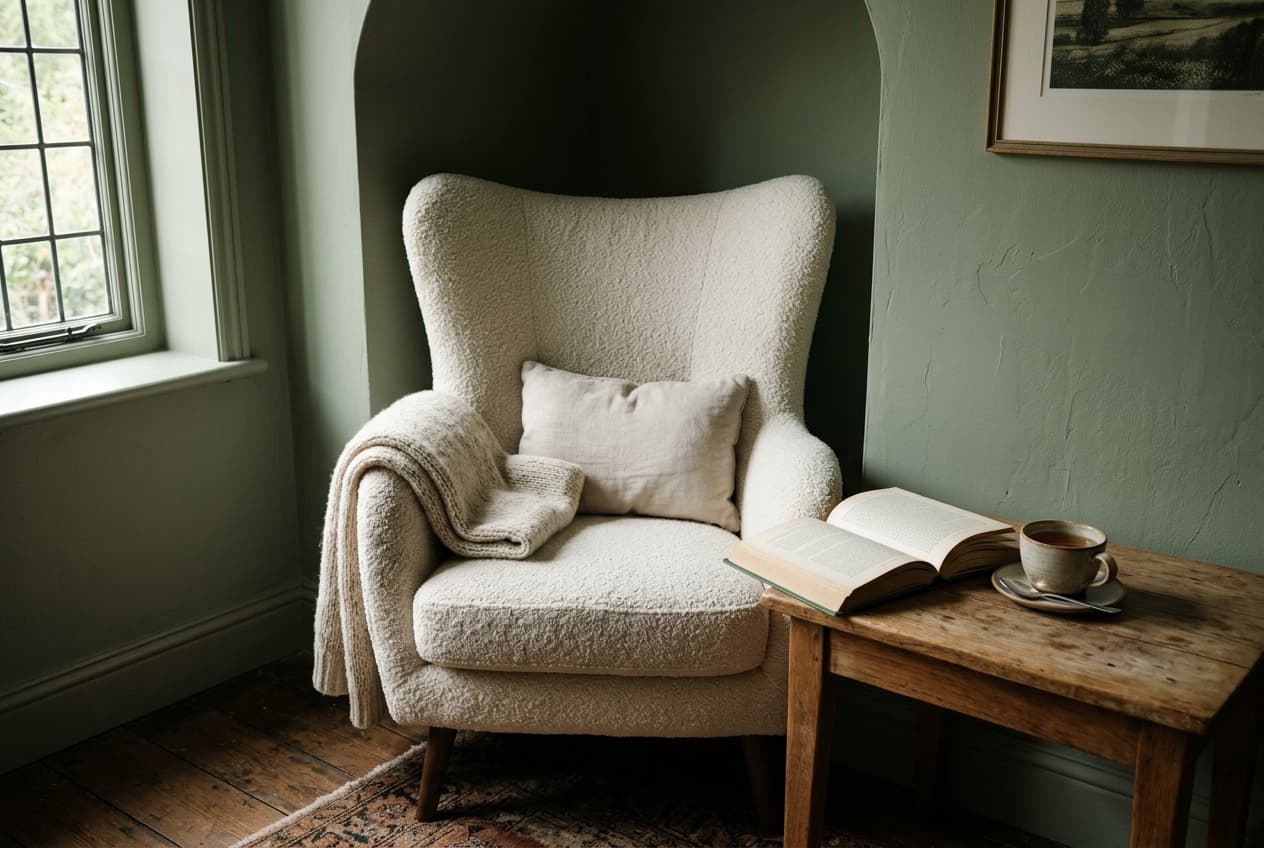
- The Position of Psychological Command: Never orient your primary lounge sofa or home office desk with its back to an entry doorway or high-traffic hallway. Anchor seating against a solid partition, slatted wood divider, or sturdy bookshelf.
- Dedicated Micro-Sanctuaries: Curate at least one dedicated cocoon zone: a deep wingback armchair tucked into an alcove, or an upholstered window bay seat. These serve as psychological havens where one can pull up their feet, wrap in a throw, and let vigilance dissolve.
7. The Wabi-Sabi Soul: Embracing Imperfection in a Living Home
The final, most poignant element of human coziness is the home’s freedom to be authentically alive.
Rooted in traditional Japanese philosophy, Wabi-Sabi venerates beauty that is imperfect, impermanent, and gently aged. Conversely, clinical research from the American Psychological Association (APA) links hyper-perfectionist, museum-sterile domestic standards with elevated chronic baseline cortisol and emotional exhaustion.
A living space where one fears leaving an open art book on the table or disrupting a pristinely ironed duvet ceases to be a home — it becomes a showroom where the occupant is merely an anxious caretaker.

Implementation Blueprint:
- Tactile Artisanal Stoneware: A hand-pinched clay mug with an organic, speckled glaze or an unglazed terracotta vase carries human touch and soulful grounding.
- Living Patina: Untreated solid oak that deepens with sun exposure, unlacquered brass hardware that oxidizes naturally, and stone trays that celebrate small character marks.
- Effortless Warmth: A book with a linen ribbon bookmark resting beside an armchair, a rumpled linen throw draped over a leather ottoman — these are the vital signs of safety, intimacy, and genuine life.
15-Minute Sensory Audit: Diagnostic Checklist
Assess your living space right now across the 7 biological dimensions:
- Vision: Can you extinguish all overhead ceiling glare in the evening and rely entirely on 2–3 warm, diffused light pools (2200K–2700K)?
- Touch: Are high-frequency contact surfaces (bedding, throws, upholstery) crafted from natural fibers (washed linen, raw wool) rather than static-generating polyester?
- Biophilia: Are your wood and stone surfaces open-pore and genuine, or are they synthetic vinyl imitations with repeating patterns?
- Air Quality: Does the room feel light and fresh to inhale, free from both stagnant stuffiness and toxic synthetic fragrances?
- Acoustics: Clap your hands firmly in the center of your bedroom. Do you hear a ringing metallic flutter echo? If so, drapes, high-pile rugs, or books are urgent necessities.
- Refuge: When you sit to read or decompress, is your back structurally sheltered from behind?
- Human Warmth: Does the home bear witness to your daily joy and living memories, or does it resemble an impersonal hotel lobby?
Summary
True coziness is not a catalog purchase or an algorithmically curated aesthetic. It is a biological alignment between your sensory architecture and the physical envelope of your dwelling.
When you calibrate lighting to your internal clock, silence harsh echoes with rich textiles, welcome crisp outdoor air, and embrace the organic poetry of raw materials, your home stops being mere square footage. It becomes your greatest sanctuary of restoration and peace.
Lock in colors before you buy finishes
Start with the main calculator, then use the two tools that most naturally follow this article.
This piece is structured as a practical sequence of work, material choices, and decisions without extra steps.