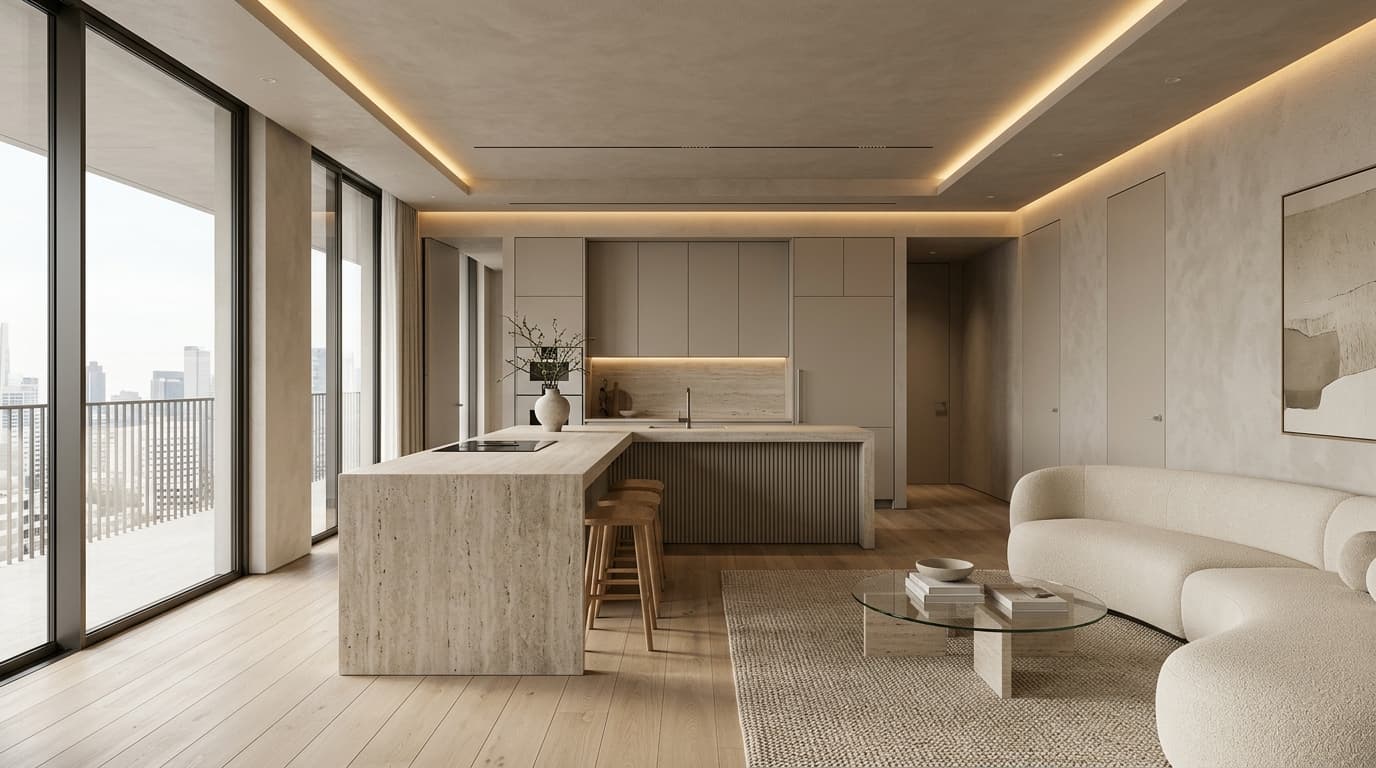
Quiet Luxury in Home Renovation 2026: How to Design a High-End Interior Without Gaudy Flash
The complete expert guide to the Quiet Luxury (Stealth Wealth) interior trend in 2026. Concealed engineering, tactile natural materials, architectural lighting, shadow gaps, and a smart budgeting matrix.
The days when wealth was signaled by polished faux-gold marble slabs, oversized crystal chandeliers, and ornate plaster moldings are officially over. In 2026, global interior design is experiencing a fundamental shift: conspicuous consumption has been replaced by Quiet Luxury (Stealth Wealth).
A truly high-end home no longer screams its price tag through flashy brand logos or glossy surfaces. It whispers — through the warmth of authentic brushed hardwood, the precision of razor-sharp shadow reveals, whisper-quiet concealed HVAC engineering, and gallery-grade architectural lighting.
In this guide, we break down the anatomy of Quiet Luxury: the core architectural detailing required, the tactile materials that define long-term quality, and how to execute this aesthetic in a modern apartment or house without overpaying for hollow prestige.
1. The Stealth Wealth Philosophy: Why Great Design Whispers
The concept of Quiet Luxury originated in high fashion, but by 2026 it has become the gold standard in residential architecture and renovation. It is anchored in four core principles:
- Zero Fake Imitations. A pure, matte mineral wash with subtle natural variation beats glossy faux-marble porcelain or vinyl prints every single time.
- Restrained Architectural Geometry. Monolithic geometric masses — massive honed stone kitchen islands, seamless wall paneling, and floor-to-ceiling built-in millwork.
- Tactile Diversity. The interior must invite touch: velvety lime plaster (Calce), open-grain brushed walnut, honed porous travertine, natural unbleached linen, and heavy wool bouclé.
- Acoustic and Environmental Wellness. Solid acoustic isolation, continuous fresh filtered airflow, and balanced indoor humidity are the invisible hallmarks of true luxury living.
Note
The Golden Rule of Quiet Luxury: A home feels luxurious not because of a single showy centerpiece, but because of the harmonious unity of the entire envelope, flawless joint intersections, and clean geometric sightlines.
2. Architectural Detailing: The Joints That Define Premium Craftsmanship
Over 80% of a luxury interior’s impact is determined during the framing, rough electrical, and plastering stages. Architectural joints are the ultimate tell of project quality.
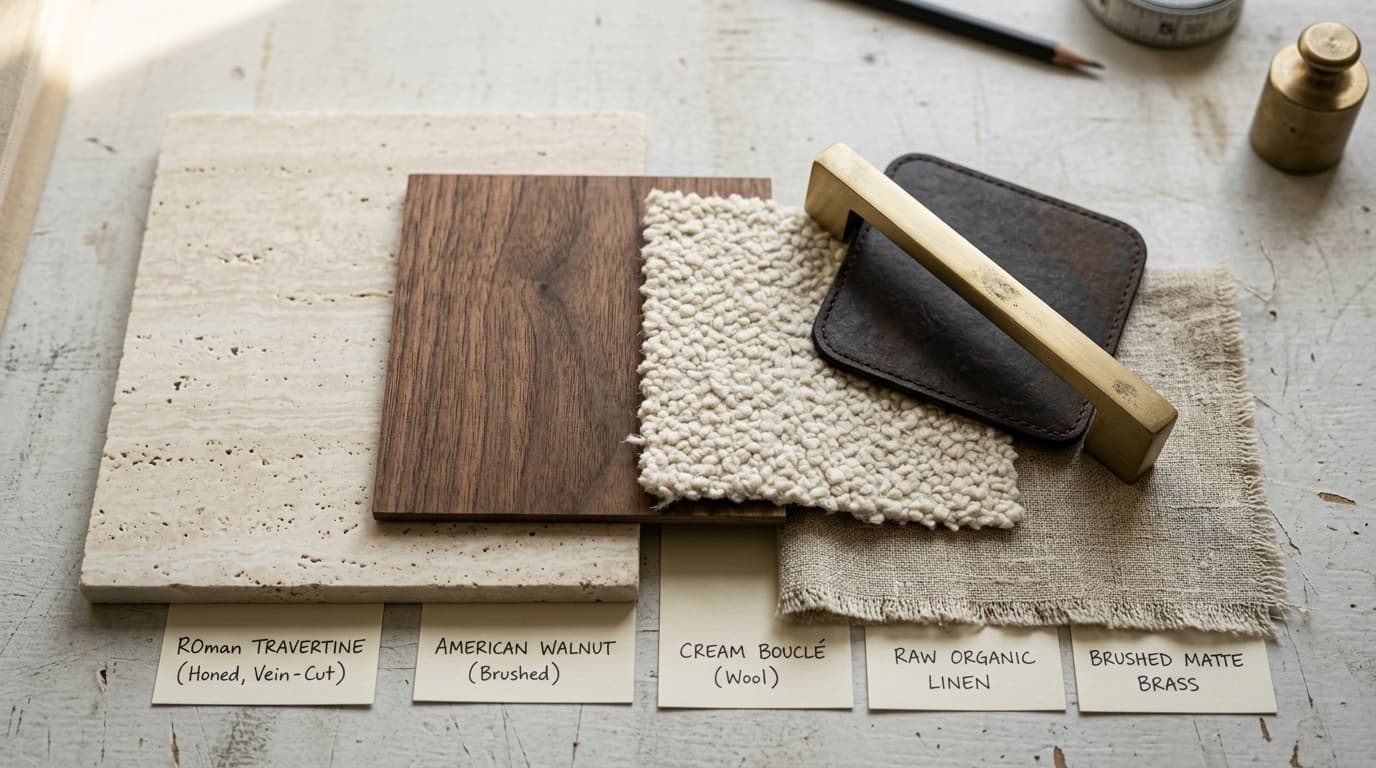
Full-Height Concealed Doors (Floor-to-Ceiling)
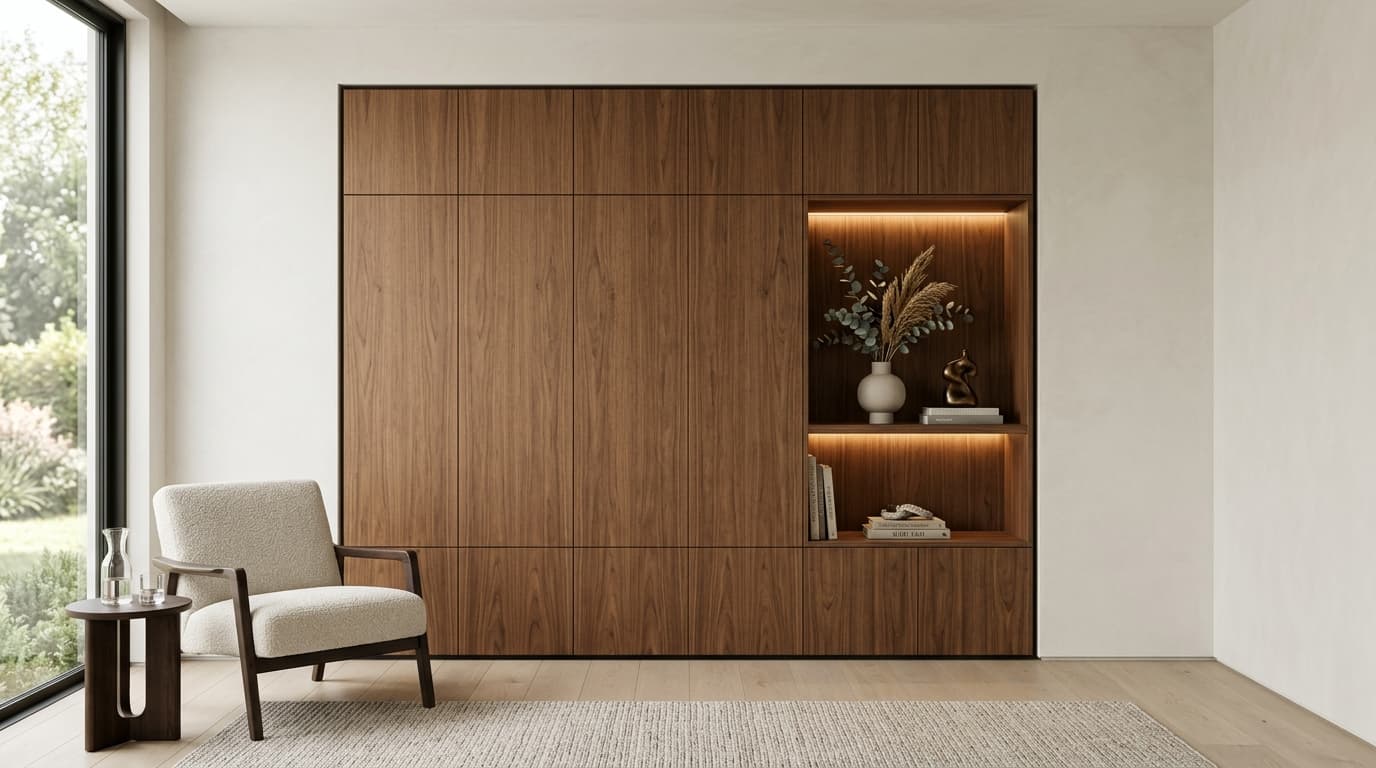
Standard 6 ft 8 in (2032 mm) interior doors with surface-mounted decorative casing visually fragment wall planes and make ceilings feel lower. Quiet Luxury relies on concealed-frame doors (Invisible Doors) that span the entire room height — 9 to 10 ft (2700–3000 mm). The door leaf is finished in the exact same wall plaster or bookmatched wood veneer, seamlessly integrating into the wall architecture.
Shadow Reveals and Micro-Baseboards
Instead of bulky baseboards and crown moldings, architects use precision aluminum shadow reveal profiles (Fry Reglet, Trim-Tex Architectural Reveal, or EuroKraab). They create a crisp recess of 3/8 to 5/8 inch (10–15 mm) along the floor and ceiling perimeter. Walls appear to float effortlessly over the floor.
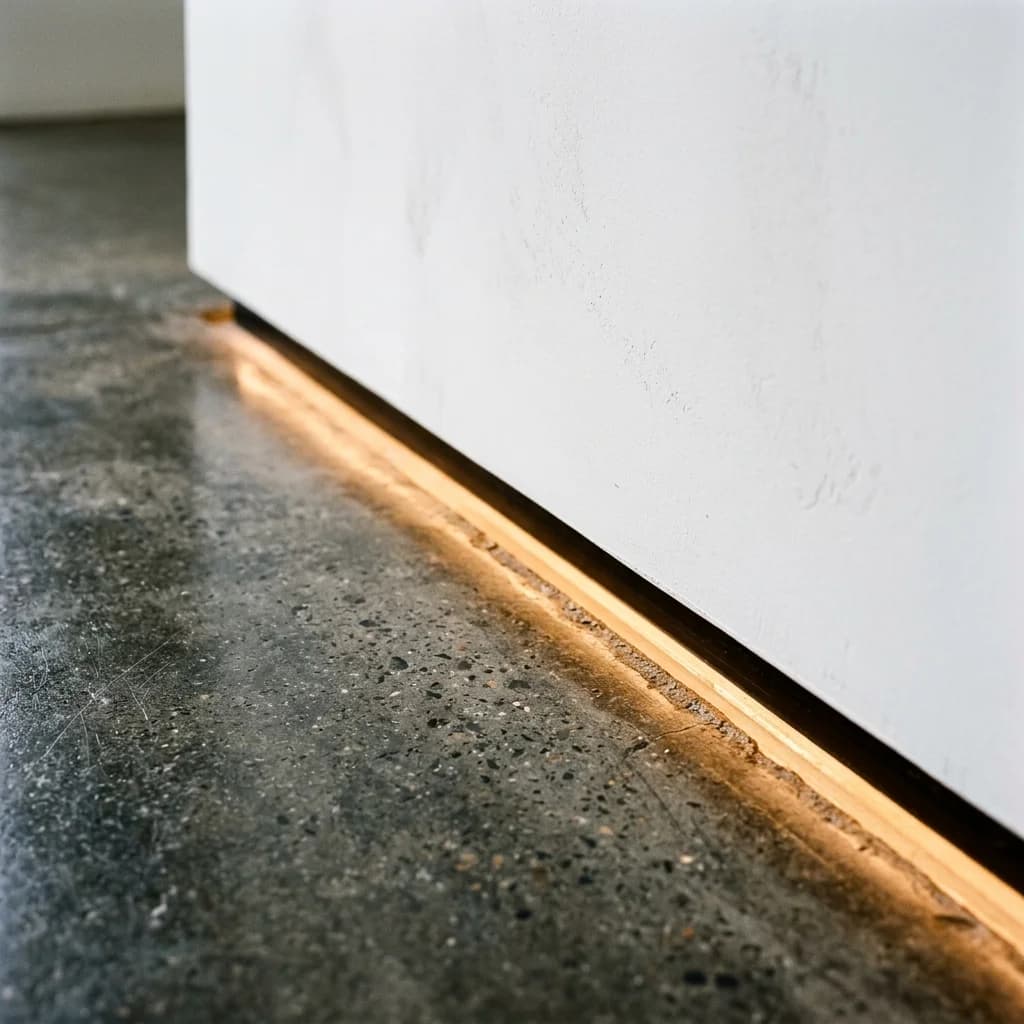
Warning
Tolerance Requirement for Contractors: Installing shadow reveals requires strict wall flatness with a deviation of no more than 1/16 in per 6 ft (1 mm per 2 m) according to DIN 18202 and Level 5 Drywall standards. If your contractor plasters uneven walls, a shadow gap will act like a spotlight highlighting every imperfection.
3. Materials and Tactility: Honed Authenticity Over Gloss
Quiet Luxury prioritizes living materials that age gracefully, developing an authentic patina rather than deteriorating like synthetic laminate.
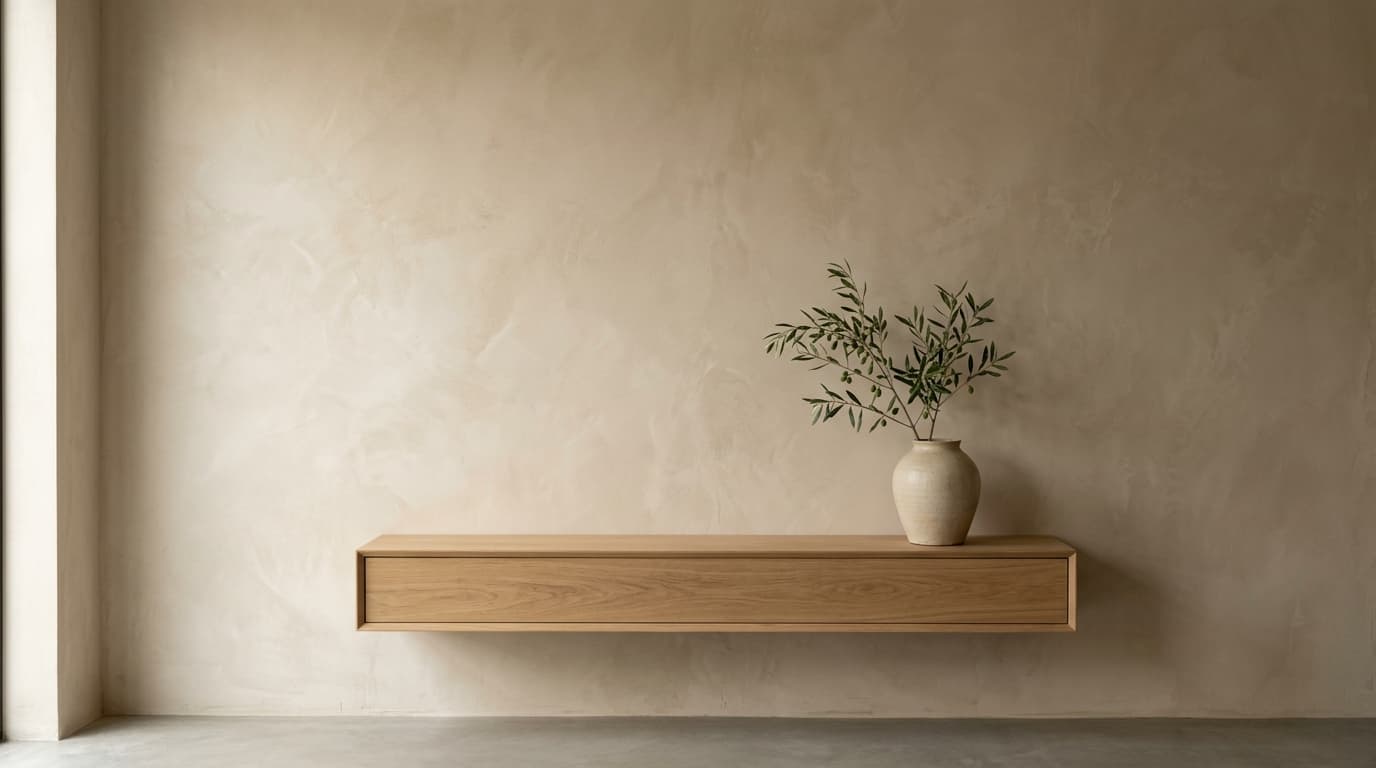
Essential Material Palette:
- Honed and Unfilled Natural Stone: Roman travertine, Portuguese limestone, sandstone, and matte quartzite with honed or tumbled finishes, replacing high-gloss polished marble.
- Warm Open-Grain Hardwoods: American walnut, rift-sawn white oak, and ash. Sealed with ultra-matte open-pore lacquer or hardwax oil (Rubio Monocoat / Osmo) that preserves the wood grain's tactile warmth.
- Mineral Plasters (Calce / Marmorino): Breathable lime and clay plasters that absorb glare and regulate ambient indoor humidity.
- Patinated Metals: Brushed unlacquered brass, burnished bronze, and gunmetal. No mirror-finish chrome.
- Organic Textiles: 100% heavy-drape washed linen, wool bouclé, textured raw cotton, and cashmere throws.
4. Architectural Lighting: Multi-Layered Ambiance Over Central Fixtures
In 2026, high-end lighting design sculpts space and flatters materials rather than merely flooding the floor with harsh lumens.
Core Lighting Principles of Quiet Luxury:
- Eliminate the Solitary Central Fixture: A single chandelier in the middle of the room casts flat, unflattering shadows into corners.
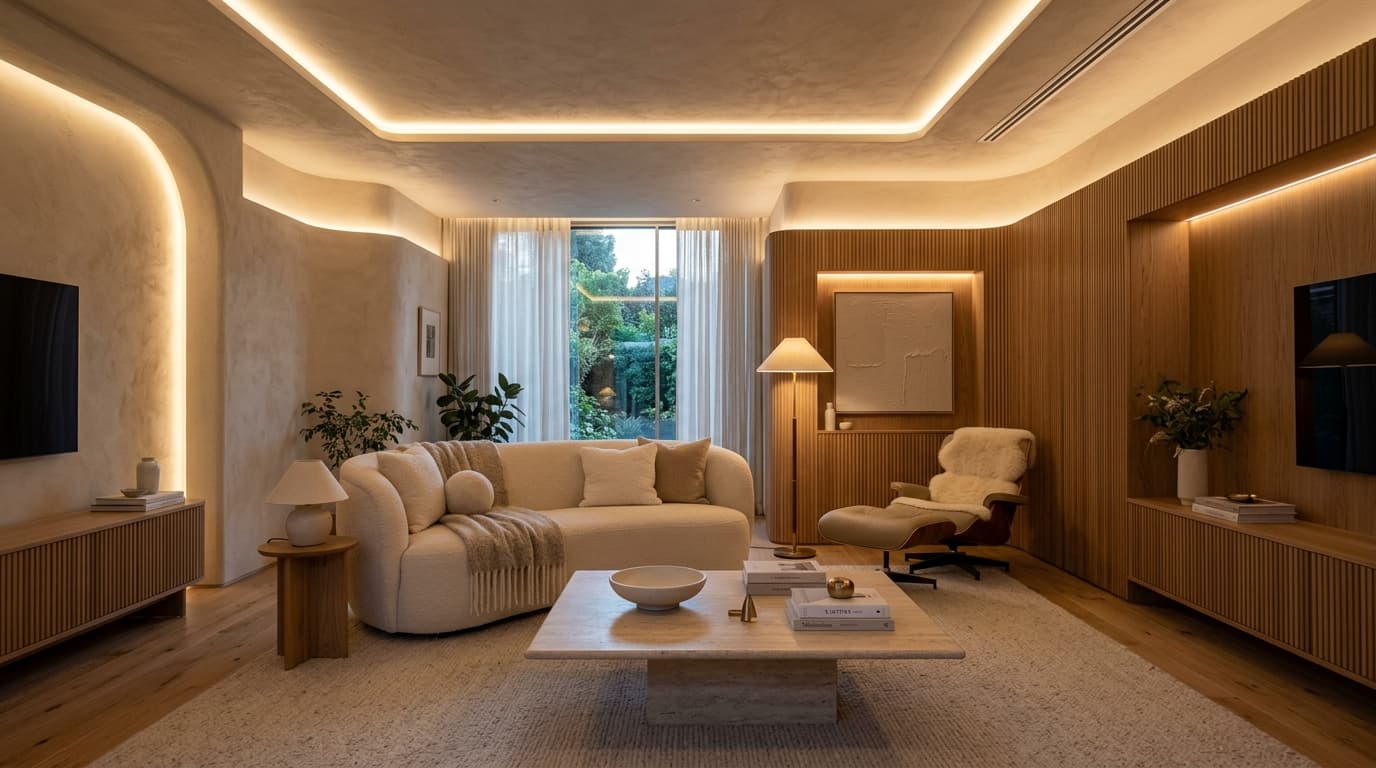
- Concealed Indirect Light (Cove Lighting): High-density LED strips hidden in architectural coves graze ceilings and walls, producing glare-free ambient illumination.
- High Color Rendering Index (CRI ≥ 95 / Ra 95): Cheap LED chips distort natural wood and stone undertones into sickly greenish-gray hues. High-CRI emitters render subtle earthy palettes authentically.
- Warm Color Temperature (2700K – 3000K): Cozy, relaxing warm-white tones for living areas and bedrooms. Neutral 3500K–4000K is reserved for task zones and vanities.
- Texture Grazing (Grazing Light): Recessed micro-spots placed 4 to 6 in (100–150 mm) from textured plaster or fluted wood walls bring out tactile depth.
5. Concealed MEP Engineering: The Inaudible Luxury
True luxury is measured by what you do not see or hear:
- Concealed Slot Diffusers: Bulky plastic AC grilles are replaced by architectural linear slot diffusers integrated directly into drywall coves or ceiling reveals.
- Concealed-Valve Plumbing: Wall-mounted basin faucets with in-wall rough-in boxes, concealed cisterns, and tile-insert linear shower drains with zero exposed stainless trim.
- Acoustic Decoupling: Soundproofed wastewater drainage pipes and resilient sound-isolation clips on shared partition walls (targeting STC 55–60 / Rw >= 54–57 dB under ASTM E90 and DIN 4109).
- Flush Access Panels: Magnetic push-to-open flush drywall doors for plumbing manifolds, maintaining clean unblemished walls.
Comparison: Flashy Glamour vs Quiet Luxury 2026
Design Evolution: Outdated Flash vs 2026 Quiet Luxury Standards
| Feature | Outdated Flash (Bling / Glamour)Not recommended | Quiet Luxury (Stealth Wealth 2026)Best choice |
|---|---|---|
| Core Focus | Logo brands, glossy marble, gold accents | Rich textures, flush geometry, acoustic calm |
| Doors & Trim | 6'8" doors with surface casing, plastic baseboards | Floor-to-ceiling invisible doors, shadow reveals |
| Lighting Strategy | Center chandelier, blinding downlights | Concealed cove lighting, CRI 95+, 2700K dimming |
| Wall Finishes | Patterned shiny wallpaper, polished tile | Ultra-matte mineral lime plaster, wood veneer |
| HVAC & Engineering | Visible wall mini-splits, plastic access hatches | Concealed linear slot diffusers, quiet plumbing |
| Aesthetic Longevity | 3–5 years (dates quickly and tires the eye) | 15–25+ years (timeless architectural baseline) |
The Budget Matrix: Where to Invest vs Where to Save
Crafting a Quiet Luxury home does not require an unlimited budget. It requires disciplined resource allocation:
❌ Non-Negotiable Investments (Never Cut Corners Here):
- Wall Framing & Level 5 Plastering: Strict 90-degree (90°) corners in all millwork zones and bathrooms. Without plumb walls, concealed doors and built-in wardrobes will fail to align flush.
- Rough Plumbing and Electrical Infrastructure: Cross-linked polyethylene (PEX-a) supply lines, manifold distribution, whole-home surge suppression, and smart leak detection.
- Subframe Extrusions & Hidden Door Cassettes: Heavy-gauge anodized aluminum subframes guarantee decades of sag-free door operation.
- Commercial-Grade LED Engines & Drivers: High-CRI drivers with flicker-free 0–10V or DALI dimming prevent annoying buzzing and color drift.
✅ Smart Cost-Saving Strategies (Zero Aesthetic Compromise):
- Veneer as Targeted Architectural Accents: Rather than cladding entire rooms in walnut paneling, use bespoke millwork on one hero focal wall (e.g., media wall or bedroom headboard niche) and finish adjacent walls in matte mineral paint.
- Matte Large-Format Porcelain Over Raw Marble Slabs: High-definition 48 x 110 in (1200 x 2780 mm) honed porcelain slabs cost one-fourth the price of natural Calacatta stone while offering zero staining and zero maintenance.
- Local Custom Cabinetry Over Imported Italian Showrooms: Working directly with skilled local architectural millworkers using Austrian or German hardware (Blum, Hafele, Grass) delivers identical flush tolerances at 40–50% lower cost.
FAQ
Why has Quiet Luxury dominated 2026 design trends?
Modern homeowners are overwhelmed by digital noise, fast-trend consumerism, and sensory overload. In 2026, the home is treated as a personal sanctuary. Tactile natural textures, warm organic tones, and the absence of visual clutter allow the nervous system to truly decompress.
Can Quiet Luxury be executed in compact apartments (450–700 sq ft / 40–65 sq m)?
Absolutely. In fact, small apartments benefit the most. Floor-to-ceiling concealed doors, perimeter shadow reveals, and unbroken monochrome color palettes eliminate visual friction, making compact spaces feel 20% larger.
What is the ideal base wall paint color for Quiet Luxury?
Complex warm neutrals: Warm Alabaster, unbleached linen greige, warm chalk, and muted almond milk. Avoid stark, cold blue-undertone clinical whites.
Summary
Quiet Luxury in 2026 is the ultimate victory of substance over superficial showmanship. It is an architectural discipline that prioritizes how a space feels, sounds, and functions on a quiet Tuesday evening over how it photographs on social media.
By investing in precise geometric joints, authentic tactile materials, and concealed comfort engineering, you create a timeless sanctuary that gains emotional and financial value with every passing year.
Turn the idea into a working budget
Start with the main calculator, then use the two tools that most naturally follow this article.
This piece is grounded in current trends, room-by-room practice, and decisions that translate into real remodel work.