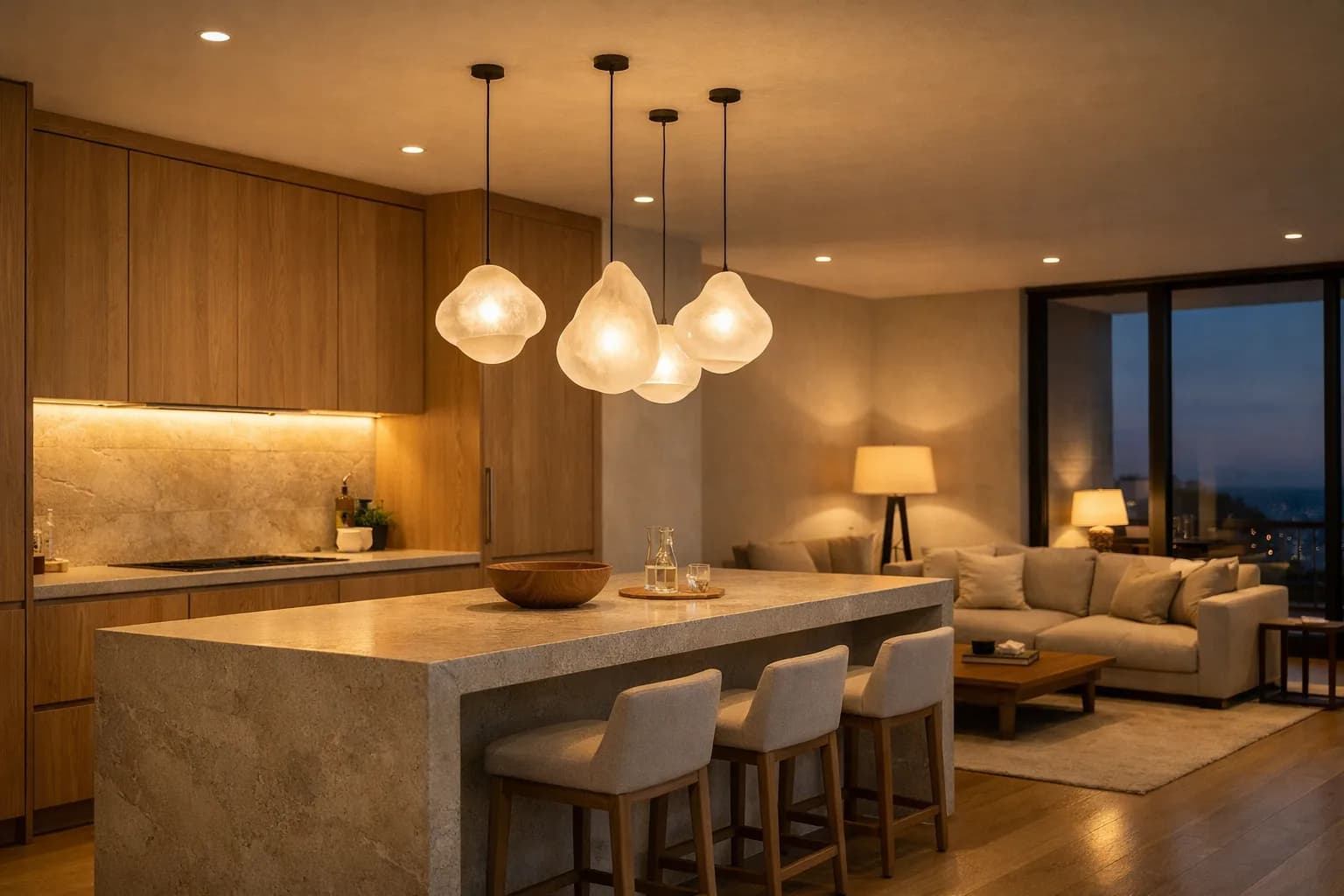
Lighting Trends 2026: 8 Home Lighting Ideas to Plan Before a Remodel
The top lighting trends 2026 for kitchens, bedrooms, bathrooms, and living rooms: layered lighting, warm dimmable light, hidden cabinet lighting, smarter controls, and common remodel mistakes to avoid.
Lighting Trends 2026: 8 Home Lighting Ideas to Plan Before a Remodel
For years, lighting was treated like a finishing touch. Walls were painted, cabinets were installed, furniture was chosen, and only then came the question: what fixture should go in the middle of the room? In 2026, that approach feels dated.
Lighting is no longer just decoration at the end of a project. It shapes how colors read, how calm a bedroom feels at night, how usable a kitchen is during everyday cooking, how storage functions, and how emotionally comfortable a home feels from morning to evening.
That shift is visible across current design reporting and industry research. The best homes right now are not just brighter or more expensive-looking. They are lit with more intention. The core idea of 2026 is simple: lighting should be layered, adjustable, and closely tied to how people actually live.
Why lighting is now a core part of remodeling
Fresh kitchen and bath reporting from the National Kitchen and Bath Association, together with current Houzz research and major design coverage, points in the same direction: lighting has moved from being a technical line item to being part of the lived architecture of the home.
That makes sense. Homes now do more at once:
- kitchens often double as social spaces;
- bedrooms are expected to support digital recovery and rest;
- bathrooms are increasingly tied to wellness routines;
- storage has to work harder and more precisely;
- homeowners want calmer, more flexible spaces instead of purely decorative ones.
In that kind of interior, lighting cannot be improvised at the end. It either supports the space or actively undermines it.
1. A single overhead fixture is no longer enough
The clearest 2026 shift is the move away from relying on one central ceiling light for everything. That kind of lighting may brighten a room, but it rarely creates depth, comfort, or good zoning. It often flattens textures, produces harsh evening glare, and makes the whole room feel less intentional.
The modern standard is layered lighting:
- ambient light for overall visibility;
- task light for work zones;
- accent light for shelves, art, texture, and architecture;
- low, warm light for evenings and slower routines.
In practical terms, that means the kitchen needs more than ceiling downlights. It needs real counter lighting. A bedroom works better with bedside lamps or sconces in addition to overhead light. A living room almost always benefits from a reading floor lamp and a softer evening layer. A bathroom needs proper mirror lighting, not just a bright ceiling fixture.
This is one of the defining features of contemporary lighting: not more fixtures for the sake of it, but better placement based on actual use.
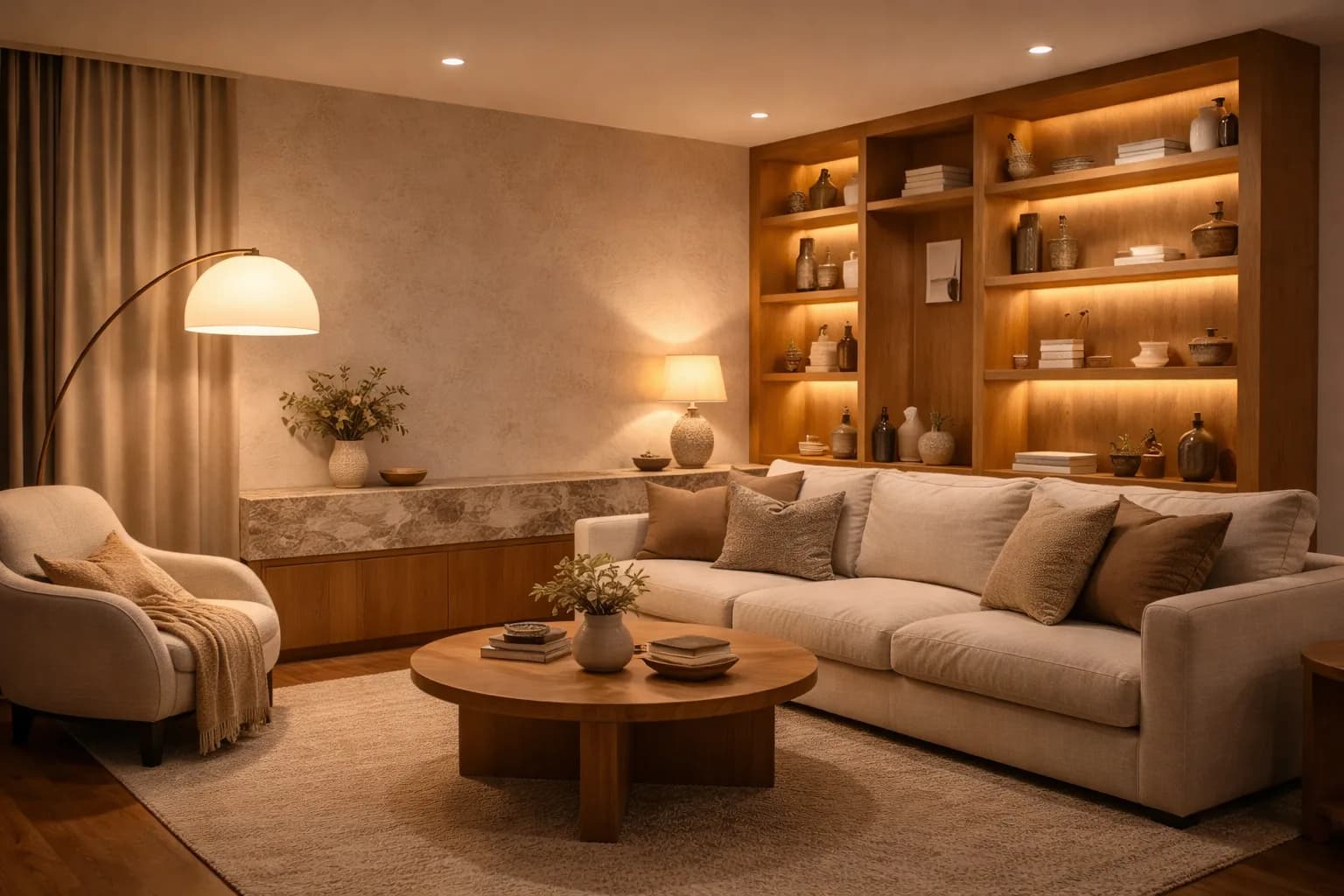
2. Warm, dimmable light matters more than raw brightness
For years, many homeowners focused mainly on brightness. But in 2026, quality beats intensity. A well-designed room can still look cold, flat, and slightly cheap if the lighting is too harsh or too cool.
The strongest residential direction now is toward warm, comfortable lighting that can shift with the time of day. That is especially important in bedrooms, living rooms, and bathrooms, where atmosphere matters just as much as visibility.
What tends to work best:
- bulbs around 2700 kelvin for evening comfort;
- dimmers where mood genuinely changes throughout the day;
- softer shades and diffused fixtures instead of exposed glare;
- multiple moderate sources instead of one overpowering one.
In many homes, a dimmer and better bedside lighting will improve daily life more than an expensive statement chandelier.
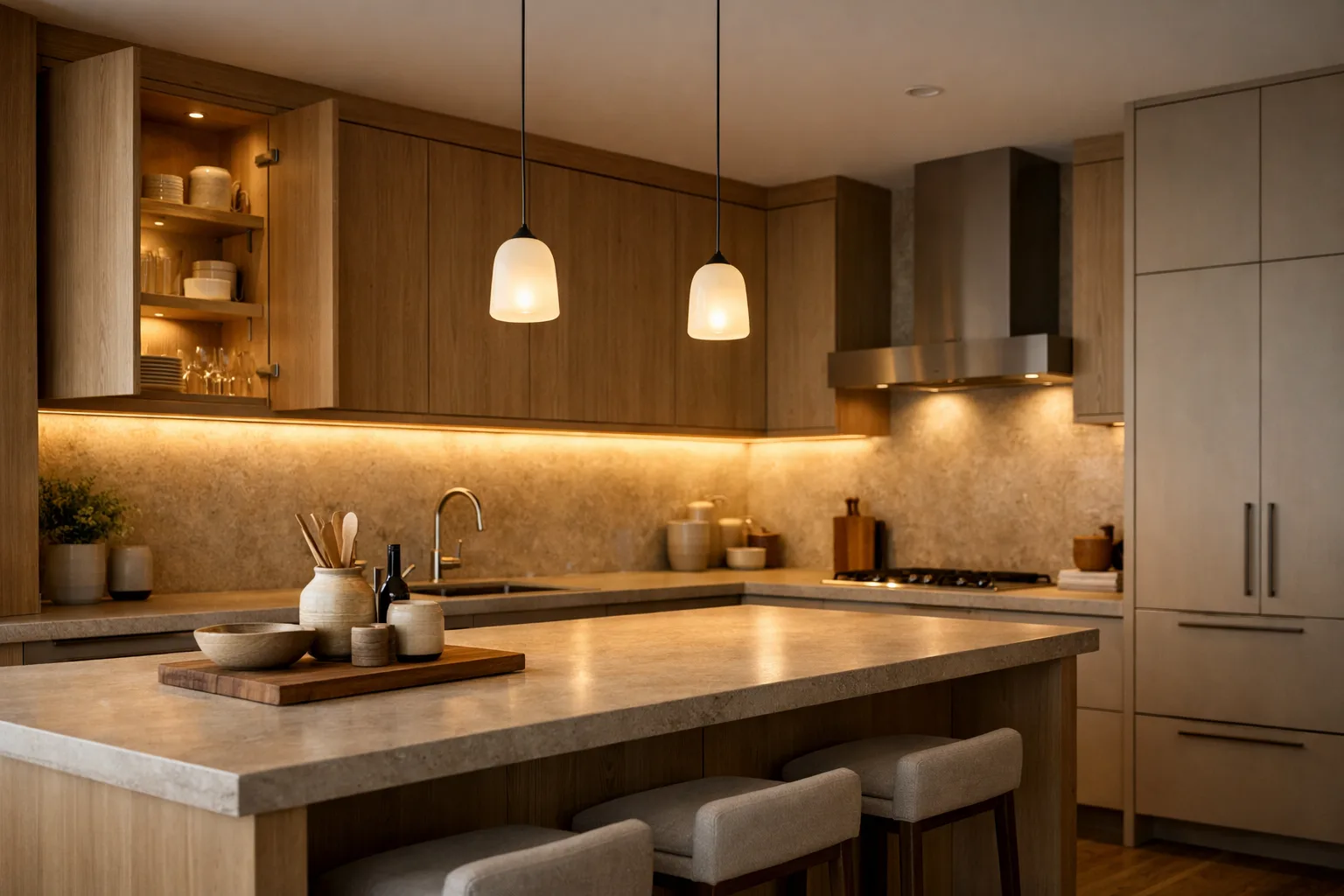
3. Hidden task lighting is becoming a baseline feature
If there is one especially practical 2026 trend, it is concealed functional lighting. It may be less glamorous than sculptural pendant lights, but it is often what makes a home feel professionally planned.
This includes:
- under-cabinet kitchen lighting;
- interior cabinet lighting;
- closet and pantry lighting;
- niche lighting;
- soft toe-kick lighting;
- floor-level or path lighting for nighttime movement.
The National Kitchen and Bath Association's 2026 kitchen reporting highlights lighting under upper cabinets and lighting inside cabinets as some of the strongest current directions, and that reflects a broader change in expectations. Homeowners want beauty, but they also want precision. They want to see the work surface clearly, find items in a cabinet without flooding the whole room with light, and move through the house more calmly after dark.
Hidden light also adds a quiet sense of luxury. It makes rooms feel deeper, calmer, and more complete.
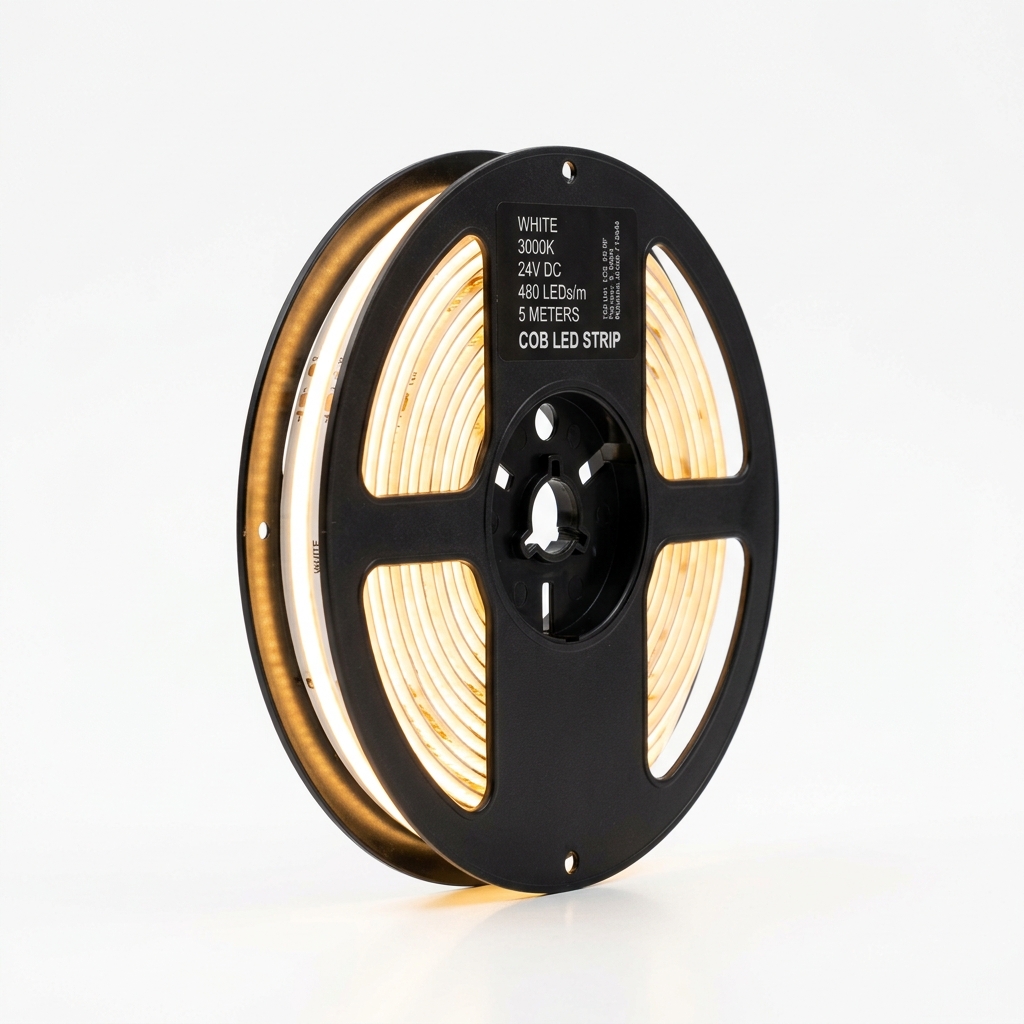
High-Density 24V COB LED Strip Light (Warm White)
Continuous, dotless illumination with CRI 90+ high color fidelity. The modern standard for under-cabinet task light, floating ceiling coves, and shadow gap baseboard accents.
View on Amazon4. Decorative fixtures are becoming sculptural again
At the other end of the spectrum, decorative lighting is having a strong moment too. In 2026, a fixture is often treated as an object with visual weight, not only as a technical necessity.
Current collections and design coverage point to:
- more expressive silhouettes;
- softer asymmetry;
- larger scale;
- clustered pendants;
- fixture forms that feel more artistic and less generic.
But there is an important distinction here. The trend is not about buying the boldest possible light. It is about choosing a fixture that works with the room’s proportions and purpose. A dramatic pendant cannot replace proper task light in a kitchen. A massive bedroom fixture can overwhelm a low ceiling. A sculptural dining light should anchor the composition, not fight with everything else in the room.
The best statement lighting in 2026 feels intentional rather than theatrical.
5. Lighting materials are getting softer, warmer, and more tactile
Another strong direction this year is materiality. Lighting is becoming less glossy and less sterile. Designers are leaning toward finishes that feel warmer, more grounded, and more human.
Especially current materials include:
- matte glass;
- fabric shades;
- ceramic;
- plaster-like finishes;
- alabaster;
- aged metals;
- warmer brass and softer nickel tones.
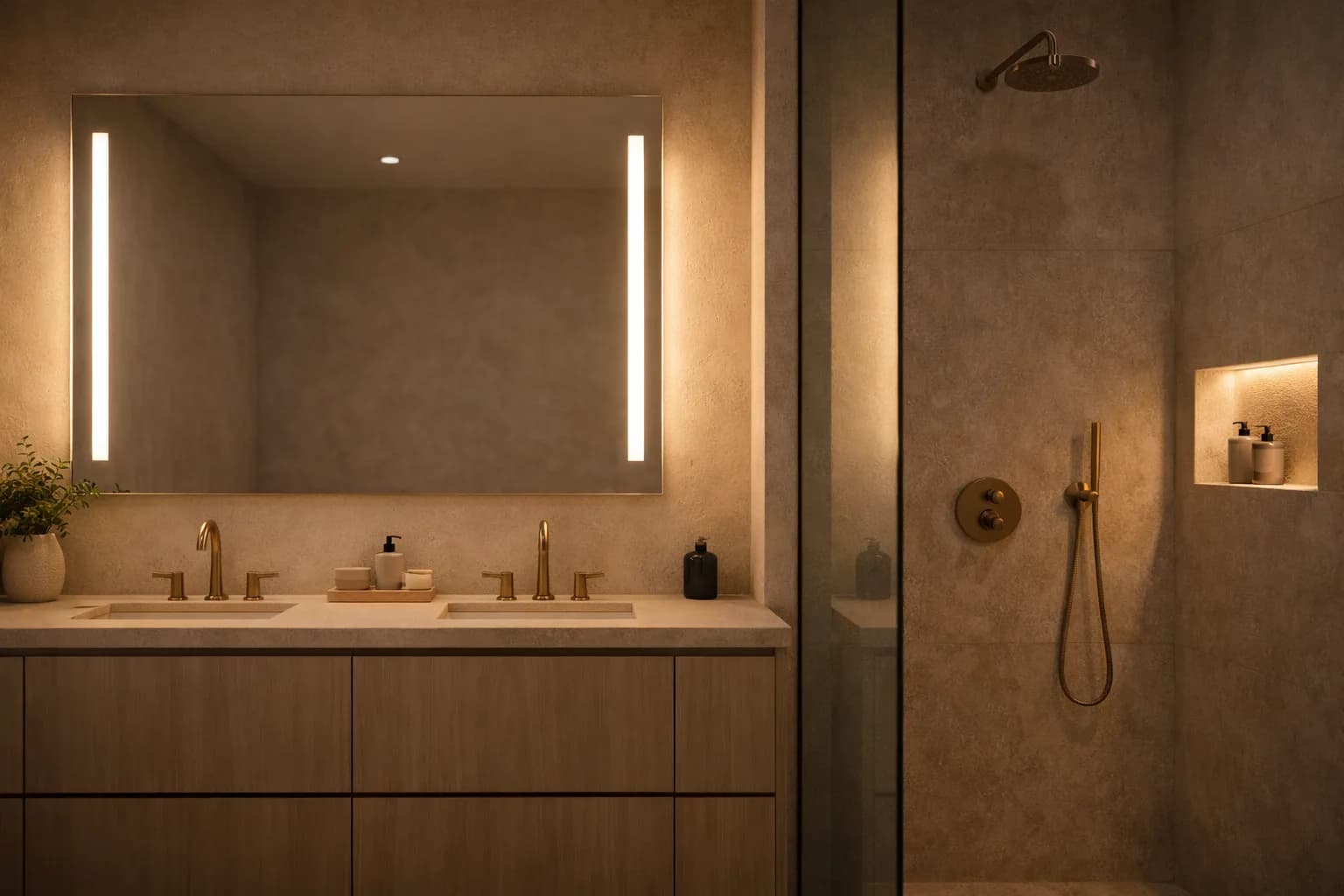
This ties into the larger move toward tactility in interiors. Even a minimal room feels richer when the lighting brings softness and texture instead of cold shine. This is especially effective in bedrooms, entryways, dining areas, and bathrooms, where lighting is experienced close to the eye and contributes directly to mood.
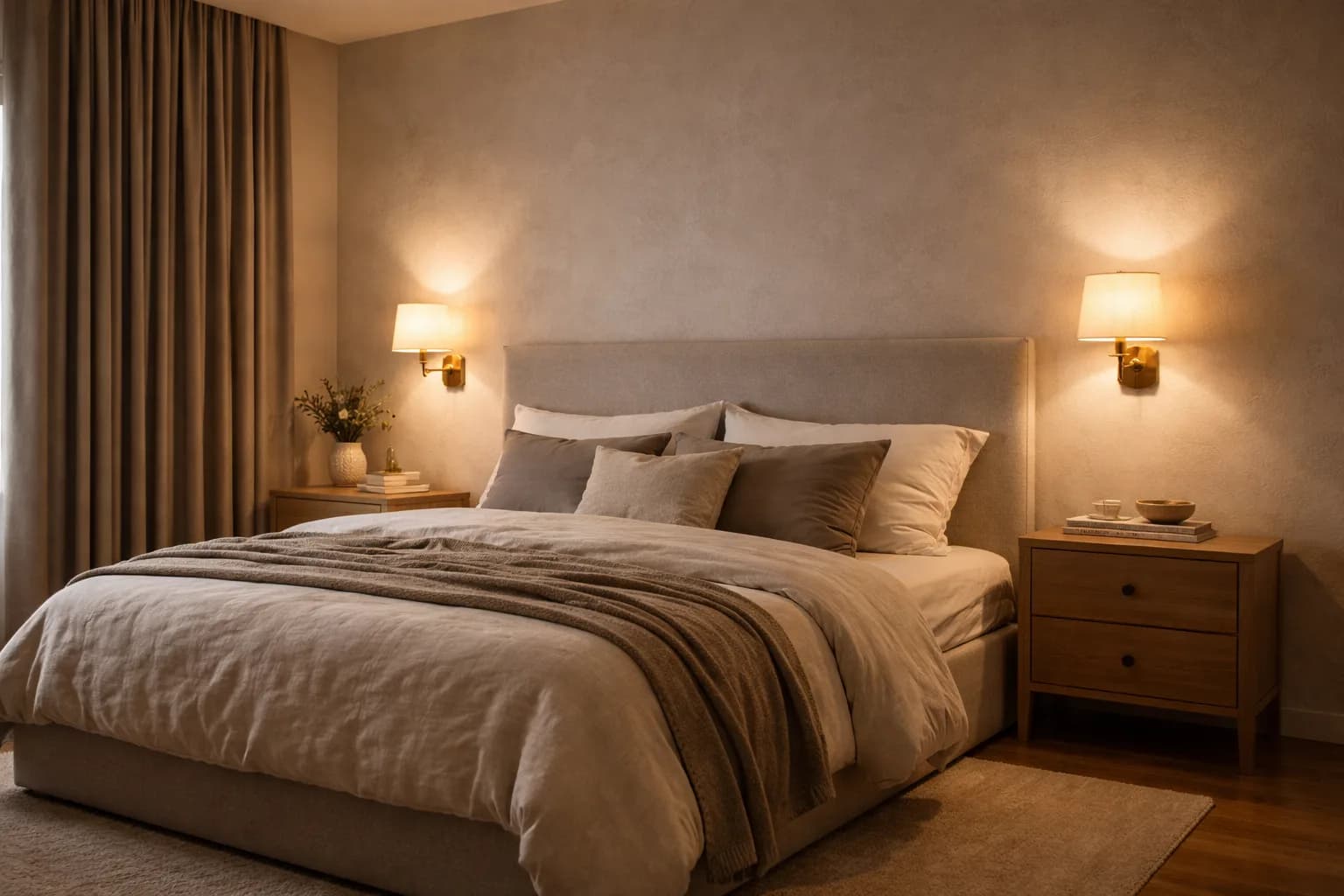
6. Bedrooms are moving toward quieter lighting and lower-tech routines
One of the clearest editorial signals of 2026 is the rise of a quieter, lower-tech bedroom. The point is not nostalgia for its own sake. It is a response to overstimulation: fewer visible devices, less harsh light, less visual noise, and more tactile comfort at night.
That affects lighting in obvious ways:
- softer bedside lighting instead of relying on one ceiling source;
- warm task light for reading;
- dimmable evening light;
- light-blocking drapery and stronger control over atmosphere;
- less exposed tech and visual noise around the bed.
A bedroom in 2026 is not supposed to feel staged. It should help you wind down. That means lighting should support the room’s emotional function, not just its appearance.
7. Smart lighting is useful when it removes friction
Technology remains part of the 2026 conversation, but the best smart lighting now is almost invisible. It works not because it feels futuristic, but because it makes repetitive moments easier.
The most useful places for smarter lighting are:
- night routes through the home;
- kitchen-living spaces that switch between work and relaxation;
- closets and cabinets;
- bedside routines;
- bathrooms with softer late-evening settings.
Bad smart lighting turns simple actions into a technical process. Good smart lighting fades into the background and quietly improves comfort. That is why the best approach is selective automation: solve a few real daily problems instead of trying to automate everything.
8. Lighting now plays a bigger role in comfort and safety
Lighting in 2026 is not only about style. It is also closely tied to ease of movement and low-stress living. This is especially clear in bathrooms, hallways, and bedrooms, where better lighting supports safer and calmer routines.
The most useful solutions include:
- subtle floor-level lighting in circulation zones;
- clear, flattering mirror lighting without glare;
- intuitive dimming;
- dedicated night settings;
- storage lighting that avoids turning on an entire room.
These choices do not make a home feel clinical. They make it feel mature, thoughtful, and easier to live in.
How to plan lighting for the kitchen, bedroom, bathroom, and living room
Kitchen lighting
In 2026, a kitchen almost always benefits from at least three lighting layers:
- ambient ceiling light;
- task light over work surfaces;
- a decorative or mood layer over an island, table, or display area.
Under-cabinet lighting and interior cabinet lighting are especially valuable because they make the room more usable and more refined at the same time.
Bedroom lighting
The priority here is softness, not intensity. A ceiling light still matters, but it should not be the only source. Bedrooms work better with warm bedside lighting, reading-oriented task light, and a clear evening mode.
Bathroom lighting
The most common mistake is relying on overhead light alone. A bathroom needs better facial lighting around the mirror, plus a softer secondary mode for late-night use.
Living room lighting
Living rooms improve dramatically when lighting is divided by purpose: a reading lamp, a gentle background glow, and some level of accent lighting for shelves, art, or texture.
5 mistakes that instantly age a space
The first mistake is relying on one ceiling light for the whole room.
The second is choosing lighting that is too cool for everyday living spaces.
The third is installing a beautiful decorative fixture without proper task lighting nearby.
The fourth is failing to plan storage and work-zone lighting during the remodel.
The fifth is automating everything instead of just the lighting scenes that genuinely improve daily life.
Avoiding these five issues already makes a home feel more current, even before styling.
What to decide before construction starts
Before finalizing your electrical plan, it helps to work through a simple checklist:
- Define how each room should function in the morning, day, evening, and night.
- Separate ambient lighting from task and mood lighting.
- Decide where dimmers would meaningfully improve comfort.
- Plan cabinet, closet, and circulation lighting early.
- Identify where you want a decorative lighting moment and where you need quiet background light.
- Use a lighting calculator to estimate baseline brightness instead of guessing.
Final takeaway
Lighting in 2026 is not about one fashionable fixture and it is not about visual drama for its own sake. The strongest lighting today feels more human. It helps people cook, rest, move, work, read, and shift into a calmer evening rhythm.
That is why the best remodel is not the one with the most lighting. It is the one with the clearest lighting logic. Morning should feel easy. Daytime should feel functional. Evening should feel warm and slower. Night should feel calm and intuitive.
If you are planning a home or apartment remodel this year, treat lighting as part of the core project from the start. Not as a finishing accessory, but as a system that quietly shapes how the home works every day. That is what separates a merely updated interior from one that feels truly resolved and genuinely current.
Sources Behind the Direction
- 2026 kitchen trends report from the National Kitchen and Bath Association
- 2026 bathroom trends report from the National Kitchen and Bath Association
- 2026 kitchen trends study in the United States from Houzz
- Eight lighting trends that will matter in 2026, according to Houzz
- The biggest lighting trends of 2026, according to Elle Decor
- Why the quieter, lower-tech bedroom is making a comeback, according to Architectural Digest
Turn the idea into a working budget
Start with the main calculator, then move into the related tools and the matching topic hub.
Budget Planner
Build a renovation budget by category, currency, and contingency reserve.
Kitchen Hub
Keep kitchen articles, tools, and the main layout, finish, and budget decisions in one place.
Open hubLighting Calculator
Work out how many lumens and fixtures a room really needs.
Calculate lightingColor Palette Generator
Build a balanced interior color palette before you commit to paint and finishes.
Build a paletteThis piece is grounded in current trends, room-by-room practice, and decisions that translate into real remodel work.