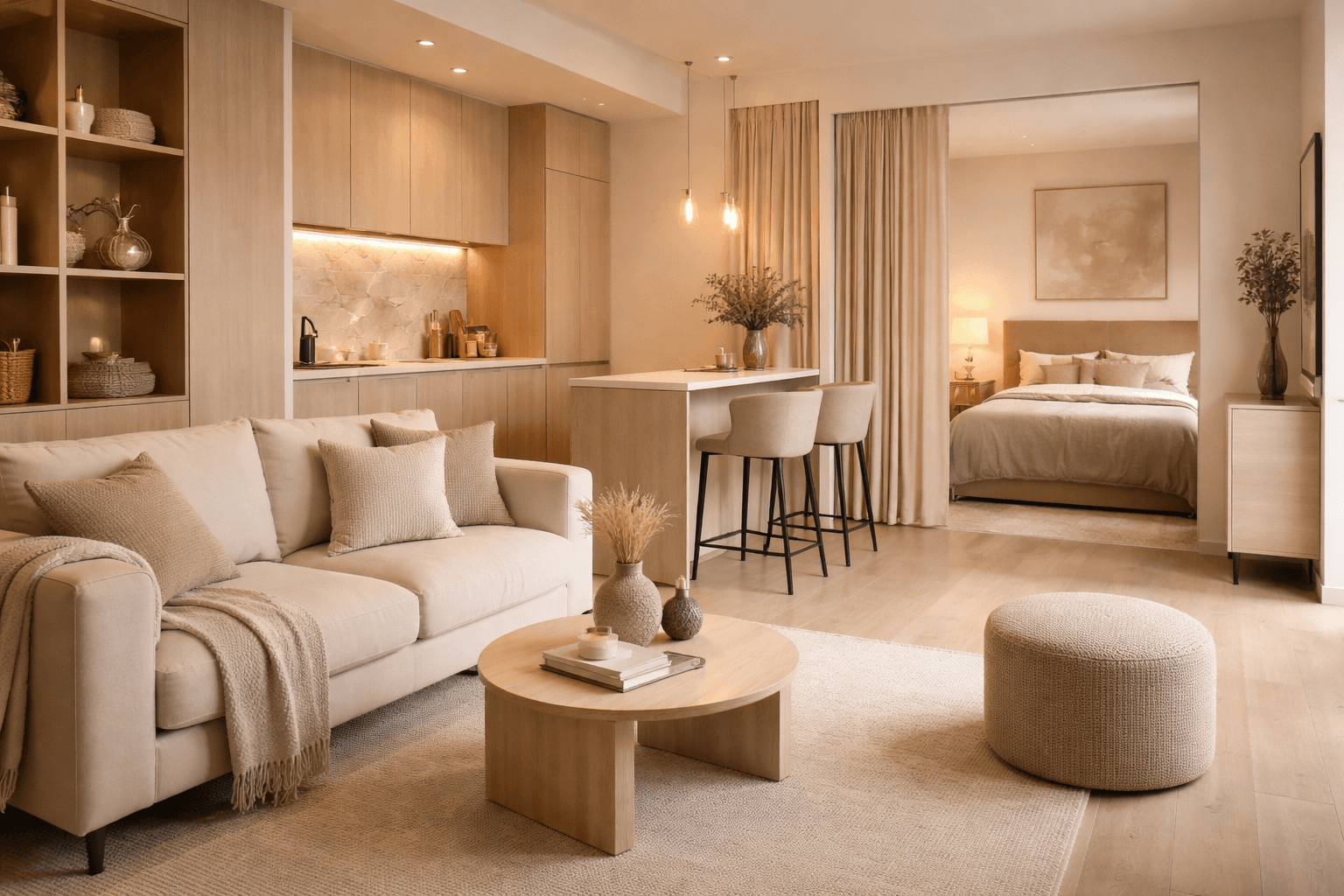
Small Apartment Trends 2026: 10 Ideas for Layout, Storage and Lighting
The small apartment trends 2026 that actually work: soft zoning, built-in storage, warm neutrals, layered lighting and furniture that reduces visual clutter.
Small Apartment Trends 2026: What Actually Works in a Studio or Compact Home
In 2026, a small apartment is no longer treated like a failed version of a larger home. The design logic is changing. Instead of trying to force every possible function into limited square footage, the strongest interiors now focus on clarity, calm and better use of space.
That means the best small apartment trends of 2026 are not about trendy gimmicks. They are about storage, zoning, lighting, a warmer palette and furniture choices that make a compact home easier to live in every single day.
1. Fully open layouts are no longer the only answer
For years, the default advice for a small apartment was simple: tear everything down and make it open. In 2026, that approach is no longer universal. A softer kind of zoning often works better.
Useful tools include:
- open shelving with transparency;
- glass partitions;
- curtains and textile dividers;
- lighting changes between zones;
- rugs and furniture placement;
- subtle shifts in material or floor treatment.
The goal is not to make the apartment feel bigger at any cost. The goal is to make it easier to read and easier to use.

Zoning with Paint Blocks? Use the Right Tape
Creating distinct zones with paint (like color blocks behind your workspace or bed) is a major trend in 2026. For clean, sharp edges without paint bleed, professionals rely on specialized painter's tape.
View on Amazon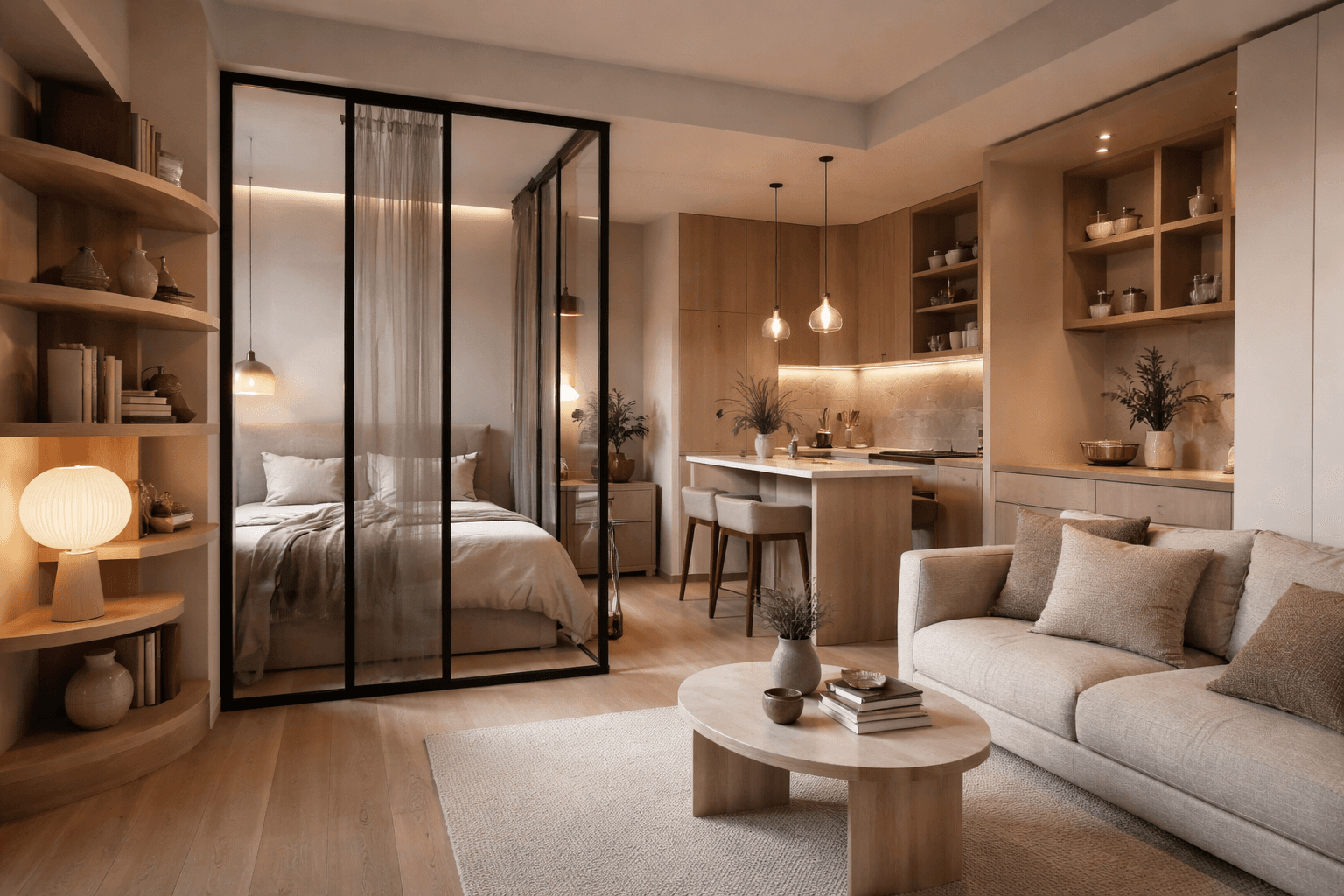
2. Built-in storage is becoming nonnegotiable
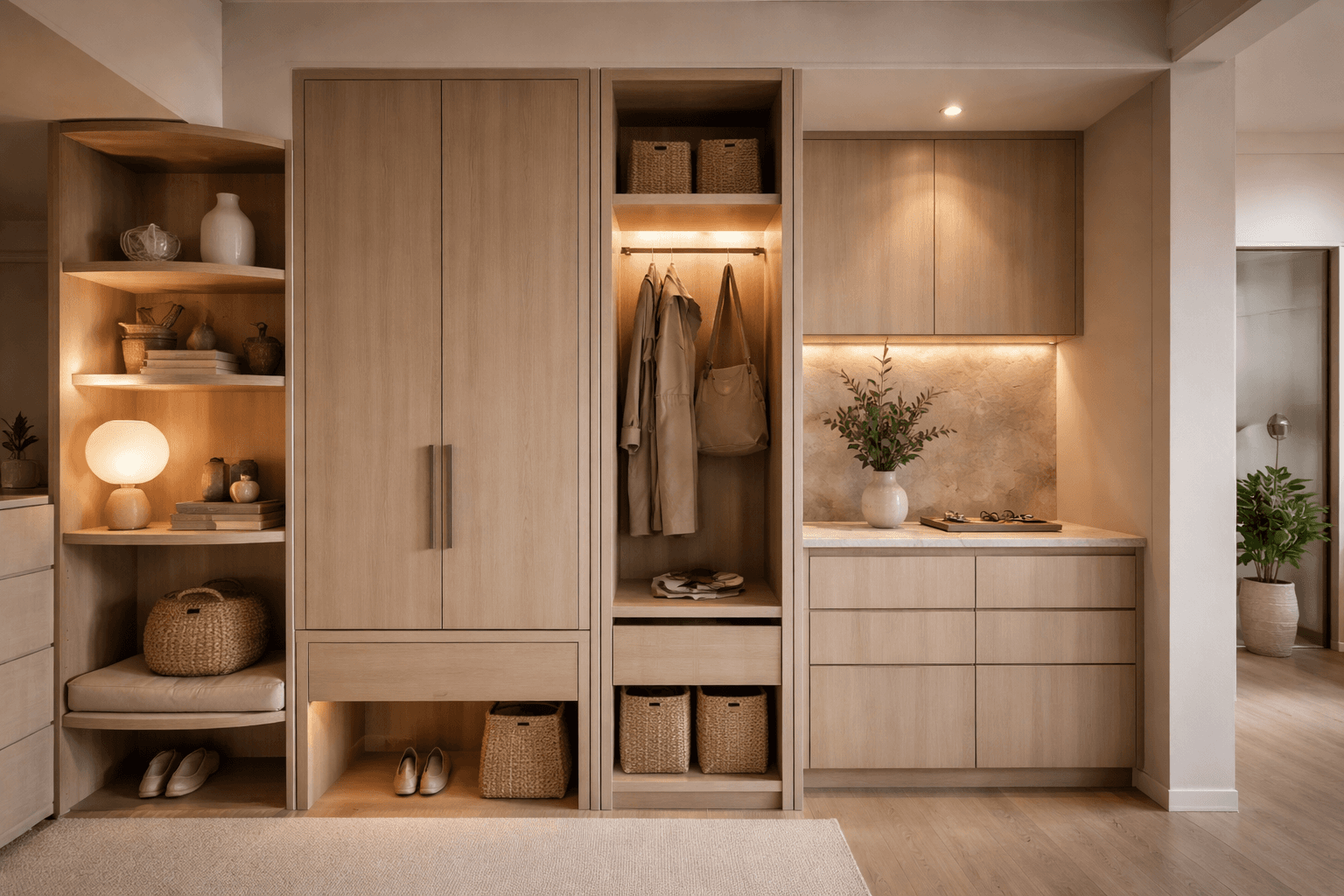
The most practical small apartment trend for 2026 is built-in, planned storage. Compact homes look stylish for about five minutes if everyday items have nowhere to go.
The best solutions are:
- full-height wardrobes;
- storage around the bed;
- built-ins around doorways;
- benches and platforms with interior volume;
- deep drawers instead of random small cabinets;
- hidden utility storage.
In real life, storage is often the difference between a calm apartment and a constant state of visual stress.
3. Visual clutter is the real enemy
One of the clearest design principles for 2026 is reducing the elements that visually fragment a small space:
- too many tiny furniture pieces;
- lots of open storage;
- random hardware and accessories;
- exposed cables and chargers;
- too many competing finishes;
- surfaces crowded with objects.
A small apartment looks more expensive when it has fewer signals competing for attention.

Conceal Messy TV and Computer Cords
Exposed cables are the quickest way to make a clean room look cluttered. Neoprene cable management sleeves gather wires behind your TV or desk into a single neat bundle, removing visual noise in seconds.
View on Amazon4. Warm neutrals are stronger than icy minimalism
Cold white and hard gray interiors are losing their grip, especially in smaller homes. In 2026, compact spaces usually look more current in a warmer palette:
- warm white;
- oatmeal;
- greige;
- sand;
- clay beige;
- muted sage;
- soft taupe.
These tones make a small apartment feel calmer and more complete. They are also easier to pair with wood, textiles and softer lighting.
5. Lighting has to work in layers
One central ceiling fixture is still one of the fastest ways to make a small apartment feel flat. In 2026, better small-space lighting usually means:
- Soft ambient light.
- Functional task lighting.
- Lower, atmospheric light for evening use.
Especially useful in compact homes:
- under-cabinet kitchen lighting;
- focused desk lighting;
- bedside or reading lights;
- shelf or closet lighting;
- dimmers;
- hidden accent lighting that adds depth.
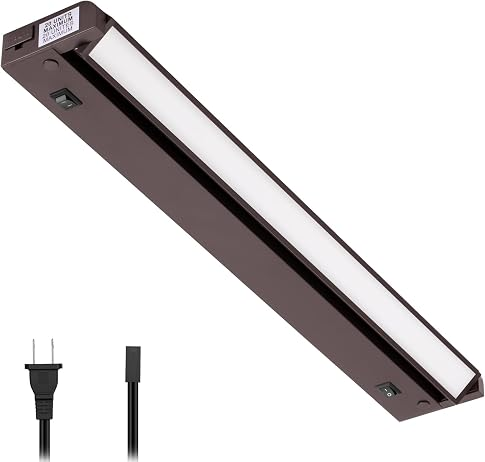
Layering Light? Start with Under-Cabinet LEDs
Adding task lighting beneath your kitchen cabinets or shelves is one of the easiest ways to create depth and eliminate shadows. GETINLIGHT LED lights offer adjustable color temperatures to perfectly match your room's vibe.
View on AmazonLighting now does a huge amount of the work that people used to expect from expensive finishes.
6. Furniture should be precise, not just tiny
There is still a myth that a small apartment always needs miniature furniture. In 2026, the better approach is different:
- fewer pieces overall;
- but each one does more;
- one good storage wall beats several random cabinets;
- one real table can be better than a gimmicky transformer;
- furniture with internal storage usually wins;
- pieces should support the way the home is actually used.
Good small-space design is about precision, not deprivation.
7. Softer forms and quieter fronts feel more current
Aggressive geometry can tire the eye quickly in a small apartment. That is why 2026 interiors often lean toward:
- rounded edges;
- cleaner cabinet fronts;
- broader, calmer surfaces;
- less ornamentation;
- matte materials and tactile textiles.
This makes the space feel more cohesive and visually quieter.
8. A work zone should be designed, not improvised
Even if someone does not work from home every day, a small apartment in 2026 usually benefits from a planned place for focused tasks. That does not mean a full office. It means:
- proper lighting;
- some storage;
- integration into the room composition;
- a setup that does not disrupt the living zone.
The common mistake is treating the desk as temporary and then living with a permanent problem.
9. Emotional longevity matters more than novelty
Another strong 2026 idea is emotional longevity: creating interiors that do not become exhausting after a few months. This matters even more in a small home because there is nowhere to escape visual overload.
The most useful formula is:
- keep the base calm;
- use light, textiles and art for personality;
- avoid building the whole apartment around one loud trend;
- leave room for the space to evolve.
10. The strongest small apartment formula for 2026
If you want one practical design formula, it looks like this:
- clear zoning;
- built-in storage;
- warm neutral colors;
- layered lighting;
- fewer small objects in view;
- quieter furniture;
- one or two accents instead of ten competing ideas.
That approach is stronger than trying to make the apartment feel "designer" through contrast, clutter or overcomplication.
What already feels dated
- cold gray-white interiors with no texture;
- too much open storage;
- furniture that looks clever but is inconvenient;
- one ceiling light for the entire apartment;
- harsh zoning in a very small footprint;
- trying to make 320 square feet function as an office, gym, bar and showroom at once.
FAQ
What colors work best in a small apartment in 2026?
Warm neutrals such as warm white, oatmeal, greige, sand, muted sage and soft clay tones usually work better than colder whites and grays.
What matters more in a small apartment: style or storage?
Storage comes first. Without it, almost any style collapses into visual clutter.
Do small apartments still need open layouts?
Not always. In 2026, soft zoning often works better than one completely undefined open room.
How do you make a small apartment feel more expensive?
Reduce clutter, layer the lighting, use a calmer palette, build in the storage and avoid fragmenting the space with too many materials and small objects.
Conclusion
A small apartment in 2026 is not about deprivation. It is about precision. The best spaces are the ones with better storage, clearer zoning, quieter surfaces and lighting that supports the way people actually live. That is what feels current now, and that is what tends to age well.
Calculate lighting before choosing fixtures
Start with the main calculator, then move into the related tools and the matching topic hub.
Lighting Calculator
Work out how many lumens and fixtures a room really needs.
Small Apartment Hub
Keep small-space zoning, lighting, storage, and budget-aware apartment ideas in one place.
Open hubColor Palette Generator
Build a balanced interior color palette before you commit to paint and finishes.
Build a paletteBudget Planner
Build a renovation budget by category, currency, and contingency reserve.
Plan the budgetThis piece is grounded in current trends, room-by-room practice, and decisions that translate into real remodel work.