Spa-Like Bathroom on a Budget: 7 Upgrades That Make It Feel Expensive
How to create a spa-like bathroom without overspending: better lighting, a smarter shower, calmer materials, hidden storage, and the upgrades that make the biggest difference.
Spa-Like Bathroom on a Budget: 7 Upgrades That Make It Feel Expensive
In 2026, the bathroom is no longer treated like a purely practical room. More homeowners now want it to feel calmer, more restorative, and easier to use every day. That shift is visible in major current reporting. According to Zillow’s October 15, 2025 trend report, mentions of wellness features in home listings rose by 33 percent, while spa-inspired bathrooms rose by 22 percent. And in its November 11, 2025 Bath Trends Report, the National Kitchen and Bath Association highlighted the growing demand for wellness, better lighting, more thoughtful accessibility, and a more personalized bathroom experience.
Here is the part that matters in real life: a spa-like bathroom does not have to be expensive. The feeling does not come from buying the costliest finish in every category. It comes from a short list of decisions that make the room feel quieter, cleaner, and better planned. If the priorities are right, this look is completely possible without overspending.
What Actually Makes a Bathroom Feel Spa-Like
A spa-like bathroom is not about copying a hotel photo. It is about reducing friction. The room feels better when the shower is comfortable, the lighting is flattering, storage is hidden, and the materials look calm instead of busy.
The expensive look does not really come from buying premium items one by one. It comes from making the room feel intentional. When the space is visually quieter and easier to use, it feels better. Restrained decisions usually win here.
1. Put the Shower Zone First
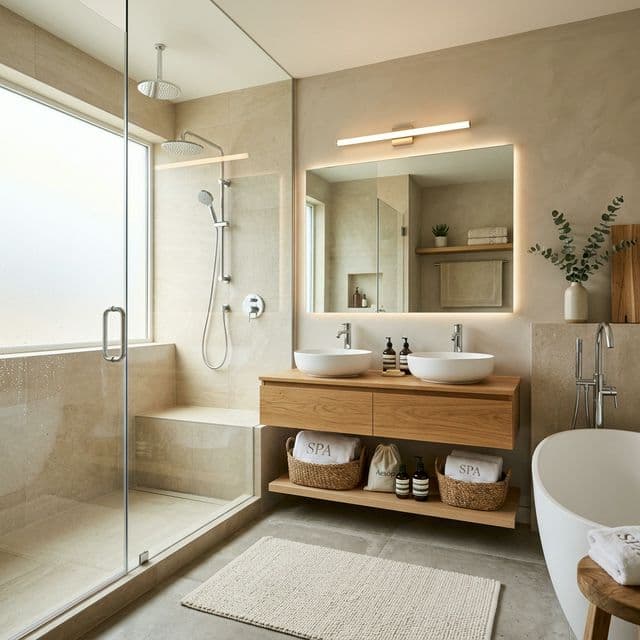
If space is limited, the shower should be one of the first priorities in the budget. According to the National Kitchen and Bath Association, 55 percent of surveyed professionals said enlarging the shower matters more to clients than including a bathtub.
What creates a more expensive feel:
- an easy shower entry
- enough width to move comfortably
- a clean glass panel
- one built-in niche
- a bench, or at least a practical ledge for daily products
Even with a moderate budget, a well-planned shower usually feels more premium than a cramped bathroom with expensive finishes.
2. Spend on Mirror Lighting and an Evening Mood
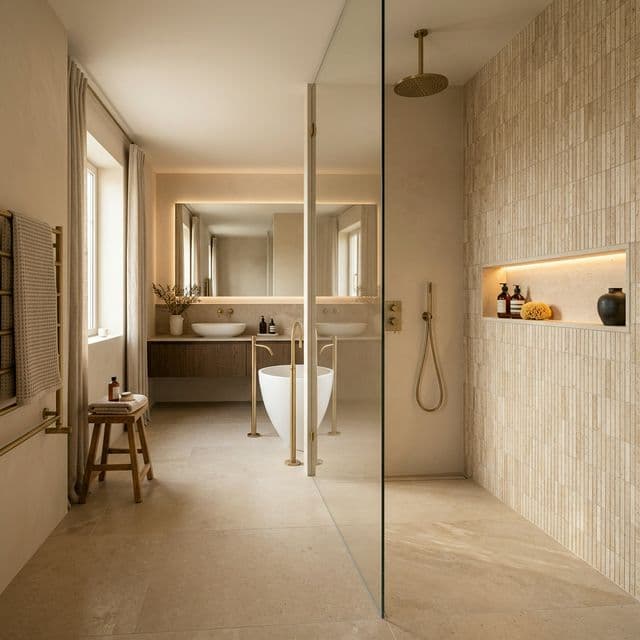
Lighting is one of the fastest ways to change how a bathroom feels. In the National Kitchen and Bath Association coverage from November 17, 2025, 91 percent of respondents said lighting quality is a top priority, and 92 percent agreed that task lighting should always be included in the primary bathroom.
In plain terms, one bright ceiling light is not enough.
A strong basic setup can still be simple:
- even general lighting
- dedicated mirror lighting
- a softer evening setting
If you have to choose where to spend, good mirror lighting and a calmer night mood will usually do more for the room than decorative extras that never improve daily use.
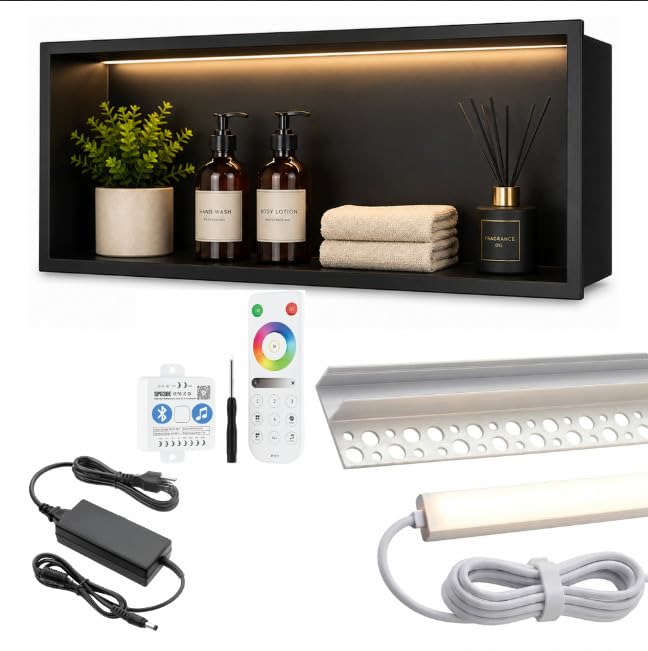
Create a Soft Nighttime Ambiance
Waterproof LED strip lights designed for shower niches and under-vanity spots let you switch to a relaxing, low-light setting in the evening without blinding ceiling fixtures.
View on Amazon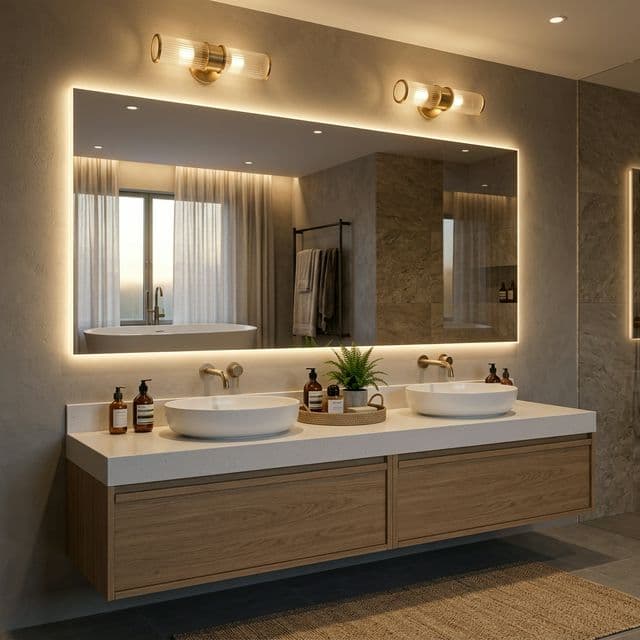
3. Quiet Materials Usually Look More Expensive Than Complicated Ones
A spa-like bathroom should not feel visually loud. The more competing finishes, gloss, and decorative effects you add, the easier it is for the room to feel cheaper than it was supposed to.
What tends to work best:
- matte or satin tile
- warm neutral tones
- soft stone or stone-look surfaces
- a wood-look vanity
- hardware with a softer finish instead of extreme shine
The National Kitchen and Bath Association points to a clear move toward warmer, more tactile finishes. That is good news for real remodel budgets because a calmer material palette usually looks more expensive than a busier one.
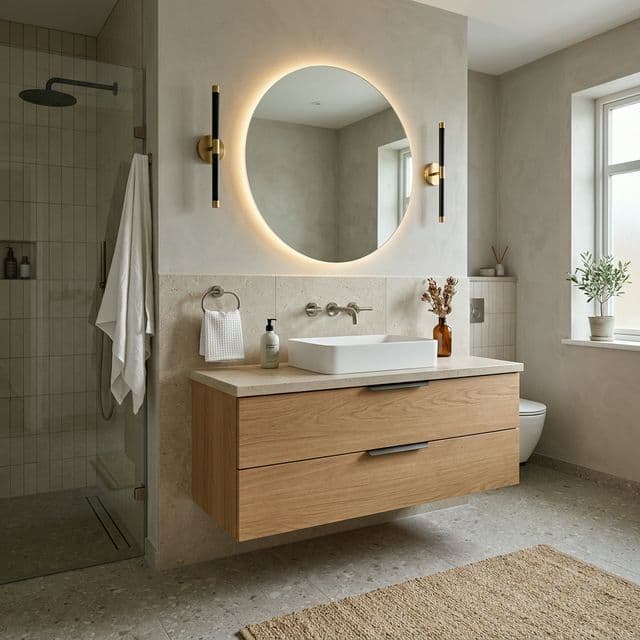
4. Hidden Storage Changes the Room Every Day
People often assume the expensive look comes from tile and fixtures. In reality, storage is often what makes the room feel polished. When hair tools, skincare, cleaning products, extra paper goods, and everyday clutter are out of sight, the bathroom feels calmer immediately.
The National Kitchen and Bath Association also notes the growing demand for more personalized and better-organized bathroom storage.
High-value storage choices include:
- a vanity with real drawers
- a mirrored cabinet if function matters more than a simple mirror
- one shower niche
- a closed tall cabinet if the layout allows it
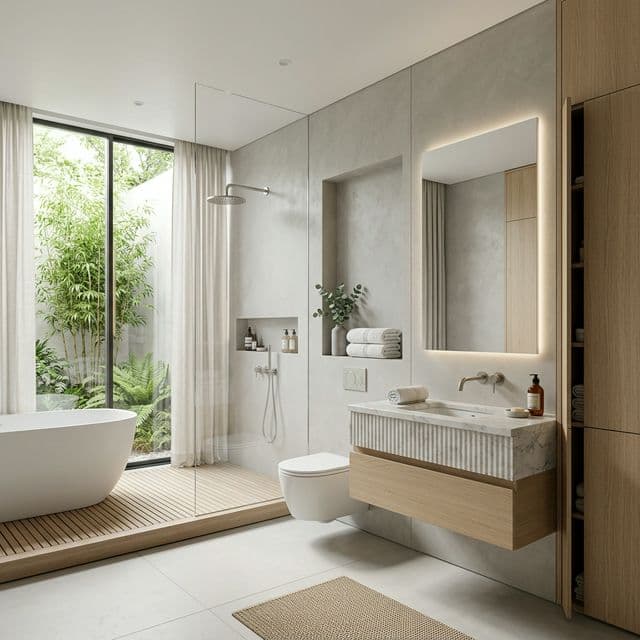
5. Comfortable Design Now Feels More Luxurious
One of the biggest 2026 bathroom shifts is that comfort-first design no longer looks clinical. The National Kitchen and Bath Association notes that curbless showers, benches, wider clearances, and other accessibility-minded features are becoming more common and more visually integrated.
That matters because practical choices now feel more high-end, not less. A curbless shower, better movement through the room, slip-resistant surfaces, and easier access all contribute to the kind of luxury people actually notice every day.
6. One Strong Upgrade Beats Five Expensive Purchases
If the budget is limited, do not try to make everything feel premium at once. Pick one strong upgrade and keep the rest of the room calm.
That focal point might be:
- a large mirror with excellent lighting
- a cleaner, more architectural shower area
- a vanity that feels more custom
- a better faucet
- one lighting choice that changes the whole mood
One strong move reads clearly. Five average upgrades compete with one another. That is why restrained bathrooms usually feel more mature and more expensive.
7. A Spa-Like Bathroom Also Feels Quiet
The most common mistake here is trying to buy an atmosphere. Homeowners choose expensive details one at a time but never shape the room into a coherent whole. The budget grows, but the spa-like feeling never really appears.
Calmer bathrooms share one thing: they do not contain too many decisions. There is less contrast, less competing material, and less visual noise. A spa-like room is not a collection of effects. It is a room with a quieter visual language.
Three Budget Paths That Actually Work
If the budget is tight
Focus on what changes the daily experience fastest:
- better mirror lighting
- a calmer paint or finish update
- a new shower screen or curtain
- storage that removes visible clutter
- better towels and accessories in one controlled palette
If the budget is moderate
It makes sense to prioritize:
- a stronger shower zone
- a vanity with better storage
- new tile in the most visible areas
- improved lighting
- calmer materials instead of a mixed finish palette
If the budget allows a bigger reset
The strongest path is usually:
- a curbless or easier-entry shower
- better lighting logic
- stronger ventilation
- heated flooring if it truly improves comfort
- a calm, durable material base that will not age quickly
Where You Can Save Without Losing the Effect
You can usually reduce spending on:
- decorative tile on every wall
- too many finish combinations
- a costly tub if you mostly use the shower
- styling details that do not improve function
- open shelving added only for looks
The smartest savings come from cutting noise, not comfort.
Where You Should Not Cut Costs
Do not cheap out on:
- the shower zone
- mirror lighting
- storage
- ventilation
- moisture-resistant materials
- ease of movement and daily use
If the underlying logic is weak, the bathroom can still be expensive and somehow feel disappointing.
Final Takeaway
A spa-like bathroom on a budget is not a watered-down version of luxury. It is a smarter remodel. You are not buying “luxury” from a checklist. You are building a room where the shower, lighting, storage, materials, and comfort all support one another.
That direction is backed by both Zillow’s October 15, 2025 report and the National Kitchen and Bath Association’s November 11, 2025 Bath Trends Report. The market is moving toward bathrooms that feel calmer, more useful, and more personal. The good news is simple: this result does not require overspending. It requires better priorities.
Sources
- Zillow's 2026 home trends: Color-drenched, whimsical and resilient — October 15, 2025
- Spotted on Zillow: Six Home Trends To Follow in 2026 — October 2025
- NKBA | KBIS Releases Annual 2026 Bath Trends Report — November 11, 2025
- Bathrooms are Getting Bigger, Brighter, and Better Organized to Support Individual Lifestyles — November 17, 2025
Calculate tile and waste first
Start with the main calculator, then move into the related tools and the matching topic hub.
Tile Calculator
Estimate wall or floor tile, waste allowance, and adhesive consumption.
Bathroom Hub
Keep bathroom articles, tools, and key planning decisions in one place.
Open hubVentilation Calculator
Calculate airflow needs by room volume and air-change rate.
Check airflowLighting Calculator
Work out how many lumens and fixtures a room really needs.
Calculate lightingThis piece is structured as a practical sequence of work, material choices, and decisions without extra steps.