SPC Vinyl vs Porcelain Tile: The Ultimate Flooring Battle for Kitchen and Hallway
A candid comparison of SPC flooring and porcelain tile in 2026. Heat conductivity under EN, slip resistance under DIN, eco-labels, and interactive calculators.
Let's face it: the kitchen and the hallway are the "battlegrounds" of any home. This is where things constantly drop, spill, and get dirty. In the hallway, the floor faces a daily onslaught of sand, grit, water, and muddy paws.
In the past, the choice was obvious: only porcelain tile. Today, however, everyone is crazy about rigid core vinyl (specifically SPC flooring). Store clerks call it the perfect replacement for tile — warm, seamless, and completely waterproof. But is it really that simple?
Let's skip the marketing hype and compare SPC vinyl and porcelain tile based on physics, numbers, DIN, EN, and FloorScore standards. We will break down where you will save money and where you risk losing it. Let's get into it!
1. Structure and Heat Conductivity: Keeping Your Feet Warm
The first difference you will notice immediately is how the floor feels underfoot.
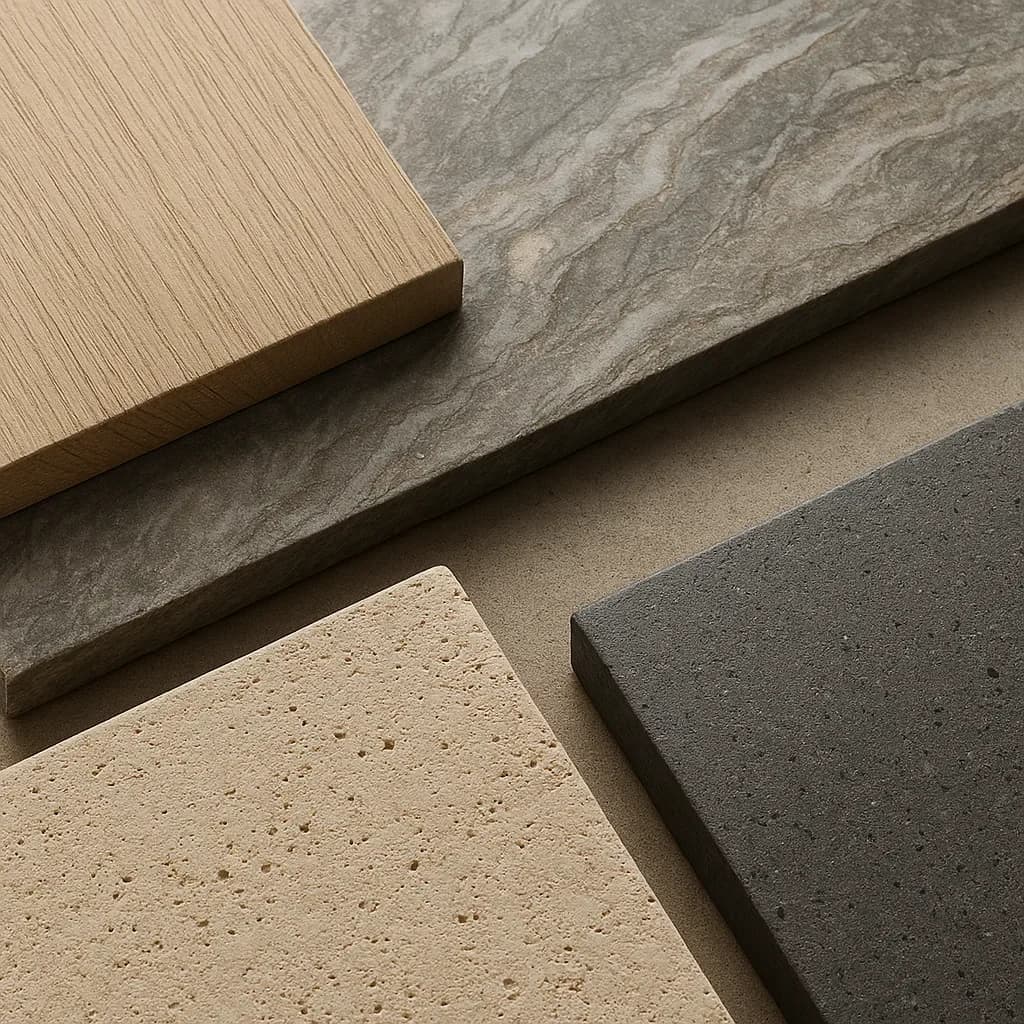
- Porcelain Tile is made of compressed clay fired at temperatures exceeding 1200°C (2200°F). It has a very high density and thermal conductivity. Without a floor heating system, walking on it barefoot is uncomfortable — it always feels freezing cold.
- SPC (Stone Plastic Composite) consists of 70-80% calcium carbonate (limestone) and 20-30% virgin PVC. It is a dense board with a much lower thermal conductivity. SPC is naturally warm to the touch, feeling more like wood.
If you plan to install underfloor heating, the thermal performance of materials is verified using the EN 12667 standard. Porcelain tile heats up 2 to 3 times faster and holds heat longer. SPC is also compatible with underfloor heating, but it has a strict temperature limit — no more than 28°C (82°F). Overheating vinyl will warp the click joints and create gaps.
2. Slip Resistance: The Wet Floor Test
Spilled water or cooking oil on the kitchen floor is a common hazard.
- For porcelain tile, the slip resistance rating under the German standard DIN 51130 is critical. For kitchens and hallways, choose tiles with a rating of at least R10 (matte or textured). Polished glossy tile in these zones is a slip hazard waiting to happen.
- SPC flooring, thanks to the embossing on its polyurethane protective wear layer, is highly slip-resistant even when wet.
3. Wear Resistance and Impact: Dropped Pans and Pet Claws
What happens if you drop a heavy cast-iron skillet?
- Porcelain Tile: It will withstand almost anything. However, a sharp, heavy impact (like a meat tenderizer dropped on its corner) can chip the tile. Replacing a single tile is a major headache. Moreover, dropped glassware or plates will shatter on porcelain tile 100% of the time.
- SPC Vinyl: It absorbs impacts. A dropped mug has a good chance of surviving. SPC handles pet claws well, but it is vulnerable to sand and abrasive grit.
According to the MMFA standards, the wear class of vinyl is determined by the thickness of its protective wear layer:
- For kitchens and hallways, you need at least a Class 33-34 rating (wear layer thickness of 0.5 mm or higher).
- Cheap SPC with a 0.3 mm wear layer in a busy hallway will wear down to the printed design in 3 to 4 years due to tracked-in sand.
4. Eco-Friendliness: Debunking the PVC Toxicity Myths
Many homeowners worry about installing vinyl because of PVC, fearing formaldehyde or phthalate emissions when heated by underfloor heating.
To ensure your home's air is clean, look for the gold standard certification on the box — FloorScore. This independent label guarantees the material has been tested in environmental chambers under the ISO 16000 standard, proving that volatile organic compound (VOC) emissions are well within the safe green zone.
Important
Cheap, unbranded SPC flooring without FloorScore or similar eco-credentials can release harmful plasticizers and have a chemical odor when heated. Never cut corners on material quality here.
Side-by-Side Comparison
Let's compare the characteristics and installation costs:
SPC Vinyl vs Porcelain Tile
| Feature | SPC Rigid Core (Click)Not recommended | Porcelain TileBest choice |
|---|---|---|
| Tactile warmth | Warm (comfortable without heating) | Cold (needs floor heating) |
| Water resistance at seams | 100% waterproof planks (but water can seep through joints) | 100% sealed (when using epoxy grout) |
| Finished thickness | 5-6 mm (with underlayment) | 12-16 mm (with adhesive) |
| Sound absorption | Good (absorbs impact noise) | Poor (loud, hollow sound) |
| Substrate prep difficulty | Perfect flat floor needed (max 2 mm over 2 m) | Can tolerate minor subfloor unevenness |
| Average labor cost (per sq.m.) | $8 - $12 | $25 - $50 |
Real Cost Breakdown for a 20 sq.m. Room (Kitchen + Hallway)
Homeowners often compare only the retail price of the flooring itself. Let's calculate the complete cost including adhesive, grout, underlayment, and labor.
Option 1: Porcelain Tile
- Mid-range tiles (20 sq.m. plus 10% waste): $400
- High-flexibility tile adhesive (C2S1 class): $70
- Epoxy grout (stain-resistant for kitchen spills): $80
- Professional tile setter labor (laying, cutting, grouting): $650
- Total cost: ~$1200
Option 2: Click-Lock SPC Flooring
- Premium Class 33-34 SPC (20 sq.m. plus 7% waste): $550
- High-density SPC underlayment (1.5 mm thickness, min 100 kg/m³ density): $70
- Fast installation labor (simple click system): $200
- Total cost: ~$820
Tip
Installing SPC vinyl is about 30% cheaper overall because the labor is less intensive. Click-lock SPC can even be installed as a DIY project over a weekend, saving you even more money. However, keep in mind: the subfloor must be flat; any dips or bumps will break the locking joints over time.
Interactive Flooring Materials Calculators
You can calculate the exact amount of flooring or tiles you need directly here. Enter your room parameters and material sizes below to get an instant calculation!
📊 SPC Vinyl & Laminate Calculator
Flooring Calculator
Estimate packs, planks, underlay and waste for laminate, vinyl or engineered wood flooring.
Classic pack-based calculation
📊 Tile & Porcelain Tile Calculator
Tile Calculator
Calculate the exact number of tiles needed for floors or walls, including waste, grout, and adhesive.
Measure from wall to wall
From one wall to another
If there is a built-in bathtub or fixed screen
Indicated on the package, e.g. 30×30 cm
For square tiles, same as length
For grout calculation
Usually 1.5–3 mm
For pack count
If work experience is low, add 5–10%
Installation Quality Checklist
Whether you go with tile or vinyl, use this list to check your installer's work:
Flooring Handover Checklist
FAQ: Frequently Asked Questions
Flooring Q&A
Summary: Which to Choose?
- Go with Porcelain Tile if you are remodeling for the long haul, plan to run a high-heat underfloor heating system, and don't want to worry about pet claws from large dogs or dirty outdoor boots.
- Go with SPC Vinyl if you prefer a warm, quiet floor without thresholds, want to avoid high tiling costs, love walking barefoot, and desire a clean, modern design style throughout the entire home.
Calculate tile and waste first
Start with the main calculator, then use the two tools that most naturally follow this article.
This piece is structured as a practical sequence of work, material choices, and decisions without extra steps.