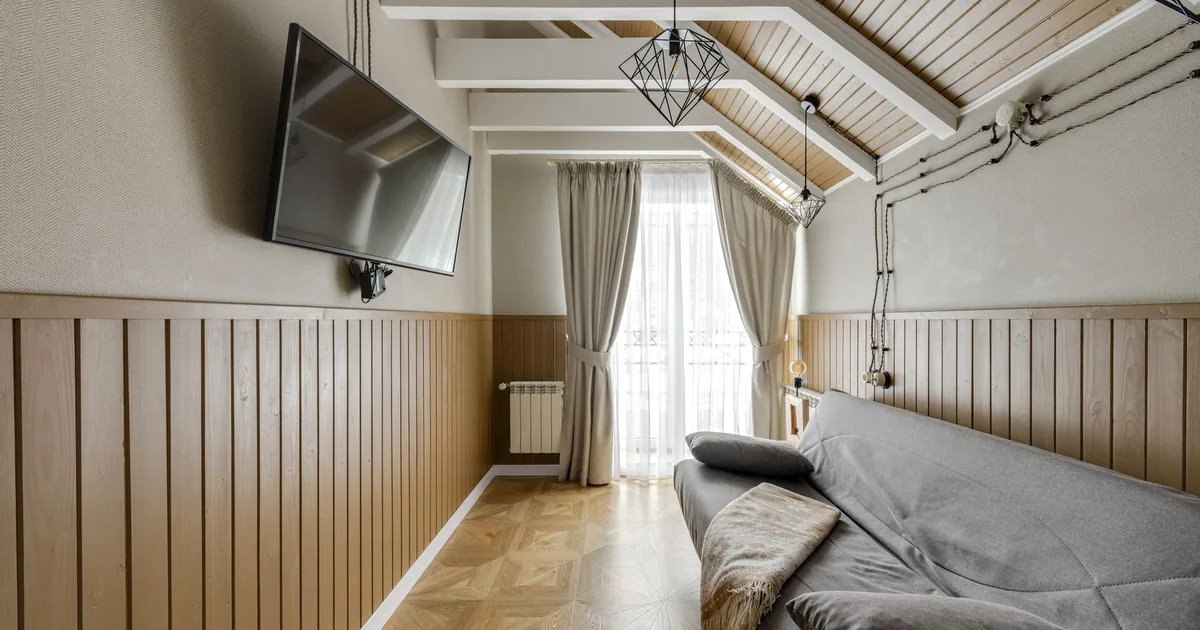
6 Living Room Color Tips for a Cozy, Balanced Interior
How to choose living room paint colors without costly repaints: daylight orientation, LRV ratings, drywall grazing light, scrub-rated matte sheens, and 60-30-10 testing.
Wall color shapes how spacious a living room feels at noon and how restful it feels at 9:00 PM—yet choosing off a tiny 2 × 2 in (50 × 50 mm) store chip is one of the most common triggers for expensive repaints. Before opening a 5-gallon pail, evaluate five real-world variables in your room: compass exposure, drywall flatness, household wear, Light Reflectance Value (LRV), and evening LED color temperature.
1. Track Compass Daylight and Evening Kelvins
Pigments shift dramatically as natural skylight gives way to indoor lamps:
- North- & East-Facing Living Rooms: Cool, bluish indirect skylight drains warmth out of pure grays and stark whites, making them read steely or violet. Counterbalance cool exposure with creamy off-whites, warm linen, oat sand, or warm greige (
LRV 62–76) carrying subtle yellow or red undertones. - South- & West-Facing Living Rooms: Strong afternoon sun amplifies yellow and peach walls into hot glare. Ground bright rooms with muted sage, pale limestone, eucalyptus, or balanced neutral putty (
LRV 52–68). - Evening Artificial Light: Pair warm living-room palettes with 2700–3000 K dimmable LEDs rated CRI ≥ 90 (
R9 ≥ 50) so wood floors, skin tones, and textiles render naturally without a muddy green cast.
Tip
Tape 24 × 24 in (60 × 60 cm) painted poster-board swatches vertically on two perpendicular walls and check them at 9:00 AM, 2:00 PM, and 9:00 PM under your actual floor and table lamps before ordering finish paint.

2. Inspect Wall Flatness Under Grazing Light Before Picking Sheen
Even premium architectural paint cannot hide wavy drywall joints—higher sheen acts like a magnifying glass under window side-light:
- Standard Skimmed Drywall or Old Plaster: Specify Dead Flat or Washable Matte (
2–5%gloss at 85°) to scatter grazing light and visually soften minor roller texture or joint imperfections. - Level 5 Skim-Coated Walls (
<= 1/8 in over 6.5 ft / 2 mm per 2 m): Smooth enough to support Velvet or Eggshell (7–12%gloss) if extra wipeability is needed in high-traffic family rooms.
Important
Hold an LED work light or flashlight flush against the primed wall (raking light test) before rolling color. Circle pinholes and sanding ridges with chalk, spot-fill, sand with 180–220 grit, and spot-prime so repaired patches never flash dull through the topcoat (flashing).

3. Match Scrub Class and VOC Chemistry to Household Wear
Living rooms with kids, dogs, or open-plan dining zones need coatings engineered for repeated wet cleaning without burnishing shiny spots:
- Wet-Scrub Durability: Look for ISO 11998 / DIN EN 13300 Class 1 (in Europe, lower number = highest durability:
< 5 µmfilm loss after 200 scrub cycles) or ASTM D2486 high-scrub ceramic-fortified 100% acrylic latex in North America. - Indoor Air Safety: Specify zero-VOC (
< 5 g/L) Greenguard Gold or EU Ecolabel waterborne coatings so rooms air out cleanly within hours rather than off-gassing solvents for weeks.
4. Anchor Sightlines With a Cohesive Neutral Base
In 160–280 sq ft (15–26 sq m) living rooms connected to entry halls or kitchens, running one calm mineral neutral across main walls erases visual boundaries:
- Small & Low-Ceiling Rooms (
8 ft / 2.45 mceiling): Paint walls, baseboards, and even interior door casings in the same light shade (LRV 65–78), dropping ceiling white just half a step lighter inDead Flatto stretch vertical height. - Large Open-Plan Rooms (
> 300 sq ft / 28 sq m): Ground a media niche or fireplace breast one to two LRV steps deeper (LRV 35–48) within the same color family to add architectural depth without harsh contrast lines.
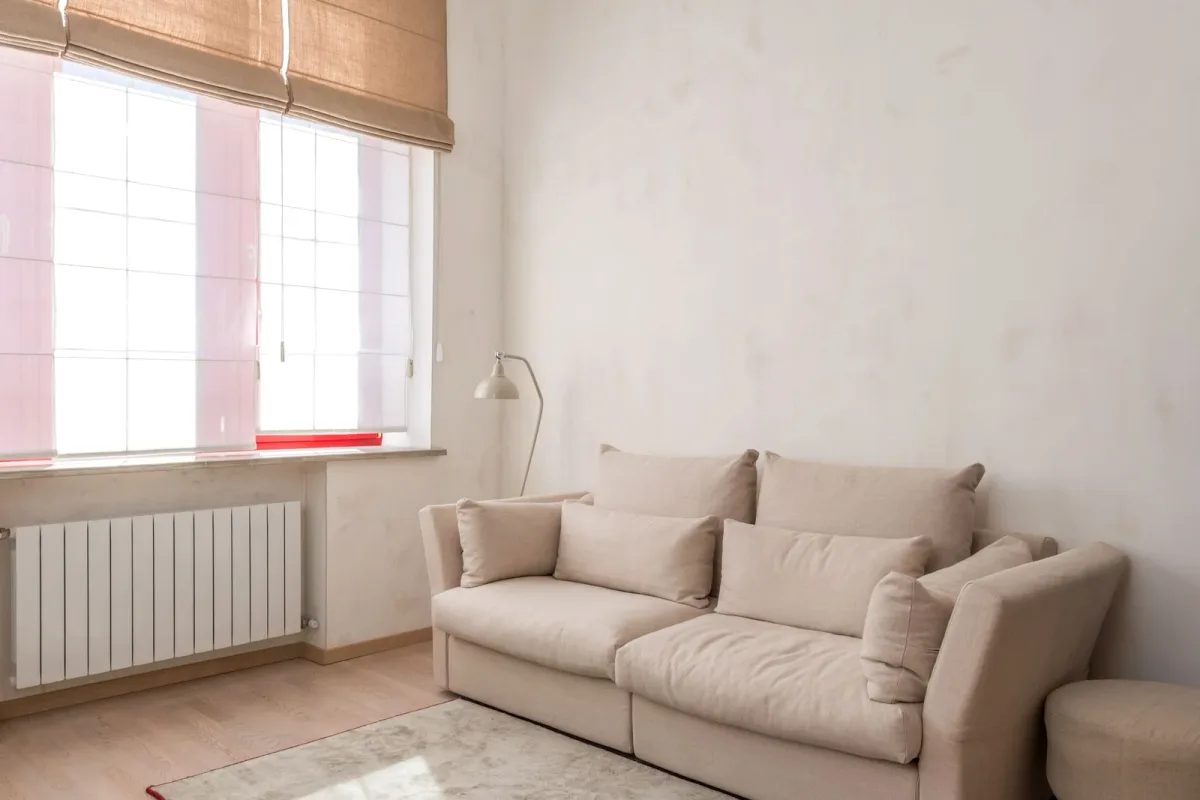
5. Discipline Accent Colors With the 60–30–10 Ratio
A restful living room avoids competing primary colors by locking proportions:
- 60% Dominant Envelope: Walls, ceiling, and full-height built-in cabinetry.
- 30% Secondary Foundation: Hardwood or SPC flooring, primary sofa upholstery, and floor-to-ceiling linen drapery.
- 10% Repeated Accents: Limit saturated tones to one or two organic hues—such as olive green + baked terracotta or deep burgundy + warm brass—echoed across cushions, a throw, and framed artwork so the eye reads deliberate rhythm.
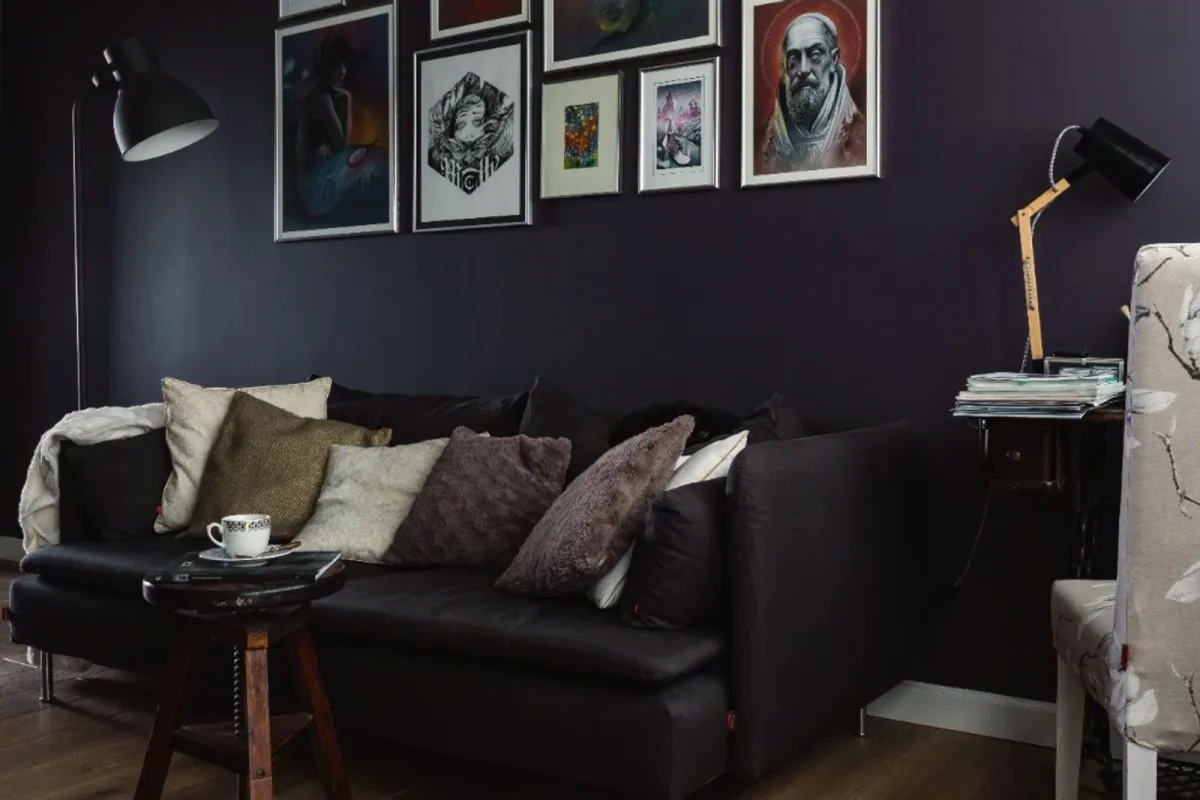
6. Run an Old-Coating Adhesion Check & Two-Coat Sample Test
Before rolling an entire room, brush two coats onto a 3 × 3 ft (90 × 90 cm) primed board or test zone and live with it for 48 hours. Because surround reflection intensifies chroma across four walls, when torn between two adjacent fan-deck strips, pick the slightly more muted, one-step-lighter shade.
Note
Solvent rub test on unknown old walls: Rub an inconspicuous corner for 20 seconds with a cotton pad soaked in denatured alcohol. If color transfers onto the pad, the existing coat is waterborne acrylic/latex and can be washed, deglossed, and painted directly. If the pad stays clean and the surface feels slick, it is oil/alkyd enamel—scuff-sand with 150-grit paper, vacuum dust, and apply a dedicated waterborne urethane bonding primer before latex topcoats.

Calculate exact primer and two-coat wall paint quantities (automatically subtracting windows and doors) below:
Paint Calculator
Estimate paint for the walls and ceiling. The calculator uses standard door and window sizes.
Frequently Asked Questions
Why does my gray or beige living room paint look purple or green on the wall?
Every neutral contains trace undertones that react with window light and floor reflection. Cool grays with blue-violet pigment turn purple in shadowy north light, while yellow-based beiges turn greenish next to cool gray floors or cheap CRI 80 LED bulbs. Always test 24 × 24 in (60 × 60 cm) two-coat boards right above your actual floorboards under CRI 90+ bulbs.
Should I paint the living room ceiling pure bright white?
Untinted bright stock white works well with crisp modern palettes, but next to warm linen, sand, or clay walls (LRV 55–68) stark blue-white ceilings can feel cold and disconnected. Tinting ceiling flat paint with 20–25% of the wall formula (or choosing a soft alabaster white around LRV 82–85) creates a far smoother transition.
Are matte living room paints washable enough for kids and pets?
Cheap contractor flat chalks and stains on contact, whereas modern ceramic-microsphere Class 1 washable mattes (3–5% sheen) withstand damp microfiber cleaning of coffee splashes, paw prints, and crayon marks without leaving glossy rub patches.
Do I need to turn off power before painting around living room switches and outlets?
Yes. Rather than taping sloppily around cover plates, shut off the living room branch breaker at the panel, verify zero voltage with a CAT III voltage tester, remove the plastic faceplates, cut in cleanly 1/4 in (6 mm) shy of the box opening, and reinstall the plates once the second coat cures dry.
Related Color & Paint Tools
- Build balanced 60–30–10 room schemes in the Color Palette Generator and verify room lumen targets in the Lighting Calculator
- Dive deeper into LRV and sheen physics in 5 Rules for Choosing Interior Paint Colors and prep substrates properly with Preparing Walls for Painting and our Walls and Finishes Hub
Lock in colors before you buy finishes
Start with the main calculator, then move into the related tools and the matching topic hub.
Color Palette Generator
Build a balanced interior color palette before you commit to paint and finishes.
Walls and Finishes Hub
Keep paint, wall prep, wallpaper, and color decisions together before the finish stage begins.
Open hubPaint Calculator
Estimate paint coverage by room size, openings, and number of coats.
Estimate paintLighting Calculator
Work out how many lumens and fixtures a room really needs.
Calculate lighting