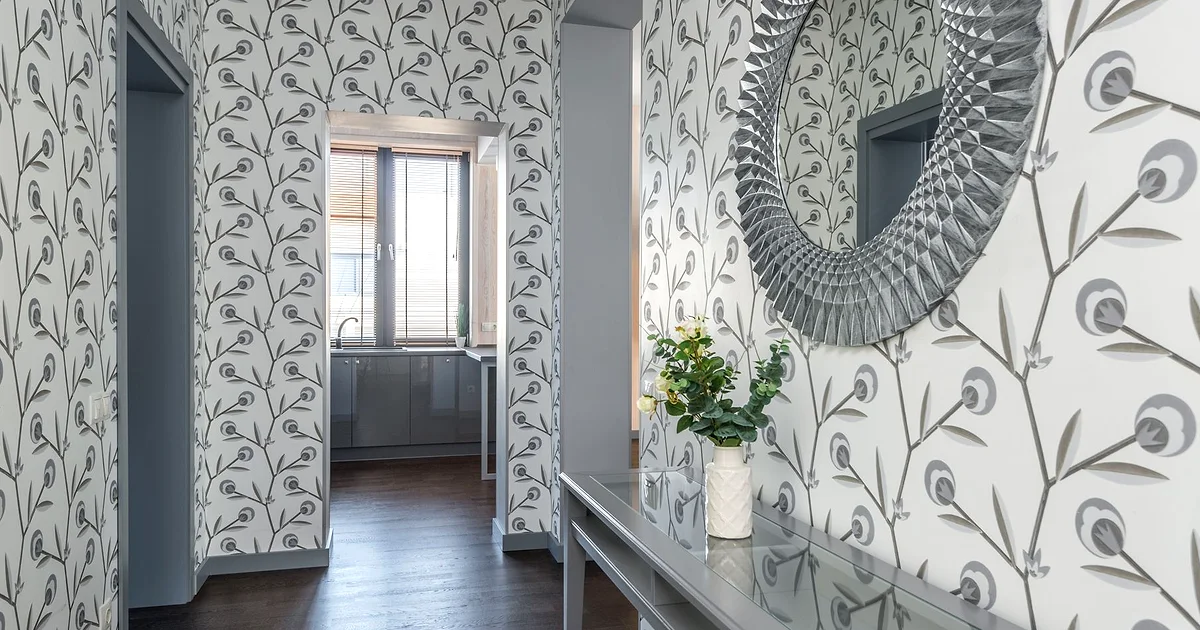
Main Types of Wallpaper: Specs, Washability Ratings, Roll Math & Best Uses
Compare six main wallpaper types—non-woven, vinyl, paper, fiberglass, textile, and liquid plaster—plus EN 233 washability classes, pattern-repeat roll math, and wall prep rules.
Picking wallpaper strictly by color or pattern often leads to open seams, telegraphing drywall joints, or running one roll short mid-wall because of pattern-repeat waste. In a 13 × 10 ft (4.0 × 3.0 m) room with 9 ft (2.74 m) ceilings, one door, and one window, a zero-match textured wallpaper takes 10 standard single rolls (20.5 in × 33 ft / 0.53 × 10.05 m, packaged as 5 US double bolts)—whereas a 25 in (640 mm) drop-match botanical print requires 12–14 single rolls (6–7 double bolts).
Below is an engineering breakdown of the six main residential wallpaper types, their moisture and scrub ratings under EN 233 / ASTM F793, roll sizing math, and substrate preparation rules.
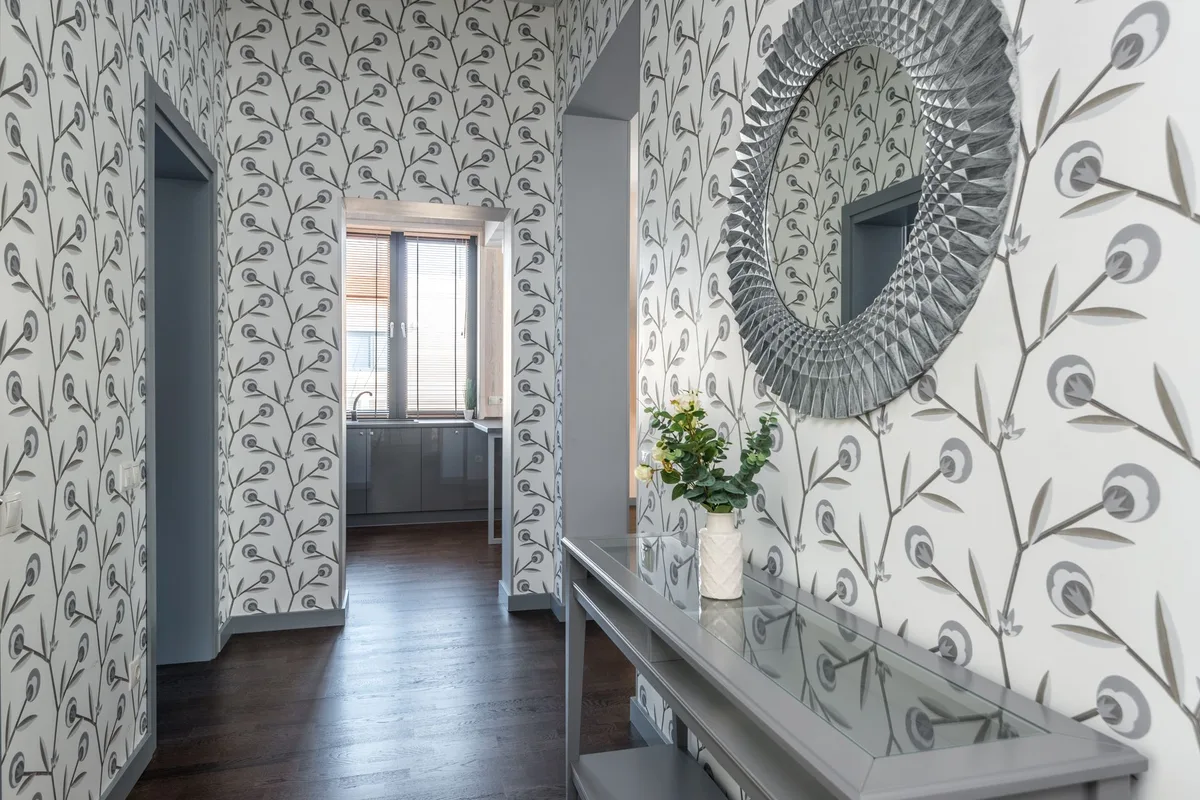
1. Non-Woven Wallpaper (Paste-the-Wall Standard)
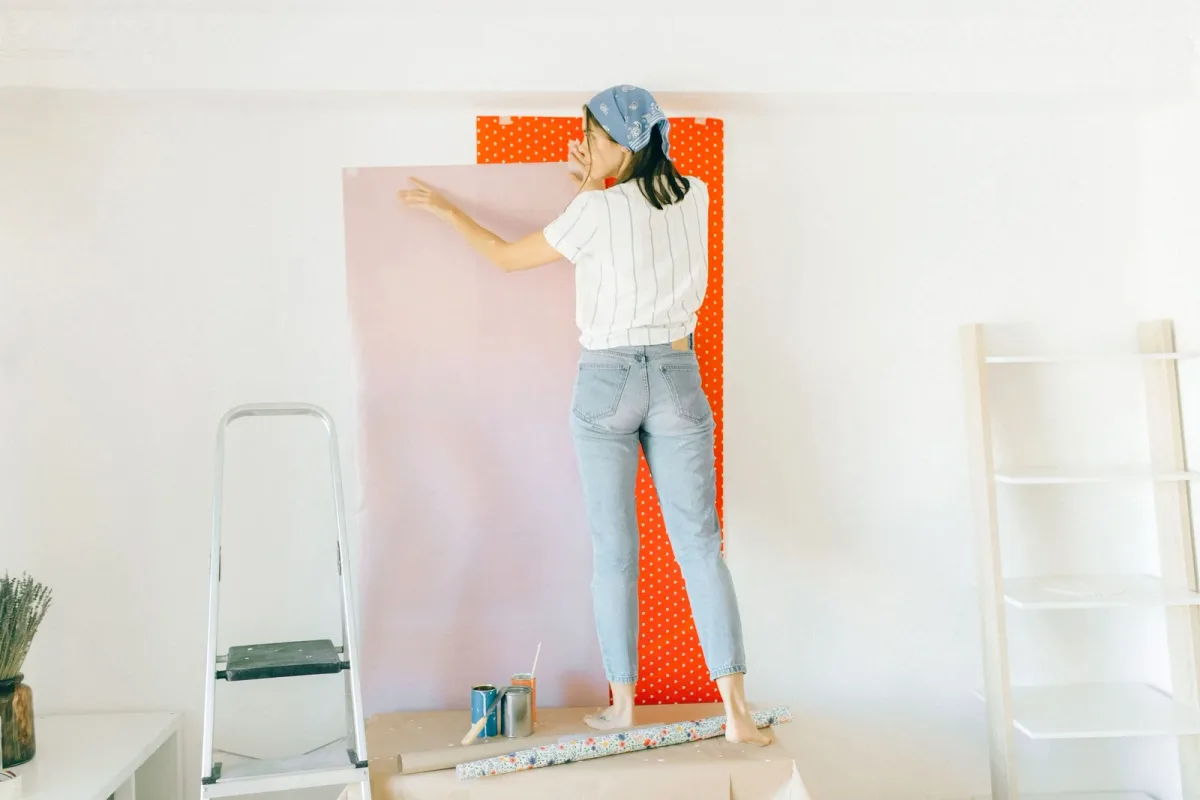
Manufactured from long-staple cellulose blended with synthetic textile fibers (110–160 g/m²), non-woven (vlies) wallpaper is the modern contractor benchmark in both North America and Europe.
- Pros: Zero wet expansion or drying shrinkage—you roll adhesive directly onto the primed wall and hang dry strips butt-joint to butt-joint without booking time. Breathable (vapor-permeable, inhibiting mold behind the sheet), bridges hairline plaster shrinkage cracks up to 1/32 in (0.8 mm), and strips off dry in full sheets during future remodels. Paintable non-woven liner (
130–180 g/m²) tolerates 5–7 repaint cycles. - Critical prep warning: Light-colored non-woven backing is slightly translucent. Always apply a white pigmented wallpaper primer/sizer over patched drywall so gray joint compound bands do not shadow through the face.
- Best for: Living rooms, bedrooms, home offices, and new-build apartments subject to minor structural settling.
2. Vinyl Wallpaper (Solid-Sheet & Heavy-Duty Scrubbable)
Combines a stable non-woven or paper backing with an embossed, foamed, or solid calendered PVC/acrylic topcoat (Type I and Type II under ASTM F793):
-
Foamed embossed vinyl: Thick cushioning relief hides minor wall imperfections well, though sharp pet claws or luggage corners can gouge soft foam peaks.
-
Hot-embossed compact / solid-sheet vinyl (
220–380 g/m²): Dense, scrub-resistant wear surface rated extra-washable / scrubbable (three waves + brush icon under EN 233) that shrugs off grease splatters, mud, and wet sponge cleaning. -
Pros: 10–15+ year service life, high UV fade resistance, and unmatched cleanability.
-
Ventilation & indoor air caveat: Impermeable PVC skins trap moisture if applied onto damp exterior masonry or unventilated bathrooms. Never hang solid vinyl in poorly ventilated shower splash zones without micro-perforated breathable backing, and look for low-VOC / RAL-GZ 479 / GREENGUARD certified rolls.
-
Best for: Entry hallways, mudrooms, kids' playrooms, dining banquettes, and powder rooms (outside direct shower spray).
3. Traditional Cellulose Paper Wallpaper (Simplex & Duplex)
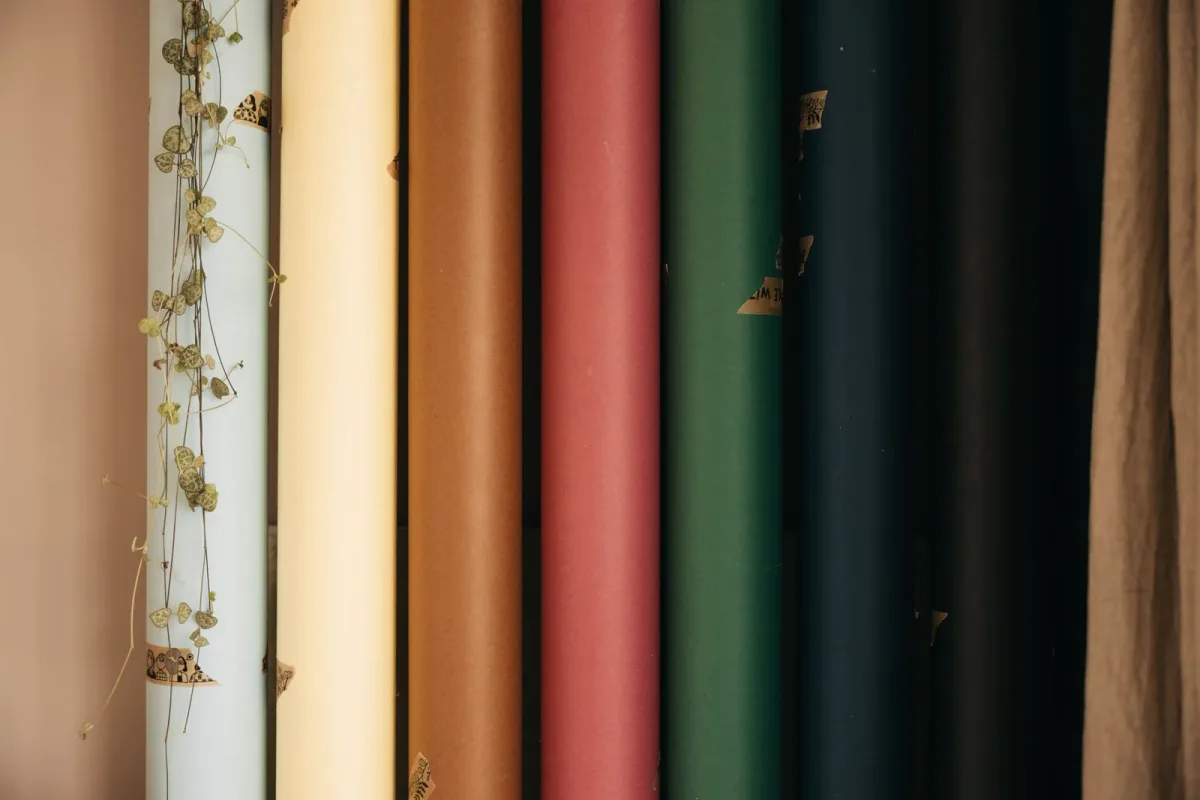
Pure wood-pulp cellulose printed in single-ply (simplex) or bonded two-ply (duplex, 90–130 g/m²) sheets—still common in heritage heritage prints and artisanal block-printed collections.
- Pros: 100% plastic-free, vapor-open, crisp traditional ink registration, and budget-friendly in standard collections.
- Installation quirks: Paste must be brushed onto the back of the strip and booked (folded paste-to-paste) for 3–5 minutes so the paper expands uniformly by 3/16 to 3/8 in (5–10 mm) before hanging. Rushing booking time causes bubbling; open windows or HVAC drafts during drying shrink seams apart. Not washable (
spongeableat best). - Best for: Low-traffic adult bedrooms, formal studies, and historic restorations.
4. Woven Fiberglass Wallpaper & Glass-Mat Liner
Woven from fine mineral glass yarns (100–220 g/m² herringbone, twill, or diamond weaves) or pressed into smooth 40–50 g/m² crack-bridging painter's fleece, then topcoated with two coats of latex/acrylic wall paint.
- Pros: Class A / Euroclass B-s1,d0 fire resistance, impervious to rot and cat claws, reinforces cracked plaster walls up to 1/16 in (1.5 mm), and lasts 20–30 years across up to 10 repaintings.
- Cons: Requires heavy-duty fiberglass adhesive, protective gloves/sleeves during cutting, and skim-coating over top if you ever switch back to bare drywall because cured fiberglass bonds permanently.
- Best for: High-traffic corridors, stairwells, rental units, home gyms, and older apartments with recurring plaster cracks.
5. Natural Textile & Grasscloth Wallcoverings
Sisal, jute, linen, cotton, or silk threads laminated onto a paper or non-woven substrate (typically sold in 36 in / 91 cm wide bolts).
- Pros: Rich organic texture, zero specular glare, and noticeable high-frequency acoustic softening.
- Cons: Visible panel seams are an inherent feature of natural grasscloth due to hand-dyed plant fibers; absorbs cooking odors and moisture stains; spot-cleaning with water leaves water rings (vacuum with a soft brush attachment only); adhesive touches on the face ruin the finish permanently.
- Best for: Primary bedroom headboard feature walls, libraries, and media lounges.
6. Liquid Wallpaper (Seamless Cellulose-Silk Plaster)
Dry flocculent blends of cellulose, raw cotton, and silk fibers mixed with water-soluble adhesive on site and troweled onto primed walls at 1/16 to 3/32 in (1.5–2.5 mm) thickness.
- Pros: Zero seams and zero pattern-repeat waste, wraps cleanly around curved arches and uneven corners, and damaged patches re-wet with a spray bottle and trowel smooth in minutes.
- Cons: Takes 24–72 hours to dry fully, cannot tolerate direct water splashes, and requires a stain-blocking quartz primer so rust specks on drywall screws or rebar never bleed yellow into the wet fiber coat.
6 Wallpaper Types Side-by-Side Comparison
| Wallpaper Type | Vapor Breathability | Cleanability (EN 233 / ASTM) | Crack & Defect Masking | Typical Lifespan | DIY Hanging Difficulty |
|---|---|---|---|---|---|
| Non-Woven (Vlies) | High | Washable (damp microfiber) | Bridges hairline cracks | 8–12 years | Easy (paste the wall, dry strip) |
| Compact / Type II Vinyl | Low | Scrubbable (mild soap + soft brush) | High (textured emboss) | 10–15 years | Easy–Moderate |
| Cellulose Paper (Duplex) | Very High | Lightly spongeable only | Low (shows substrate flaws) | 3–6 years | Moderate–Hard (booking & shrinkage) |
| Woven Fiberglass | High (with breathable paint) | Scrubbable (set by topcoat paint) | Reinforces cracks to 1/16 in | 20–30 years | Moderate (heavy paste + 2 paint coats) |
| Grasscloth / Textile | High | Dry vacuum brush only | Moderate | 10–15 years | Pro recommended (stain-sensitive) |
| Liquid Silk Plaster | High | Dry clean only | Fills 1/16–1/8 in waves | 8–12 years | Trowel-applied, zero seams |
Roll Formats and Pattern-Repeat Waste Math
Check the roll label carefully before ordering—regional roll dimensions differ substantially:
- Euro / Standard Metric Single Roll:
20.5 in × 33 ft(0.53 × 10.05 m= 57 sq ft / 5.32 sq m gross, yielding ~45–48 sq ft / 4.2–4.5 sq musable after trimming). Note: North American retailers typically price by the single roll but ship double-roll bolts (20.5 in × 56–66 ft/100–114 sq ft) so fewer short remnants are wasted! - Wide-Width European Metric Roll:
41.7 in × 33 ft(1.06 × 10.05 m= 115 sq ft / 10.65 sq m), cutting visible vertical seams in half.
Always check the pattern match icon:
- Free match (
0 in / 0 cm): Zero pattern waste. - Straight match (
e.g., 21 in / 53 cm): Every strip aligns horizontally at the ceiling line. - Half-drop / offset match (
e.g., 25.2 / 12.6 in—64 / 32 cm): Alternating strips shift by half a repeat, adding 15% to 30% extra roll consumption. Confirm every bolt carries the identical dye-lot / run number before opening plastic wrappers.
Run your exact room measurements, openings, roll width, and pattern repeat in our interactive calculator:
Wallpaper Calculator
Calculate the number of wallpaper rolls needed for your room, accounting for wall area, pattern repeat, and waste.
Wall Prep and Electrical Safety Checklist
- Shut off power before wet pasting: Before stripping old paper, priming, or trimming damp wallpaper around outlets and switches with a steel utility blade, turn off the branch circuit breaker at the panel, verify zero voltage with a multimeter, remove faceplates, and mask recessed terminals.
- Prime bare drywall properly: Never paste directly onto raw gypsum paper or flat chalky paint—apply an acrylic wallpaper primer/shield (
Level 4drywall finish minimum;Level 5skim coat under metallic or thin smooth papers) and cure 24 hours so future removal never rips drywall paper off the studs. - Control drying environment: Hang at 65–72°F (18–22°C) and keep windows closed and space heaters off for 24–48 hours so paste cures slowly without popping seams.
For complete skim-coating, sanding, and primer instructions, read Preparing Walls for Painting & Wallpapering, or compare paint coverage in our Paint Calculator and DIY Wall Painting Guide.
Check roll count before you buy
Start with the main calculator, then move into the related tools and the matching topic hub.
Wallpaper Calculator
Calculate how many wallpaper rolls you need with pattern repeat, openings, and waste.
Walls and Finishes Hub
Keep paint, wall prep, wallpaper, and color decisions together before the finish stage begins.
Open hubPaint Calculator
Estimate paint coverage by room size, openings, and number of coats.
Estimate paintBudget Planner
Build a renovation budget by category, currency, and contingency reserve.
Plan the budget